
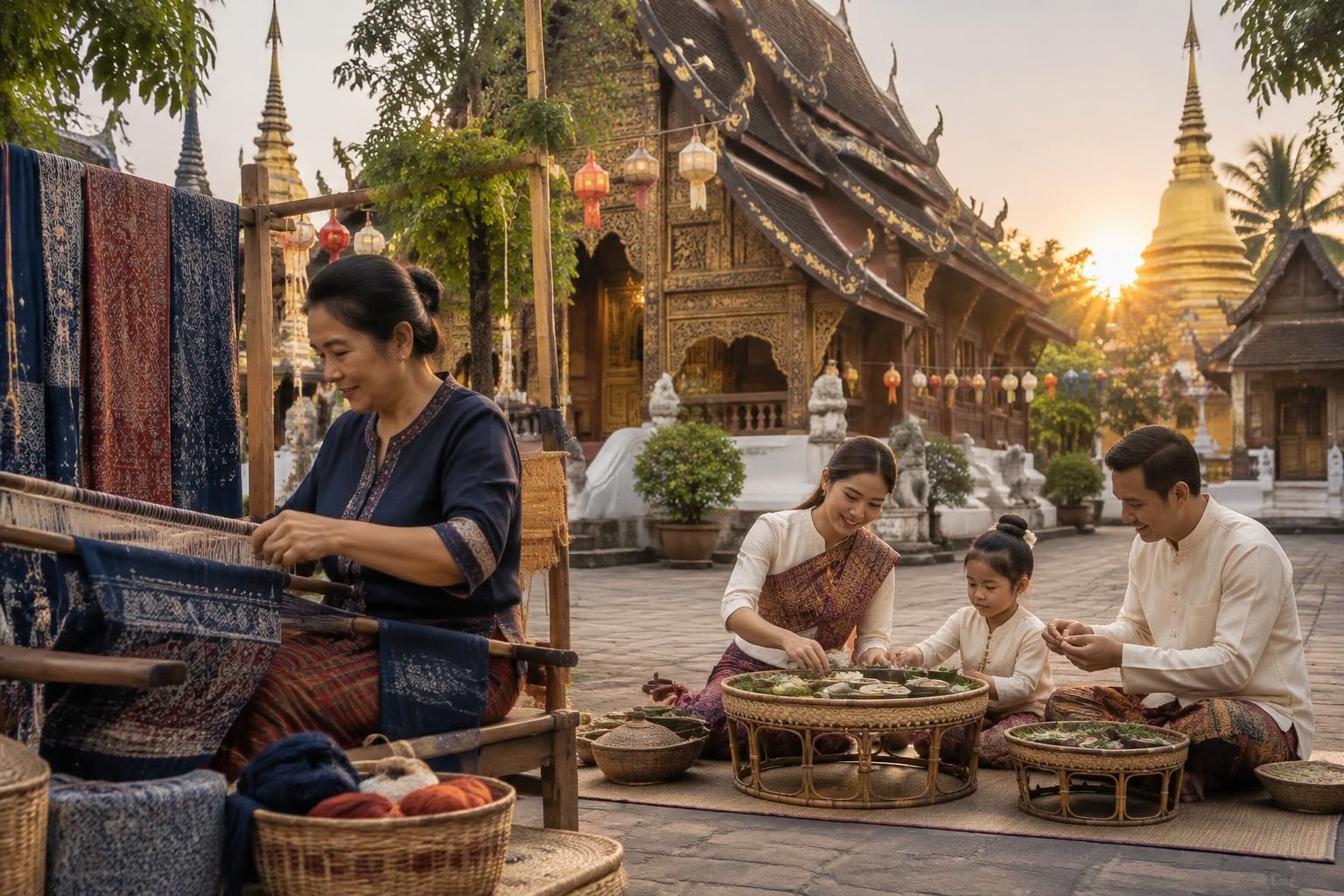
Lanna culture gives Northern Thailand a character shaped by an old kingdom, living languages and everyday traditions. In Chiang Mai, a temple’s layered roof, a bowl of fragrant curry and a conversation in Kham Mueang can each reveal a different part of that heritage. The story reaches beyond one city: it belongs to communities across the north and continues to change as younger generations find their own ways to carry it forward.
At a glance
- The Lanna Kingdom was a historic northern realm with Chiang Mai as a major centre.
- Kham Mueang, the northern Thai language, and the Tai Tham script preserve distinctive ways of speaking and writing.
- Temples, food, festivals and traditional crafts bring regional heritage into daily life.
- Respectful visitors can support local communities by asking permission, following temple etiquette and choosing locally made goods.
The Lanna Kingdom and the roots of northern Thai identity
The name Lanna is commonly translated as “a million rice fields,” an image that points to the agricultural landscapes that sustained settlements across the north. Rice-growing valleys, rivers and mountain routes helped communities exchange food, religious ideas and artistic skills as well as goods.
King Mangrai founded Chiang Mai in 1296, establishing a city that became a major centre of the Lanna Kingdom. Its location near the Ping River supported connections with other settlements, while the surrounding landscape offered agricultural land and access to wider trade routes.
The kingdom did not develop in isolation. Earlier centres such as Hariphunchai, associated with present-day Lamphun, contributed important Buddhist traditions and artistic influences to the region that Mangrai’s realm came to encompass.
How Lanna history shaped Northern Thailand
Over the centuries, the north experienced changing political fortunes, including periods under Burmese rule and later closer integration with Siam, now Thailand. These changes affected administration and power, but they did not erase local speech, ritual or artistic knowledge.
That distinction matters for a traveller trying to understand what makes Chiang Mai different. Lanna is not simply a decorative label for anything found north of Bangkok; it refers to a historical and cultural inheritance with connections to neighbouring Tai-speaking communities.
At the same time, Northern Thailand includes many communities whose identities should not be reduced to one regional category. Tai Lue, Tai Khun and other groups have their own histories and customs, and the wider region is also home to diverse highland peoples.
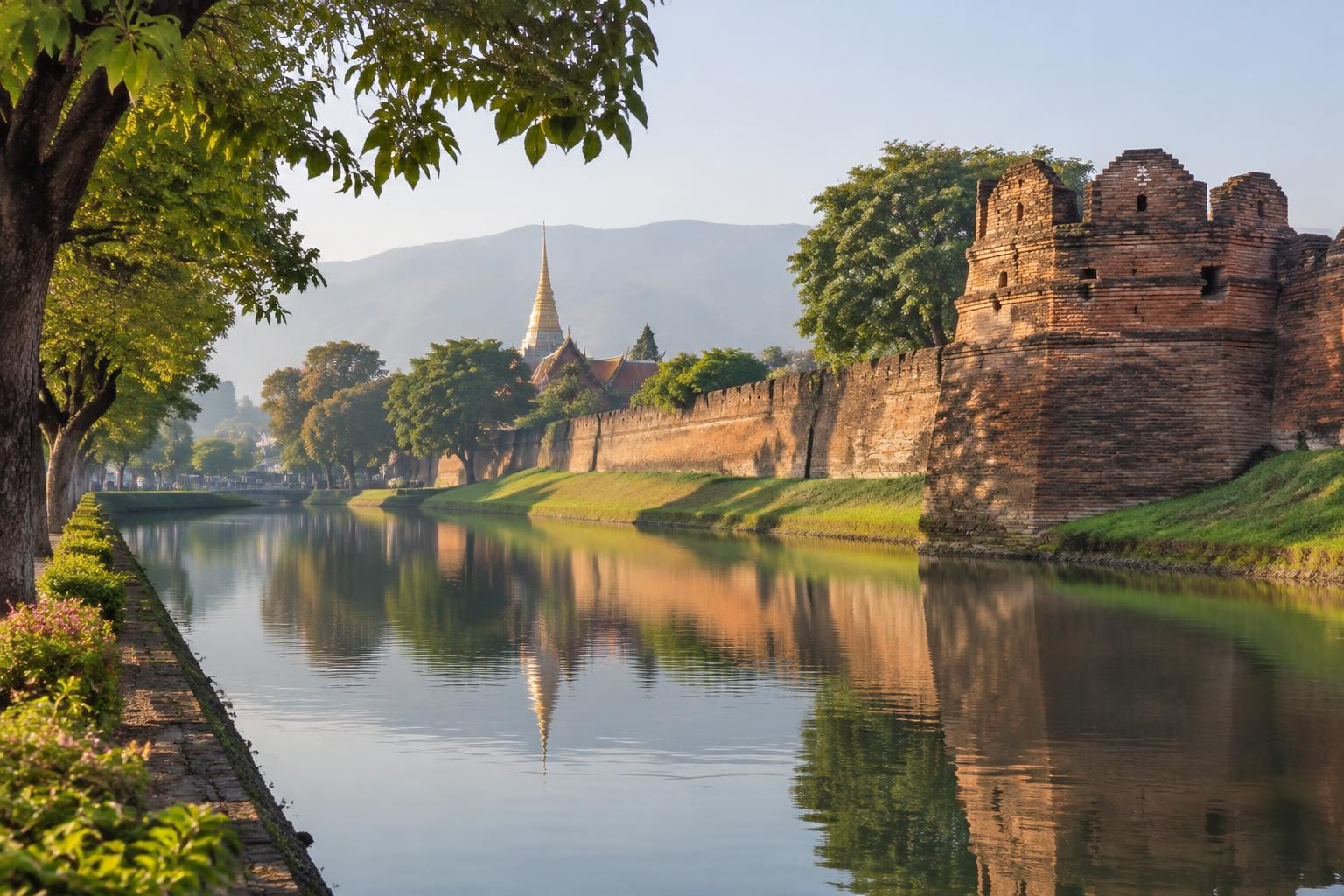
Imagine a first-time visitor named Arun walking through Chiang Mai’s old city. The moat and traces of its walls suggest a historic urban plan, but conversations in markets and activities at neighbourhood temples show that heritage is not confined to monuments.
A visit to Lamphun adds another layer. Rather than treating it as a smaller version of Chiang Mai, Arun can look at its older religious history and see how northern identity grew through connections between places.
The archaeological site of Wiang Kum Kam offers another useful example. Associated with Mangrai and situated south of modern Chiang Mai, it is often described through stories of flooding; archaeological evidence and chronicles help researchers examine how the settlement changed over time.
Stories about a lost city can be memorable, but a dramatic version is not automatically the whole history. Asking who recorded an account, and what physical evidence remains, makes the past more interesting rather than less magical.
Visitors planning a wider journey can find more inspiration for exploring Thailand alongside time spent in local museums and historic neighbourhoods. A knowledgeable local guide can also explain how individual sites connect to the city around them.
The essential insight: Lanna identity grew from a network of places and peoples, and its history is still visible in the language used across the north today.
Kham Mueang and Lanna script: a living northern language
Language gives visitors one of the clearest ways to notice regional identity. Kham Mueang, often called Northern Thai, is spoken across much of the north, although vocabulary, pronunciation and usage can differ between communities and generations.
Many speakers also use Central Thai, particularly in formal settings, education or conversations with people from elsewhere. Hearing a shopkeeper switch between ways of speaking is therefore not unusual; it reflects how people move comfortably between local and national contexts.
For Arun, learning to recognise a few words can turn an ordinary market visit into a richer experience. A familiar greeting or food name may open a friendly exchange, but pronunciation takes practice and there is no need to perform fluency after a few days.
Reading Tai Tham and preserving Lanna literature
The historic Lanna writing system is commonly known as Tai Tham. Its curved characters appear in religious manuscripts, inscriptions and contemporary cultural projects, connecting written language with the region’s Buddhist literary traditions.
Visitors might notice the script on a temple sign or a textile label without being able to read it. Rather than assuming that every older-looking character has the same meaning, it is worth asking a guide or maker what the words actually say.
Not everyone who speaks Kham Mueang reads Tai Tham, and not every encounter with the script represents an unbroken everyday practice. Teaching, research and community initiatives help make it accessible to new learners.
One resource is Moradok Lanna, a non-profit knowledge centre founded by Ajarn Jaree Soontornsing. Based in Chiang Mai, it brings together material on the language, script, customs and literature of the old northern kingdom.
Its Lanna–Thai dictionary contains more than 17,000 words. Entries show the Lanna script, a reading and a Thai definition, giving learners a way to connect spoken vocabulary with its written form.
An English search tool can help visitors begin with a familiar word or an approximate sound. English meanings marked as AI drafts have not necessarily been checked by a person, so the Thai dictionary remains the main reference for definitions.
The project also offers English articles and learning activities, including a script quiz and a matching game. A digital board allows users to write in Thai, English and Lanna script, which can make classroom practice or collaborative learning more approachable.
Its articles provide a useful model for reading local stories carefully. Discussions of places such as Wiang Kum Kam separate chronicles, archaeological work and later retellings instead of presenting every colourful detail as established fact.
Why does this matter to someone staying only a few nights? A name on a menu or a phrase heard at a reception desk becomes more meaningful when it is understood as part of a language used and cared for by real communities.
The essential insight: learning even a little about northern speech makes it easier to see cultural knowledge as something people maintain, not just something displayed on a sign.
Lanna architecture, Buddhist temples and local beliefs
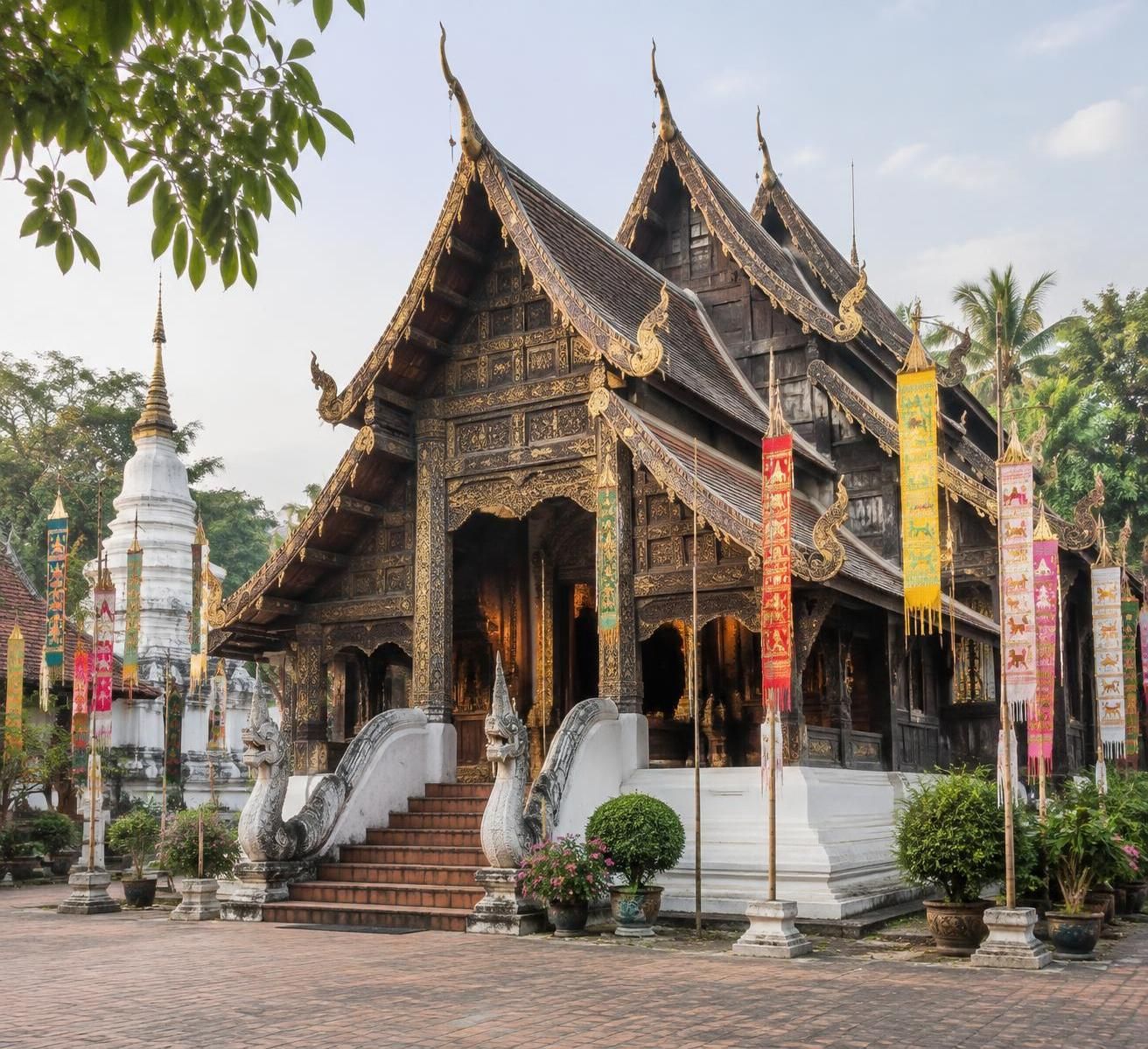
Lanna architecture is especially visible in the region’s Buddhist temples, where steep or layered roofs, carved wooden details and richly decorated interiors create a distinctive visual language. Styles vary by place and period, so no single feature defines every northern temple.
A temple visit is most rewarding when the building is understood as an active community space. Monks may be attending to daily routines, neighbours may be making offerings, and families may have come to mark an occasion rather than to admire architecture.
In Chiang Mai, Wat Phra Singh provides an opportunity to observe northern religious art within a well-known temple complex. Visitors can take time to look at decorative details and ask how the buildings are used, rather than trying to photograph everything at once.
What to notice at a northern Thai temple
The viharn, or assembly hall, is often a good place to begin. Its roof, entrance and interior may all carry ornamentation, but their appearance also reflects practical needs: a sheltered place where people gather around religious images and ceremonies.
A chedi is another important feature in many complexes. These structures hold religious significance, and their shapes can reveal influences from different periods and neighbouring traditions.
Look, too, for tung, the long banners associated with northern religious and ceremonial life. Their materials, patterns and placement vary, and a local explanation can show why a particular banner has been offered.
Lanna religious life cannot be explained through buildings alone. Theravada Buddhism is central to many communities, while local spirit beliefs and protective practices also form part of the regional landscape.
These traditions do not always sit in neat categories for the people who live with them. A household or neighbourhood may participate in Buddhist merit-making while also observing local customs connected with ancestors, place or protection.
Arun can approach these practices with curiosity without treating worshippers as an attraction. If a ceremony is underway, standing quietly at a respectful distance is often more appropriate than moving close for a photograph.
Temple etiquette is straightforward: dress modestly, remove shoes where requested and follow signs or local guidance. Photography rules vary, so permission matters, particularly when monks, worshippers or private rituals are involved.
Small actions also make visits easier for others. Keep pathways clear, speak softly in prayer areas and avoid touching religious objects unless invited to do so.
Travellers looking for more ideas can browse additional Thailand travel inspiration, then check individual temple guidance before visiting. Opening arrangements and access to particular buildings can change around ceremonies.
What might look like a beautiful roof from the street can therefore lead to a more thoughtful question: how does this place serve the people who return to it? The essential insight: architecture becomes meaningful when its community use is seen alongside its craftsmanship.
Northern Thai cuisine and the meaning of a khantoke meal
Northern Thai cuisine is shaped by local ingredients, regional preferences and connections with neighbouring areas. It is often discussed in contrast with food from central Thailand, but variety within the north is just as important as difference between regions.
Sticky rice is a familiar accompaniment to many meals. It can be served with dips, grilled dishes or vegetables, creating a shared table where each person combines flavours in a way that suits them.
One well-known dish is khao soi, a northern noodle curry commonly served with a rich broth, tender meat or another topping, and crisp noodles. Pickled greens, shallots and lime may be offered alongside it, allowing diners to adjust the balance.
Recipes differ between households and restaurants. A bowl that is creamy, sharply spiced or relatively mild can still reflect a local cook’s approach; there is little value in insisting that one version represents every northern kitchen.
Shared dishes, market visits and food etiquette
Another useful introduction is nam phrik num, a dip made with roasted green chillies and other ingredients. It is often eaten with vegetables or pork crackling, making it an approachable way to explore smoky flavours while choosing how much chilli to take.
Sai ua, a northern-style sausage, brings together meat, herbs and spices in another recognisable combination. At a market stall, a small portion can be a practical choice for someone who wants to taste without ordering a full meal.
Not every dish is suitable for every diet. Curries and dips may contain meat, fish sauce or other animal ingredients even when vegetables are prominent, so visitors with dietary needs should ask about preparation rather than relying on appearance.
A khantoke is a low, footed tray used to present shared dishes, and the term is also associated with a style of communal dining. The tray is more than a photogenic object: it helps organise a meal around dishes that guests can reach together.
Some khantoke dinners are offered as cultural performances for visitors, while shared meals also belong to family and community settings. A staged evening can be enjoyable, but it should not be mistaken for the only way northerners eat.
Imagine Arun sitting down with several friends to share rice, a dip, vegetables and a curry. The most useful first step is to notice how the hosts serve themselves, then follow their lead rather than treating the arrangement as a rigid set of unfamiliar rules.
Markets offer a different kind of lesson. A vendor can explain which foods are made that morning, whether a sauce is spicy and how a dish is usually eaten; a polite question is often more helpful than ordering entirely by sight.
For a quick comparison, the table below highlights a few foods and serving traditions that a visitor may encounter.
| Food or tradition | What to expect | Useful question |
|---|---|---|
| Khao soi | Curried noodle dish with varied toppings | How spicy is this version? |
| Nam phrik num | Roasted green chilli dip with accompaniments | What is it served with? |
| Sai ua | Herb-and-spice northern sausage | Is a small tasting portion available? |
| Khantoke | Shared dishes arranged on a low tray | Which dishes are prepared locally? |
The essential insight: asking how food is made and shared gives a visitor a better understanding of the region than searching for a single “authentic” plate.
Lanna festivals and traditional crafts in community life
Northern celebrations and traditional crafts show how heritage is made and renewed through participation. A festival may bring neighbours together around a temple, while a workshop may preserve skills through years of patient teaching and practice.
Among the best-known traditional festivals is Yi Peng, associated with the northern lunar calendar and often linked in visitors’ minds with lanterns. In Chiang Mai, it usually takes place around the same period as Loy Krathong, though the two observances have distinct histories and practices.
Yi Peng can involve temple visits, merit-making, decorations and community gatherings. Images of lantern releases are striking, but they represent only one part of a broader celebration.
Rules governing airborne lanterns can vary by location and year because of safety and environmental concerns. Before taking part, visitors should check current local guidance and avoid assuming that a photograph from a previous festival shows what is permitted now.
Joining northern Thai traditions respectfully
Loy Krathong is associated with floating small decorated offerings on water. If joining an organised activity, choose materials and disposal arrangements recommended locally, and remember that crowded riverbanks require care for both people and the surrounding environment.
Songkran, the Thai New Year period in April, also has meaningful northern expressions. Alongside the better-known water festivities, families and communities may visit temples, make merit and show respect to elders.
These quieter practices help explain why the celebration is more than a street party. For residents, it can be a time to reconnect with relatives and take part in rituals that carry personal as well as religious significance.
Arun might enjoy the excitement of a festival while making room for the people who call the neighbourhood home. Asking before photographing a family ritual, avoiding blocked entrances and following instructions at temple grounds are simple ways to participate with care.
Outside festival season, workshops and markets offer another window into Thai traditions. Northern makers work in fields including weaving, woodcarving, silverwork and ceramics, with techniques and designs varying by community.
A handwoven textile is not only a pattern to compare against a price tag. Its materials, production time and maker’s knowledge all affect its value, and a respectful conversation may reveal whether the piece was made locally or sourced from elsewhere.
The same care applies to carved wood or silver objects. Instead of assuming that every item sold in a tourist market was handmade nearby, a buyer can ask where it was produced and who made it.
At a weaving demonstration, Arun can observe how a repeated pattern takes shape through many individual movements. That practical experience makes a finished cloth easier to appreciate and helps distinguish skilled work from a mass-produced souvenir.
When visiting a workshop, ask before taking close-up photographs or recording a maker’s process. Buying directly where possible, paying the stated price fairly and allowing artisans to work without interruption can make an encounter more beneficial for everyone.
The essential insight: festivals and crafts are strongest when visitors notice the people, skills and community responsibilities behind what they see.