
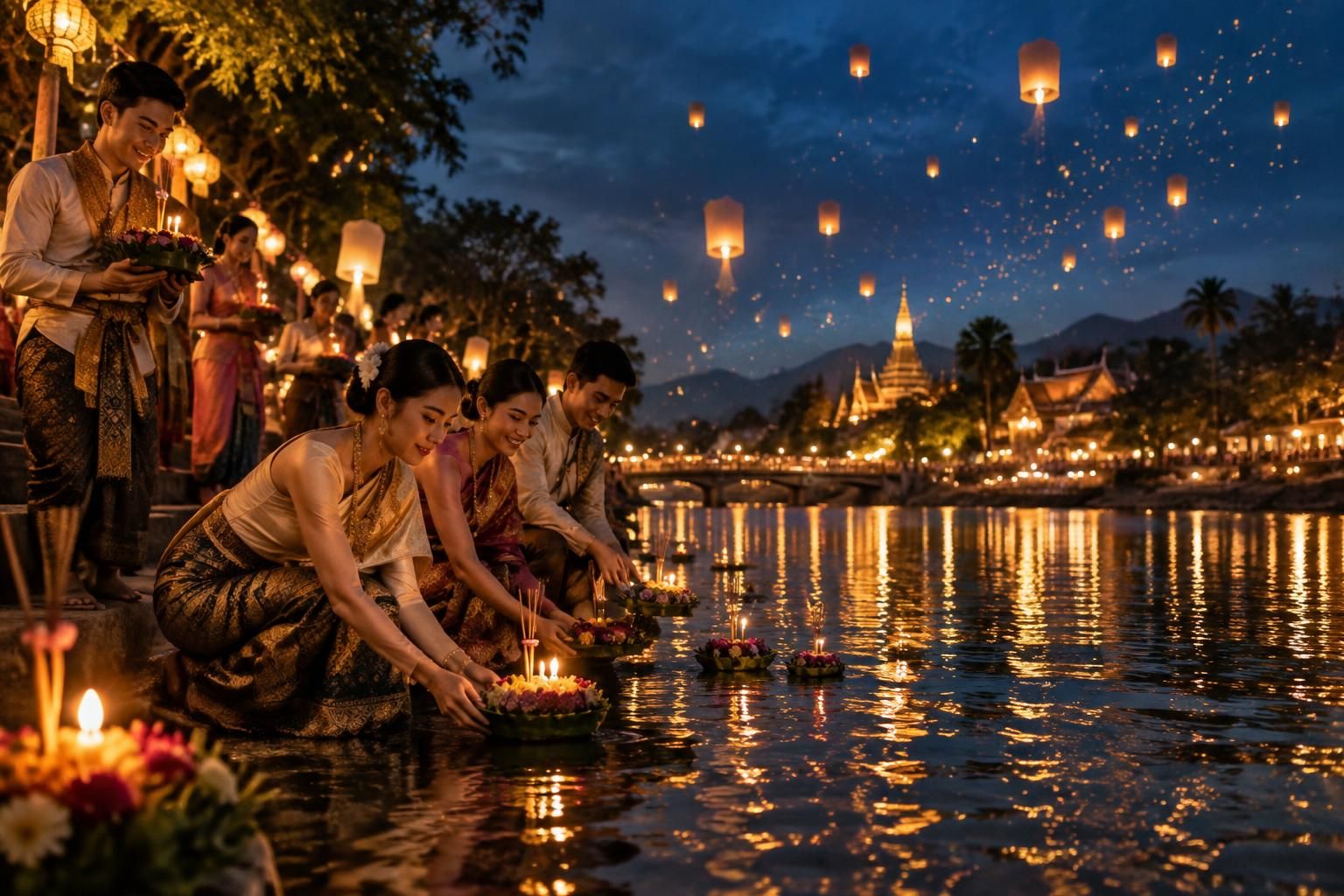
As dusk settles over Chiang Mai, candlelit offerings drift along the Ping River while paper lanterns brighten temple courtyards and the old city walls. These scenes belong to two distinct traditions: the Loy Krathong Festival, celebrated across Thailand with offerings floated on water, and the Yi Peng Festival, a Northern Thai Lanna celebration associated with lanterns, merit-making and light.
For visitors, understanding the difference makes planning much easier. Public streets, temples and riverbanks offer plenty to explore without an admission ticket, while large, coordinated Sky Lanterns releases generally take place at paid events outside the city. Rules governing releases can change, and a lantern sold on a street is not necessarily legal to launch there.
In 2026, festival travel centers on 24 and 25 November, with the full-moon night falling on 24 November. Crowds, road closures and fireworks are part of the experience, but a thoughtful plan leaves room for quieter moments too: a temple visit before sunset, a handmade offering from a local seller, or a slow walk beside the river.
At a glance
- Dates: Plan around 24–25 November 2026 and check the local program for confirmed event times.
- Free celebrations: Explore the Old City, Tha Phae Gate and the Ping River without buying a festival ticket.
- Sky lanterns: Use only officially authorized locations or permitted events.
- Best base: Stay near the Old City or Tha Phae Gate for convenient walking access.
- Allow two evenings: Spend one in the city and another at an authorized event if a large lantern release is a priority.
Yi Peng and Loy Krathong in Chiang Mai: Meaning and Traditions
The two festivals overlap, but they are not different names for the same occasion. Knowing what each one celebrates helps visitors choose experiences that feel meaningful rather than chasing an image that may belong to another part of the festivities.
Loy Krathong is observed throughout Thailand around the full moon of the twelfth month in the traditional Thai lunar calendar. Its best-known practice is placing a krathong, a small decorated float, on water.
Flowers, folded banana leaves, a candle and incense often decorate these offerings. For many participants, the act expresses gratitude to water, asks forgiveness for its misuse or offers a symbolic way to leave troubles behind.
Yi Peng is rooted in the Lanna traditions of Northern Thailand. Its celebrations include illuminated temples, hanging lanterns, candles and acts of Buddhist merit-making; the release of hot-air paper lanterns is only one part of a broader cultural occasion.
Some people associate a rising lantern with releasing misfortune or carrying a wish into the future. Meanings vary between families and communities, so it is best to see these explanations as living traditions rather than a single universal rule.
Water Offerings and Lantern Light
| Feature | Loy Krathong | Yi Peng |
|---|---|---|
| Tradition | Celebrated across Thailand | Associated with Northern Thai Lanna culture |
| Distinctive sight | Decorated floats on water | Lanterns, candles and illuminated temples |
| Common setting | Rivers, canals and other approved waterways | Temples, streets and authorized event sites |
| Typical cost | Public celebrations are generally free | Public decorations can be enjoyed freely; large organized releases often require tickets |
Consider Maya, a fictional first-time visitor who arrives expecting every glowing object to be part of one event. At a temple, she sees lanterns hanging overhead; later, beside the Ping River, she watches Floating Krathongs carry candlelight downstream.
Both scenes are festive, but they invite different kinds of participation. At the temple she can observe decorations and ceremonies respectfully; by the water she can learn about the offering before deciding whether to float one herself.
The distinction matters for practical reasons as well. A free walk through the historic center does not guarantee a synchronized sky release, and a ticket for an organized release does not replace time spent exploring the public celebrations.
Dates follow lunar calendars, so they move from year to year. For the 2026 November Celebrations, build plans around 24 and 25 November, while checking official Chiang Mai announcements for parade routes, ceremony times and approved release areas.
Festival schedules may appear closer to the event, and individual venues can have different opening hours. Travelers who leave a little flexibility in the evening are better placed to enjoy a ceremony without rushing toward the next attraction.
What makes this combination special is not simply the contrast between water and sky. It is the chance to encounter several expressions of Thai Culture in one city, from family offerings to Lanna lantern displays, before deciding where to spend the busiest evening.
Where to Experience Loy Krathong in Chiang Mai
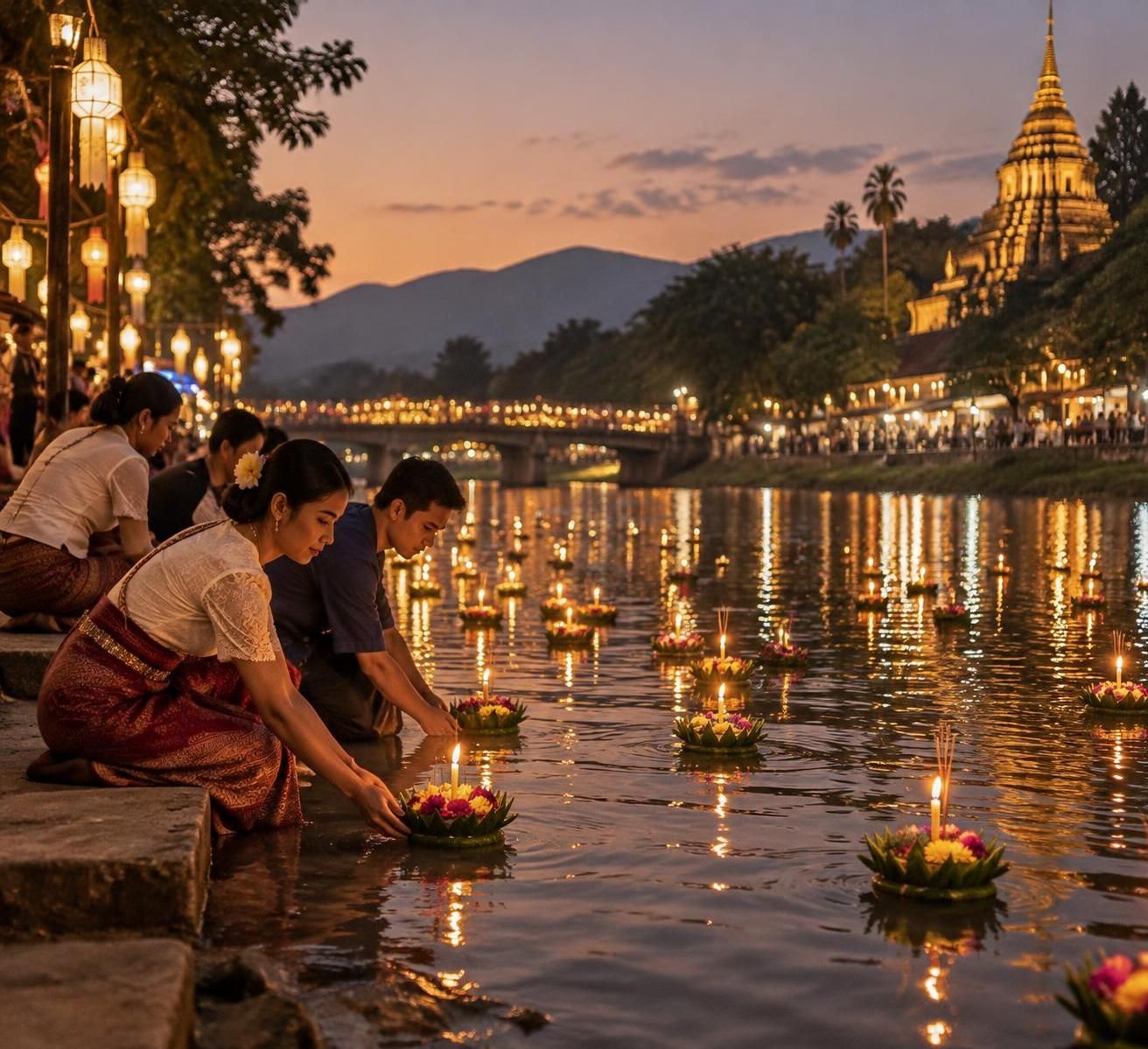
A first evening can unfold as a walk from the Old City toward the Ping River. The route brings together temple decorations, street food, public performances and the water offerings that give the festival its distinctive atmosphere.
Start before sunset, when there is enough daylight to find landmarks and notice the details of the decorations. As the evening progresses, the same streets become busier and more dramatic, with candles and lanterns standing out against the dark.
Tha Phae Gate and the Old City
Tha Phae Gate is a useful meeting point and a frequent focus of festival activity. Depending on the published program, visitors may encounter decorated floats, performances or processions in and around the area.
There is no need to schedule every minute here. Maya, for example, could begin with a slow circuit of the gate, choose a nearby food stall and then follow the flow of pedestrians east instead of trying to catch every performance.
Inside the historic center, look for illuminated walls, decorated courtyards and smaller streets leading to temples. These places can feel more intimate than the riverfront, although popular religious sites also become crowded.
Wat Lok Moli, just north of the Old City, is known for its atmospheric lantern decorations during the festival. Check access arrangements locally, cover shoulders and knees, and remember that worshippers may be visiting for religious observances rather than sightseeing.
The area around the Three Kings Monument is another place to look for candles and cultural performances when they appear on the official program. Arriving early gives visitors a better chance to appreciate the setting before the busiest crowds gather.
The Ping River and Nawarat Bridge
The Ping River is the central choice for seeing krathongs on the water. Vendors often sell handmade offerings nearby, while families and groups gather along appropriate access points to light candles and make their wishes.
Nawarat Bridge offers views across the water and both banks, but it can become extremely congested. Anyone who finds dense crowds uncomfortable can enjoy a different perspective by moving along the riverbank, following barriers and local instructions.
Fireworks and firecrackers may add excitement but can also be startling, especially for young children or anyone sensitive to noise. Earplugs, a planned meeting point and an early exit route can make the evening much more comfortable.
For a smaller-scale change of pace, consider Mae Kha Canal if decorations and access are confirmed locally. Its walkways, small bridges and nearby food stalls offer a different setting, though narrow paths can still become busy.
Photography is often rewarding around sunset and blue hour, when the remaining daylight reveals architecture as candles begin to glow. Keep walkways clear, ask before photographing people closely and avoid blocking families who are taking part in a ritual.
Public celebrations can be enjoyed without an expensive package, making the city route suitable for travelers with different budgets. The main expense might be a snack, a drink or a simple krathong, rather than an entrance fee.
Choose one or two areas rather than racing across town for every possible sight. A relaxed city evening makes it easier to appreciate the festival on the ground and leaves energy for a separate lantern event if that is also on the itinerary.
Walking footage can help visitors recognize the scale of the crowds and the distance between festival areas, but the official program remains the best source for current routes and access arrangements.
Chiang Mai Sky Lanterns: Authorized Yi Peng Events and Tickets
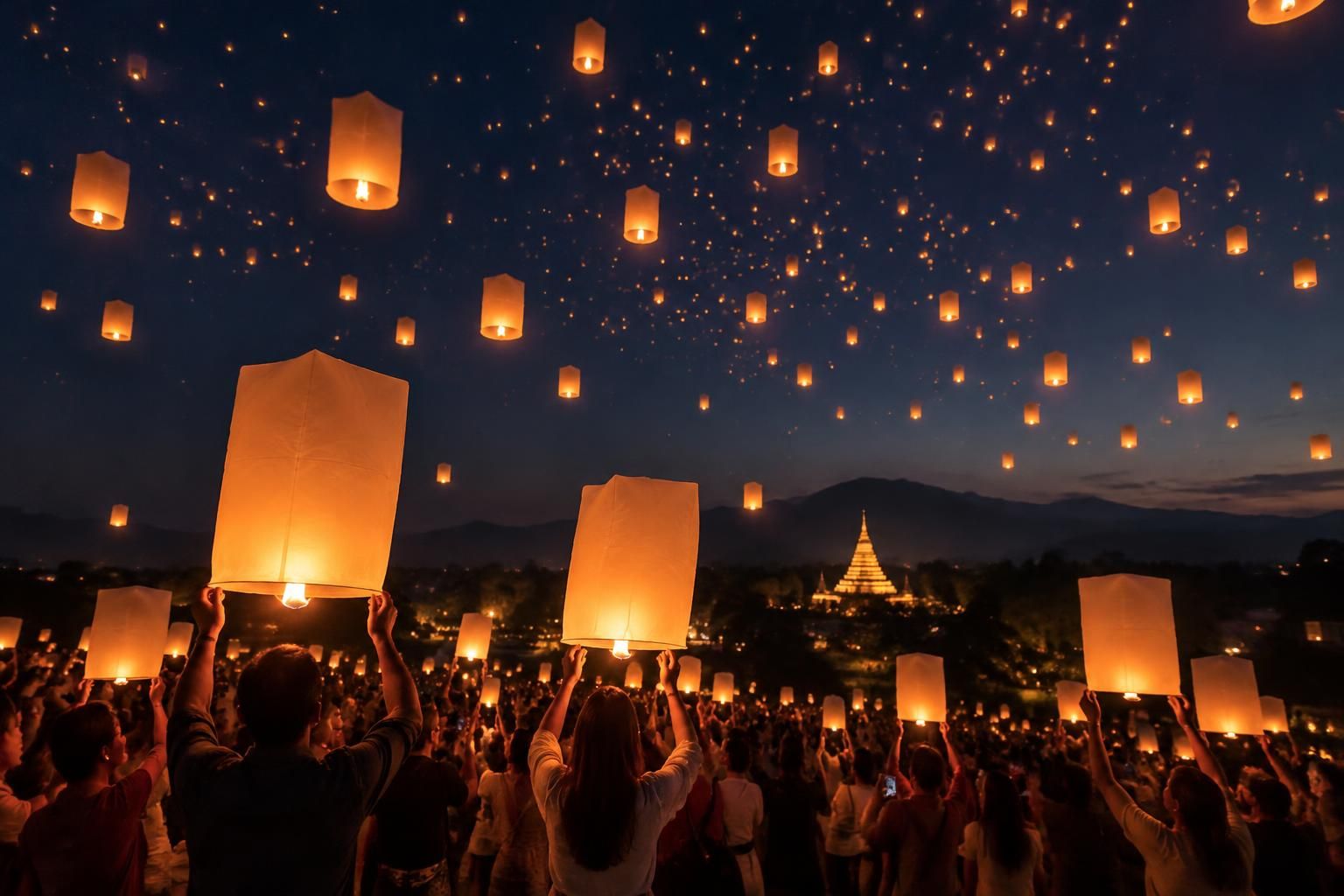
Images of hundreds of lanterns rising together are closely associated with the Chiang Mai Lantern Festival. That scene usually requires more planning than an evening walk through the city, because sky releases are regulated for safety.
Chiang Mai International Airport is close to the urban area, and airborne lanterns can create risks for aircraft. They can also cause fires or leave debris when they come down, which is why visitors should follow provincial rules and event-specific instructions.
Buying a lantern does not make it legal to release one. Older travel accounts may describe launches near bridges or temples, but those experiences should not be treated as permission to repeat them under current rules.
If taking part matters more than simply seeing decorations, look for an officially authorized event or location and verify the permitted dates and times. Do not launch a lantern independently in the Old City or assume a crowd has permission to do so.
Doi Saket and Organized Lantern Releases
Doi Saket, east of Chiang Mai, has hosted memorable gatherings where visitors have watched many glowing lanterns rise together. A previous event does not guarantee that the same public release will take place again at the same site.
Before arranging transport there, check provincial announcements and the festival program for a specifically authorized gathering. If one is confirmed, arriving in the afternoon can provide time to find the venue, eat and understand the departure arrangements before dark.
For a more structured option, the CAD Khomloy Sky Lantern Festival is among the better-known ticketed events outside the city. Its advertised 2026 dates are 24 and 25 November, but visitors should verify availability, permissions and the latest schedule directly with the organizer before paying.
Packages may include transport, food, cultural activities and a coordinated release. The precise inclusions depend on the ticket category, so compare the meeting point, transfer arrangements, seating, cancellation terms and any additional charges rather than choosing solely by the most attractive photograph.
Published categories have ranged from approximately 4,900 to 15,900 Thai baht, depending on the package. Treat those figures as planning references, not guaranteed prices, and check the organizer’s current listing before booking.
Imagine Maya has two evenings available and a limited budget. If her priority is local atmosphere, she can spend both nights exploring public celebrations; if a coordinated release is the reason for her journey, she can reserve one evening and enough money for a permitted event.
A ticket provides a designated setting, not a promise of a perfectly smooth evening. Large gatherings can involve queues, weather changes and slow departures, so comfortable shoes, water and patience are useful even when transport is included.
At the venue, listen carefully to staff instructions and avoid lighting or handling anything outside the designated procedure. Travelers who prefer not to release a lantern can still appreciate the ceremony and performances, subject to the event’s ticket conditions.
Environmental considerations deserve attention too. A release may be authorized and still generate falling material, so visitors who prefer a lower-impact experience can choose hanging lantern displays and temple decorations instead.
The central question is not whether a paid event is necessary for everyone. It is whether a particular, permitted sky release matters enough to justify its cost, travel time and environmental trade-offs.
Where to Stay and How to Get Around Chiang Mai During the Festivals
Location becomes especially valuable when roads are crowded and some routes close for processions. A room within walking distance of the places visitors most want to see can reduce both transport costs and the pressure of finding a ride late at night.
The Old City suits travelers who want temples, historic streets and a choice of hostels and guesthouses close at hand. Some lanes are quieter than others, so check the property’s location and recent reviews if sleep is a priority.
Near Tha Phae Gate, accommodation puts visitors between the historic center and the route toward the river. This is practical for a first visit, though central convenience can come with higher prices and lively streets.
The area between Tha Phae and the Night Bazaar is another useful base. It can offer access to restaurants and the Ping River while keeping much of the festival within a manageable walk.
Choosing a Room for a Busy November
Book several months ahead when travel dates are fixed, especially for a private room in a convenient location. Festival demand can remove the best-value options long before the public program is finalized.
Compare the complete booking terms, not just the nightly rate. A slightly more expensive room with a flexible cancellation policy may be worthwhile if a parade route changes or an event ticket does not become available.
Hostel guests should check whether reception is staffed late, whether luggage storage is available and how shared rooms are arranged. Travelers attending an event outside town may return after midnight, so knowing the entrance procedure prevents an awkward end to the evening.
Maya, for example, might choose a guesthouse near the eastern edge of the Old City. She can walk to Tha Phae Gate, return to collect a warmer layer and then continue toward the river without depending on a car in the busiest streets.
Travelers seeking more comfort can compare hotels near the gate, in the Old City or around Chang Khlan. Properties mentioned in festival planning include ON Thapae, El Barrio Lanna and Maladee Rendezvous; check their exact locations, current rates and suitability before booking.
Walking, Transfers and Late Returns
Walking is often the simplest option for short central journeys, provided visitors wear comfortable shoes and follow temporary pedestrian routes. A map downloaded in advance helps when mobile data slows under heavy demand.
For longer trips, ride-hailing services, taxis and songthaews can be useful, but normal journey estimates may not apply. Agree on the fare where appropriate, confirm the pickup point and leave extra time around road closures.
For a ticketed event outside town, an included official transfer is often easier than arranging a separate journey. Check whether the return goes to the original meeting point and whether the shuttle waits for all guests or departs in stages.
Renting a scooter solely for a crowded festival evening can add unnecessary stress. Anyone who does ride should already be experienced on Thai roads, hold the required licence and permit, wear a helmet and avoid riding after drinking.
When thousands of attendees leave a venue together, the return to the city can be slow regardless of transport. A saved hotel address, charged phone and clear meeting point help keep a long journey manageable.
Choosing accommodation around the places that matter most turns geography into an advantage. With the practical base settled, visitors can spend less time negotiating traffic and more time participating thoughtfully.
Videos of previous celebrations can be useful for understanding venue layouts and crowd levels; transport details and release permissions should always be checked for the specific event being booked.
Planning a Respectful Two-Night Festival Visit in Chiang Mai
Two evenings allow room for both the city celebrations and a separate authorized lantern event without forcing everything into one crowded schedule. A stay of at least three nights also gives visitors time to arrive, settle in and explore during daylight.
On the first evening, begin near the Old City before sunset. Visit a decorated temple, continue toward Tha Phae Gate and walk east toward the Ping River, adjusting the route to match the confirmed program and any road closures.
Leave enough time to stop for food and observe rather than treating every landmark as a checkpoint. If the bridge is too crowded, a quieter stretch of riverbank may be a better choice than waiting for a perfect photograph.
On the second evening, attend a permitted event if a large release is important. Confirm the pickup location beforehand, carry the ticket offline and allow for a late return; travelers who prefer not to book can spend another evening exploring public decorations and performances.
Making or Choosing a Krathong
Street sellers often offer small handmade floats near festival areas. A simple example made from banana trunk, leaves and flowers can support a local craftsperson while avoiding obvious plastic or foam components.
Prices vary with size, materials and location. Smaller krathongs have previously sold for roughly 30–50 baht, but that is only a historical reference; check the price before buying rather than expecting a fixed amount.
Natural materials are preferable to plastic, yet even biodegradable offerings add material to waterways and require cleanup. One krathong shared by a couple or family can express the spirit of the ritual while reducing the number placed in the river.
Some hotels, restaurants and community workshops offer opportunities to make an offering. These sessions can help visitors understand the folding and decoration involved, provided they also discuss responsible materials and where floating is permitted.
At the water, follow local guidance, use designated access points and keep clear of steep or slippery edges. There is no obligation to participate: watching respectfully is also a valid way to experience the tradition.
Comfort, Temple Etiquette and Family Travel
Lightweight clothing is practical for walking, while a layer or scarf can help visitors cover shoulders when entering a temple. Knees should also be covered in religious spaces, and shoes should be removed where required.
Keep voices low around ceremonies and avoid interrupting worshippers for photographs. A small pause to understand what is happening often reveals more than rushing into a courtyard with a camera raised.
Families traveling with young children may prefer an earlier visit to decorations and food stalls, followed by a departure before the densest crowds. Choose a meeting point, keep children away from water edges and consider ear protection where fireworks are expected.
Carry small cash for vendors, drinking water, a power bank and a saved address for the return journey. A modest supply of patience is useful too: mobile networks can slow, queues may form and the evening rarely follows an exact timetable.
Daytime hours offer a different view of Chiang Mai through a cooking class, a market visit or a trip to a temple. Booking popular activities early and keeping the afternoon before a major event relatively free can prevent festival fatigue.
For Maya, the most comfortable plan is not the one with the greatest number of stops. It is the one that leaves space to understand a local tradition, navigate the crowds safely and return to her accommodation without feeling rushed.