
At a glance
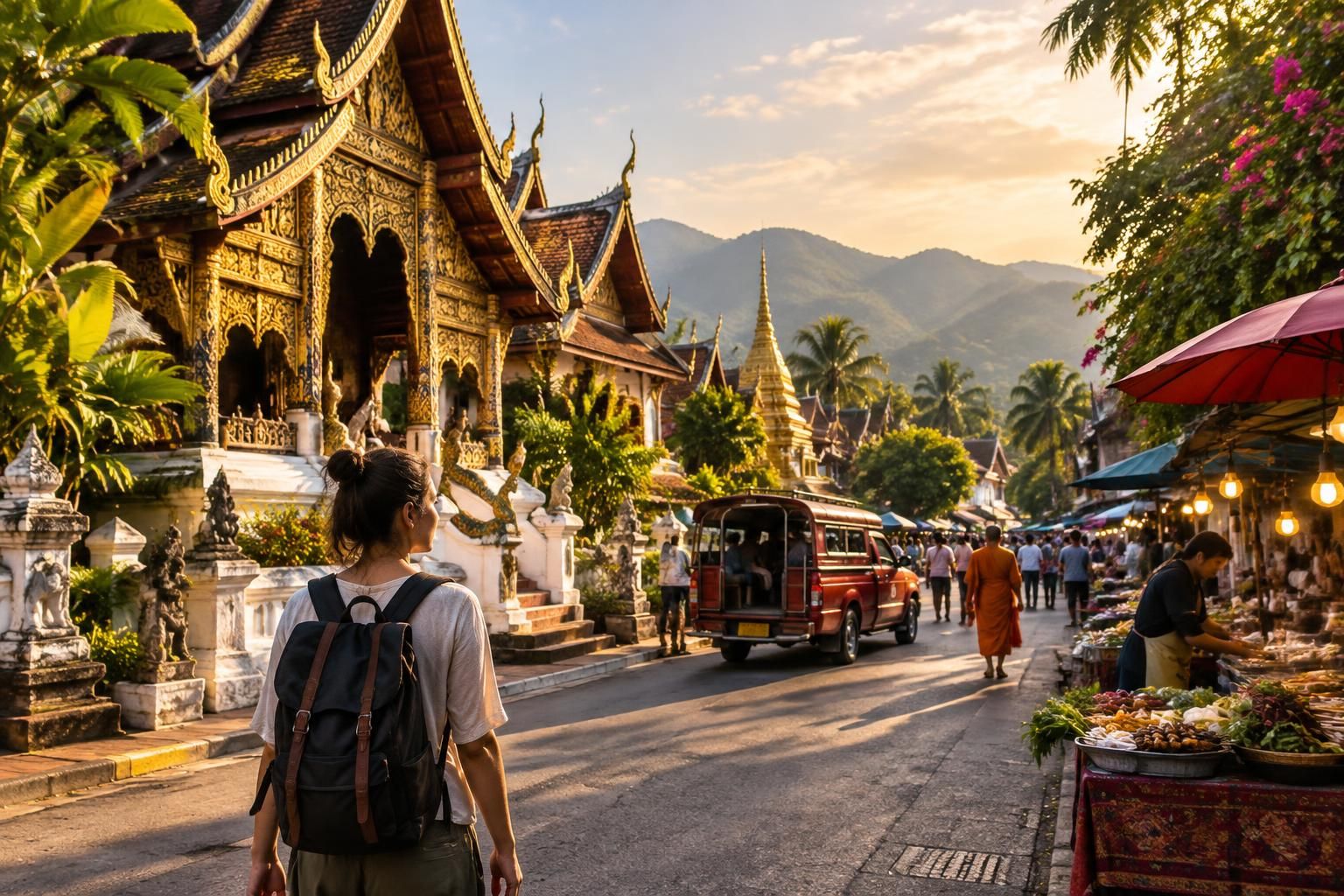
- Day 1: Explore the Old City, historic temples and the Chiang Mai Night Bazaar.
- Day 2: Visit Doi Suthep in the morning and spend the afternoon around Nimman.
- Day 3: Choose an elephant sanctuary or another nature trip, then enjoy a relaxed evening in town.
- Getting around: Walk within the Old City and use Grab or a songthaew for longer journeys.
- When to go: November to February generally brings cooler weather, although air quality and conditions can change.
Day 1 in Chiang Mai: Old City temples, local food and the Night Bazaar
Start the morning among Chiang Mai’s historic temples
Begin inside the moat that marks the edges of Chiang Mai’s Old City. Founded in the late 13th century as the capital of the Lanna Kingdom, this compact historic centre still holds fragments of its walls and gates, alongside neighbourhoods where residents go about their daily routines.
Early morning is a comfortable time to walk, before the heat builds and tour groups arrive. Travellers may see monks collecting alms; give them space and observe quietly rather than treating the ritual as a photo opportunity.
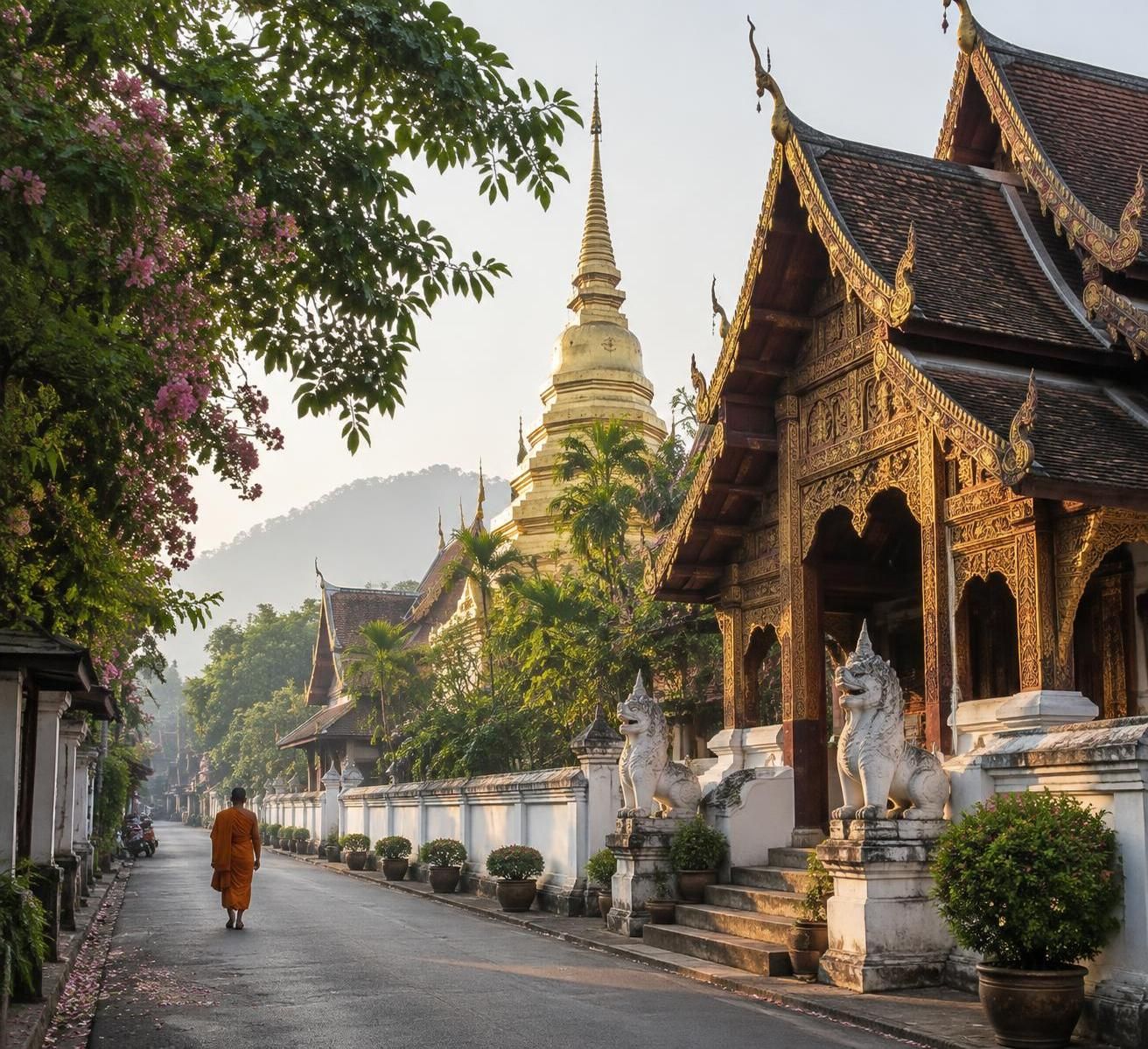
Start at Wat Phra Singh, a 14th-century complex celebrated for its Lanna-style architecture and the revered Phra Buddha Sihing image. Its layered roofs, carved details and peaceful courtyards reward a slow look, particularly when the morning light reaches the buildings.
Continue towards Wat Chedi Luang, whose monumental, partly ruined chedi once housed the Emerald Buddha. Nearby Wat Phan Tao offers a different atmosphere, with a dark teak prayer hall and a more intimate scale.
For travellers Alex and Sam, following this west-to-east route leaves room to pause at smaller shrines instead of rushing through a long checklist. Temple opening times and entry charges can change, so check current information locally before setting out.
These are active religious spaces as well as cultural landmarks. Wear clothing that covers shoulders and knees, remove shoes where requested, and check whether photography is permitted inside individual buildings.
Try northern Thai cuisine around the Old City
By lunchtime, seek out khao soi, a northern Thai curry noodle soup typically served with soft noodles, crisp noodles and condiments. Lime and pickled greens add brightness to the rich broth, while chilli can be added according to taste.
Khao Soi Khun Yai, near Chang Phuak Gate, is a well-known choice for the dish; Huen Phen is another option for exploring a broader range of northern flavours. Restaurant schedules may change, so it is sensible to have a second choice saved on a map.
Vegetarian travellers should ask about the ingredients rather than assuming a vegetable dish contains no animal products: curry pastes, stocks and sauces can include fish or meat. A translation app can help communicate dietary needs clearly and kindly.
After lunch, walk towards Tha Phae Gate and follow Ratchadamnoen Road through independent shops, cafés and more temples. A short stop for iced coffee or fruit gives tired feet a break and makes the afternoon feel less like a race between landmarks.
Spend the first evening at Chiang Mai Night Bazaar
East of the Old City, the Night Bazaar is a convenient first encounter with Chiang Mai’s night markets. Browse clothing, crafts and small souvenirs, then move between food stalls for grilled skewers, noodles or a fresh fruit drink.
Not every item is locally made, so ask sellers about materials and origin when buying a special gift. If the crowds feel overwhelming, choose a nearby restaurant or food court instead; a quieter meal can be just as rewarding after a day on foot.
For a different evening, check a local Muay Thai venue’s current programme and ticket prices before booking. Whether the night ends with a market snack or a sporting event, keeping the schedule flexible leaves energy for the mountain journey tomorrow.
Day 2 in Chiang Mai: Doi Suthep, mountain views and Nimman cafés
Visit Wat Phra That Doi Suthep before the crowds
Set out early for Wat Phra That Doi Suthep, the celebrated temple on the mountain west of Chiang Mai. The journey is roughly 15 kilometres from the city, although travel time depends on traffic, weather and the route taken.
A shared songthaew, a Grab car or an organised half-day excursion can take visitors up the winding road. Agree on the fare and return arrangements before departure if hiring a driver, particularly when the price depends on sharing with other passengers.
At the entrance, the long staircase bordered by naga figures leads towards the temple complex. A lift is available for travellers who would rather avoid the climb, though it is worth checking its current operation and accessibility requirements before setting out.
Inside, golden structures and prayer halls surround spaces used for worship. The terraces can offer expansive city views, but visibility varies with mist, rain and air pollution; the temple’s architecture remains compelling even when the skyline is hidden.
Arriving early gives Alex and Sam time to look around without squeezing the visit between meals. They can also avoid making the journey during the hottest part of the day, an advantage on a short trip where comfort helps preserve momentum.
Add a forest stop or return for a slower lunch
Travellers with extra time can explore more of the surrounding area, including Wat Pha Lat, a quieter temple set among trees on the mountain. Some visitors hike there, but trails can be steep or slippery and conditions change with the season.
Choose footwear with grip, carry water and check the route before walking. A driver can be a better option for anyone who prefers not to manage uneven ground or who wants to save time for the afternoon.
Back in town, head towards Nimmanhaemin, often shortened to Nimman. This contemporary neighbourhood is known for coffee shops, small galleries and boutiques, giving the day a different rhythm from the historic centre.
For lunch, consider a northern Thai restaurant such as Tong Tem Toh and look for dishes featuring herbs, chilli and regional spices. Sai ua, a fragrant northern sausage, is one option for meat eaters; ask about alternatives if travelling with dietary restrictions.
Explore Nimman’s side streets and evening scene
The neighbourhood rewards wandering beyond its main road. Side streets, known locally as sois, contain coffee roasters, dessert shops and independent stores, so pick one or two places that appeal rather than trying to cover every block.
A café stop can be a welcome reset after the mountain road, especially for anyone sensitive to heat or motion. Browse local design shops afterwards, then return to the accommodation for a swim or rest if the evening will run late.
For dinner, choose between casual Thai restaurants and international menus. Bars and live-music venues give the area an energetic side, while quieter restaurants offer a gentler alternative for travellers who would rather talk than compete with a soundtrack.
Before leaving, check the location and opening hours of any venue that looks appealing: businesses can move or alter their schedules. A balanced second day combines the mountain’s religious heritage with the everyday creativity of a modern neighbourhood, leaving the final day open for nature or hands-on learning.
Day 3 in Chiang Mai: elephant sanctuary visits, nature and local life
Choose a wildlife visit that puts elephants first
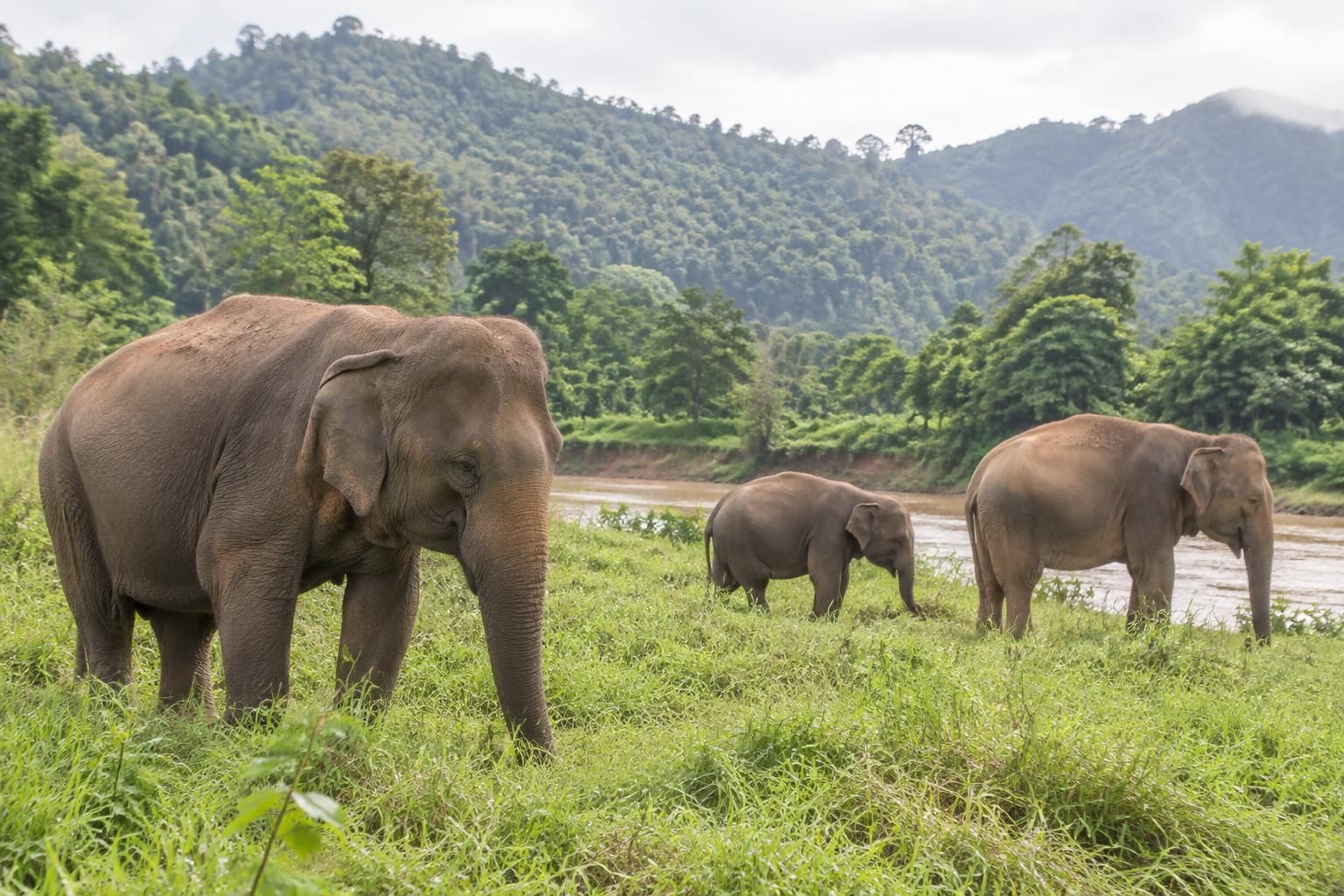
For a full day beyond the city, consider visiting an elephant sanctuary that prioritises observation and animal welfare. Elephant Nature Park is a rescue and rehabilitation centre offering visitor programmes; check its current activities, availability and transport arrangements directly before booking.
Look for programmes that avoid riding, performances and forced interaction. A responsible visit gives elephants space to move and make choices, while guides explain the animals’ backgrounds and the challenges involved in their care.
Labels alone are not enough to establish good welfare. Ask whether bathing or feeding requires close contact, how group sizes are managed and whether an animal can leave an interaction; choose an observation-focused programme when possible.
Many organised visits include city transfers, which can make an early start easier. Confirm pickup details, what to bring and the expected return time, since a full-day programme can leave little room for an afternoon class or a second excursion.
For Alex and Sam, booking ahead also helps avoid a stressful search on their final morning. Comfortable closed shoes, sun protection, insect repellent and a refillable water bottle are useful, while a light rain layer is sensible in wetter months.
Consider a waterfall or cooking class instead
Wildlife visits are not the only way to spend day three. Bua Tong Waterfall, often called the Sticky Waterfall, is a nature-focused alternative north of the city; its mineral-coated rocks can provide unusual grip underfoot.
Grip does not eliminate risk: surfaces, water flow and weather conditions vary, and some sections are steep. Follow local guidance, use designated routes and avoid climbing if conditions or personal mobility make the activity unsuitable.
Arrange transport in advance and discuss waiting time and the return journey with the driver. The waterfall is better treated as an alternative to a full-day sanctuary trip than as an extra stop squeezed into an already demanding schedule.
Travellers who prefer to stay closer to town can book a Thai cuisine class instead. Many schools combine a market visit with practical cooking, introducing ingredients such as lemongrass, chilli, herbs and coconut milk before participants prepare and eat their dishes.
Ask in advance about vegetarian menus, allergies and the amount of time spent standing. A half-day class can pair comfortably with a slow morning, while an evening session may suit a shorter excursion that returns early.
Make room for a gentle final evening
If there is time before dinner, Buak Hard Public Park in the southwest corner of the Old City is a pleasant place to sit in the shade. Riverside cafés near the Ping River offer another restful setting for a late lunch or a cool drink.
On Sunday, Ratchadamnoen Road hosts the Sunday Walking Street Market, where food vendors, craftspeople and performers fill the route. On Saturday, the walking street around Wua Lai is another option; check current hours locally and arrive early if dense crowds are uncomfortable.
For a cultural evening on another day, look for a Khantoke dinner with northern Thai food and Lanna-style performances. Confirm the programme and seating arrangements beforehand, especially if sitting on the floor is difficult.
These cultural experiences work best when they are chosen for interest rather than added out of obligation. Leave enough time to enjoy the evening and prepare for the onward journey without turning the last night into another logistical exercise.
Getting around Chiang Mai during a 3-day itinerary
Walk the Old City and plan for heat
The Old City’s compact layout makes walking practical for many temple visits, meals and café stops. Streets are broadly flat, but pavements can be uneven or interrupted, and crossing busy roads around the moat requires attention.
Plan longer walks for early morning or late afternoon when possible. Carry water and sun protection, and use a car for the hottest part of the day if energy levels drop; a short ride can be a sensible comfort choice rather than a failure to explore.
Map routes before leaving accommodation and save key destinations, including the hotel, in an app that can be accessed offline. Showing a driver a pinned location can be easier than relying on pronunciation, particularly when a business has several branches.
A simple route also reduces unnecessary backtracking. For example, Alex and Sam can visit the western temples first, move east towards Tha Phae Gate and then take a short ride to the Night Bazaar instead of repeatedly crossing the city.
Use songthaews, Grab and local taxis
Songthaews are red pickup trucks adapted to carry passengers. Some operate as shared taxis with flexible routes: flag one down, tell the driver the destination and ask the fare before getting in.
A quoted price may be per passenger, while hiring the vehicle privately costs more. For a mountain trip, establish whether the fare covers waiting time and the return journey; the cheapest-looking quote is not helpful if the details remain unclear.
Grab offers another convenient option for door-to-door journeys, with a fare displayed in the app before booking. Prices fluctuate with demand and traffic, so check the live quote rather than treating an older travel guide’s figures as fixed.
| Journey | Practical option | What to check |
|---|---|---|
| Between Old City temples | Walking | Heat, road crossings and comfortable footwear |
| Old City to Nimman | Grab or songthaew | Live app price or agreed fare |
| City to Doi Suthep | Shared songthaew, car or tour | Return transport and waiting time |
| Airport to accommodation | Airport taxi or booked car | Pickup point and total fare |
| Sanctuary outside the city | Programme transfer | Pickup area and return time |
Tuk-tuks are available for short trips, but agree on the full fare before setting off. Travellers considering a motorbike should account for licensing, insurance, helmet use and local traffic conditions rather than renting simply because scooters are common.
Keep travel days comfortable and flexible
Allow extra time for traffic, especially around busy roads and airport transfers. If a flight or onward bus leaves on the third evening, a full-day excursion may create unnecessary pressure; a morning class or shorter city activity is a safer fit.
Families, travellers with limited mobility and anyone carrying heavy luggage may find door-to-door transport particularly useful. Ask accommodation staff about current pickup points and accessibility details, since vehicles and individual sites vary.
Cash remains handy for small purchases and some local transport, even when an app is used for other rides. Keeping a little flexibility in the budget and schedule makes it easier to respond to rain, traffic or a tempting unplanned stop.
Where to stay and when to visit Chiang Mai for three days
Choose an Old City or Nimman base
For first-time visitors who want to walk to temples, cafés and small restaurants, the Old City is a convenient base. Guesthouses, hostels and hotels are spread across its lanes, with different levels of privacy, comfort and price.
Check the exact location rather than relying only on the neighbourhood name. A room near a busy gate may suit travellers who want easy transport and late-night food, while a quieter side street may be preferable for light sleepers.
Hostels can be useful for solo travellers who appreciate shared spaces and help arranging excursions. Before booking, look at recent reviews for noise, air conditioning, locker availability and the distance to the places included in the day itinerary.
Nimman is a good alternative for café culture, shopping and evening dining. It is less convenient for walking between Old City temples, but rides into the centre are straightforward and the neighbourhood is well placed for a mountain excursion.
Accommodation options include ibis Chiang Mai Nimman Journeyhub in the Nimman area and ibis Styles Chiang Mai on Huay Kaew Road. Compare current rates, facilities and exact locations before booking; a property that looks close on a map may still require a ride in the heat.
Travellers Alex and Sam might choose the Old City for their first visit if temples are the priority, or Nimman if a lively café scene matters more. Neither choice requires changing the entire route: the two areas are connected by short car journeys.
Pick the season with weather and air quality in mind
November to February is generally the most comfortable period for sightseeing, with cooler temperatures than the hot season. It is also popular, so reserve accommodation and sought-after activities early, particularly around holidays.
March and April can be very hot, and seasonal smoke can seriously affect air quality and mountain views. Check current air-quality readings and health guidance before outdoor activities, especially if anyone in the group has asthma or another respiratory condition.
The rainy season typically brings greener scenery and regular showers, though rainfall patterns vary. Carry a light waterproof layer, allow for slower road journeys and check trail or waterfall conditions rather than assuming rain will arrive at a predictable hour.
Chiang Mai’s Yi Peng lantern traditions and Loy Krathong celebrations are linked to lunar calendars, so dates change. If a trip coincides with either festival, check official local schedules and rules for lantern releases, and book transport and rooms well ahead.
Prepare for a respectful, manageable visit
Pack breathable clothing, comfortable shoes and an outfit that covers shoulders and knees for religious sites. A scarf can help cover shoulders, but trousers or a skirt of suitable length are useful when knee coverage is required.
Keep the itinerary adaptable around meals and rest. Someone interested in more planning ideas can explore more Thailand travel inspiration or browse additional ideas for a northern Thailand trip while deciding what fits their pace.
Before departure, confirm bookings, temple access, restaurant hours and transport pickup details directly with providers. Saving those details offline gives travellers a practical reference when mobile service is patchy or the final morning gets busy.