
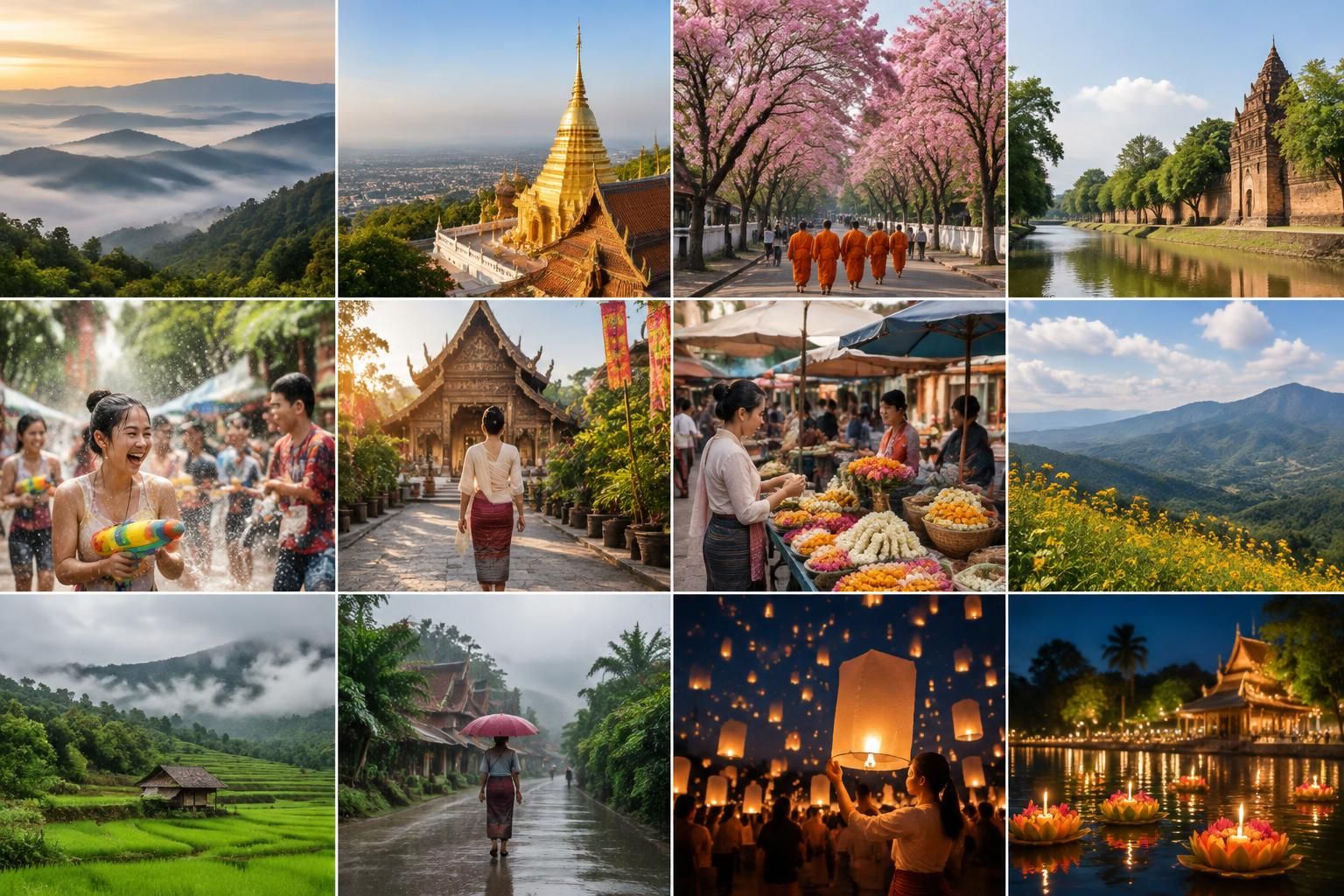
November to early February is the best time to visit Chiang Mai for most travelers: days are generally dry and warm, evenings feel cooler, and mountain trips are easier to plan. The trade-off is a busy calendar, particularly around lantern celebrations and the year-end holidays.
Each part of the year offers a different experience. Spring brings the excitement of Thai New Year alongside heat and potentially serious smoke, while the rainy months reward flexible visitors with green hills, quieter streets and often better accommodation rates. For a traveler like Mina, a fictional first-time visitor weighing festival dates against outdoor plans, the right choice depends as much on air quality and budget as it does on sunshine.
At a glance
- Best all-round window: November to early February, with the most comfortable sightseeing conditions and the highest demand.
- Best for celebrations: November for Yi Peng and Loy Krathong, February for the Flower Festival, and April for Songkran.
- Best for value and greenery: June to October, provided there is room in the itinerary for rain delays.
- Greatest health consideration: Smoke can become severe from late February through April; check current PM2.5 readings before and during a trip.
- Best compromise: October can bring green scenery and improving weather before the busiest weeks arrive.
Chiang Mai Weather in January and February: Cool Days and Flower Festival Color
January is among the most comfortable months for exploring Chiang Mai on foot. Daytime temperatures commonly reach around 30°C, while mornings and evenings are noticeably cooler, making it easier to move between the Old City’s temples, cafés and markets without planning the whole day around shade.
February starts in much the same spirit, but temperatures climb and the risk of haze increases as the month progresses. For visitors who want mountain walks and clear views, the first half of February is generally a more dependable choice than the second.
January: Temple Walks, Mountain Mornings and Handicrafts
Consider Mina’s first morning in the city: an early visit to Wat Phra Singh, breakfast near the moat and a shared ride up to Wat Phra That Doi Suthep before the busiest hours. Dry paths and relatively gentle temperatures make that kind of unhurried schedule practical, even for travelers adjusting to a long flight.
January is also rewarding for excursions into the hills. Doi Inthanon is substantially cooler than the city, especially near the summit, so a fleece and closed shoes can feel as useful as sunglasses and a sunhat.
Nature trails can have seasonal opening periods, guide requirements or visitor limits. Check the latest national park notices before booking a driver, particularly if a specific trail is the reason for the trip.
East of Chiang Mai, Bo Sang is known for handmade umbrellas and painted crafts. Its annual umbrella festival is usually held in January, offering a chance to see local artisanship beyond the main night markets; confirm the program locally before arranging a day around it.
February: Flowers and a Changing Forecast
The Chiang Mai Flower Festival brings decorated floats, floral displays and crowds to the city, usually in February. Its exact dates and parade arrangements can change, so consult Chiang Mai Municipality or the Tourism Authority of Thailand before making a nonrefundable booking.
For Mina, the festival could anchor a short city break: a morning among the displays, an afternoon cooking class and an evening at a walking street market. Booking a room within comfortable reach of the Old City helps avoid spending the day in traffic.
The less visible consideration is air quality. Agricultural burning and forest fires can begin affecting the region before the hottest months, and a blue-looking sky does not always mean fine-particle levels are low.
Families with young children, older travelers and anyone with heart or lung conditions may prefer January or early February. Checking Air4Thai close to departure provides a more useful picture than relying on the calendar alone.
These weeks are popular, so accommodation near the moat and well-reviewed local guides can fill quickly. A refundable booking offers reassurance if festival schedules change or the air deteriorates unexpectedly.
The lesson of the early-year Chiang Mai travel seasons is simple: comfortable temperatures make a strong start, but the best outdoor plans also leave room for an air-quality check.
Chiang Mai Monthly Weather in March and April: Heat, Haze and Songkran
March and April require a different approach from the cool season. The city becomes hotter, dry conditions favor fires across parts of northern Thailand and neighboring regions, and smoke can settle in the valley for days at a time.
March often brings daytime highs around 35°C, while April can reach roughly 37°C on average. These figures describe typical conditions rather than a ceiling: individual heatwaves can feel considerably more intense, especially on exposed streets.
Understanding Burning Season in Chiang Mai
Searches for burning season Chiang Mai are often prompted by photographs of Doi Suthep disappearing behind haze. The more important issue is PM2.5: tiny airborne particles that can enter the lungs and affect health, even when a traveler does not feel immediate discomfort.
Smoke comes from a combination of agricultural burning, forest fires and pollution carried across borders. Still weather and the surrounding mountains can make it harder for that pollution to disperse, although conditions vary from day to day and from year to year.
For Mina, a cheap March room would not necessarily mean a good-value trip if her main goal were hiking. A mountain view might be obscured, vigorous exercise could become unpleasant, and changing hotels within northern Thailand would not guarantee an escape from regional smoke.
Check the actual PM2.5 concentration through Air4Thai and compare readings carefully: Thai and international air-quality indexes use different scales. Travelers with asthma, cardiovascular or respiratory conditions, and those accompanying small children should consider choosing another season or destination.
If the dates cannot move, choose accommodation with well-sealed rooms and ask whether indoor air filtration is available. A properly fitted N95 or equivalent respirator can reduce exposure outdoors, but it does not make strenuous activity on heavily polluted days a sensible plan.
April and the Songkran Festival
The Songkran Festival, Thailand’s New Year celebration, gives April a compelling cultural pull. The national holiday period runs from 13 to 15 April, though Chiang Mai’s local activities can extend beyond those dates.
Around the Old City moat, water throwing transforms streets into a lively social gathering. Alongside the exuberance, families visit temples, make offerings and show respect to elders; experiencing both sides gives visitors a fuller understanding of the holiday.
Protect phones and passports in waterproof bags, use clean water and avoid throwing it at motorcyclists, monks or anyone who clearly does not want to participate. A quieter hotel outside the busiest streets can be a relief for families or light sleepers.
Plan outdoor celebrations for the cooler parts of the day, drink water regularly and take breaks indoors. Early thunderstorms may improve the air, but they do not arrive on a schedule that can be relied upon when booking.
Demand for rooms and transport rises around Songkran even though other weeks may be quieter. For festival lovers, the reward is a joyful shared celebration; for others, the same dates can mean intense heat, noise and a difficult air-quality trade-off.
By May, the first sustained rains begin to change both the landscape and the pace of a visit.

Chiang Mai Travel Seasons in May and June: Early Rains and Better Value
May is a transitional month rather than a neatly defined switch from dry to wet. Heat and humidity can remain intense, but showers become more frequent and the hills begin to recover their color.
By June, the Chiang Mai rainy season is usually more established. Rain often arrives in heavy bursts, sometimes later in the day, though prolonged storms are possible and every itinerary needs some flexibility.
May: A City Adjusting to the Rain
Early rain can help clear smoke, making May appealing to travelers who want lower rates without waiting for the height of the wet season. Air quality does not improve on a guaranteed date, however, so check current readings rather than assuming the first storm has solved the problem.
The temperature can still be demanding. Mina might schedule a temple visit before breakfast, spend the hottest hours in a cooking class and save a covered market for the afternoon, when a sudden shower would be less disruptive.
At Wat Chedi Luang, the Inthakhin festival honors Chiang Mai’s city pillar with offerings and local ceremonies. Its dates follow a traditional calendar and vary, so visitors should check the temple or local tourism announcements before planning a trip around it.
As with other religious occasions, modest clothing and quiet observation are appropriate. A visitor need not understand every ritual to appreciate the care with which families bring flowers and take part in community traditions.
June: Green Hills and Slower Days
June suits travelers who enjoy a less rigid schedule. A morning excursion to a garden or viewpoint can be followed by lunch in the city, with a museum, massage or café held in reserve if the sky darkens.
The wetter landscape is especially appealing outside the urban center. Trees regain their deep green color, streams grow fuller, and rural roads reveal a different side of northern Thailand from the dry-season postcard.
That beauty comes with practical responsibilities. Waterfalls can become dangerous after heavy rain, trails turn slippery, and mountain roads may take longer than expected; a local guide and current park advice are worth more than an ambitious checklist.
Accommodation can offer better value than in December, but compare the whole booking rather than the headline price. A room with reliable transport, good ventilation and a sheltered common area may be more useful than a cheaper place far from the activities planned.
Pack a lightweight rain jacket or umbrella, quick-drying clothes and shoes with grip. A waterproof cover for a day bag helps when moving between a shared vehicle, a market stall and a hotel during a downpour.
For longer stays, June’s lower-pressure rhythm can be an advantage: a delayed excursion becomes an opportunity to learn a new dish or linger over northern Thai food. Try khao soi, a coconut curry noodle soup associated with the region, at a busy local shop.
The early wet season rewards visitors who measure a successful day by its experiences rather than by uninterrupted sunshine. As rainfall grows more frequent, that flexibility becomes even more valuable.
Chiang Mai Rainy Season from July to October: Lush Landscapes and Flexible Plans
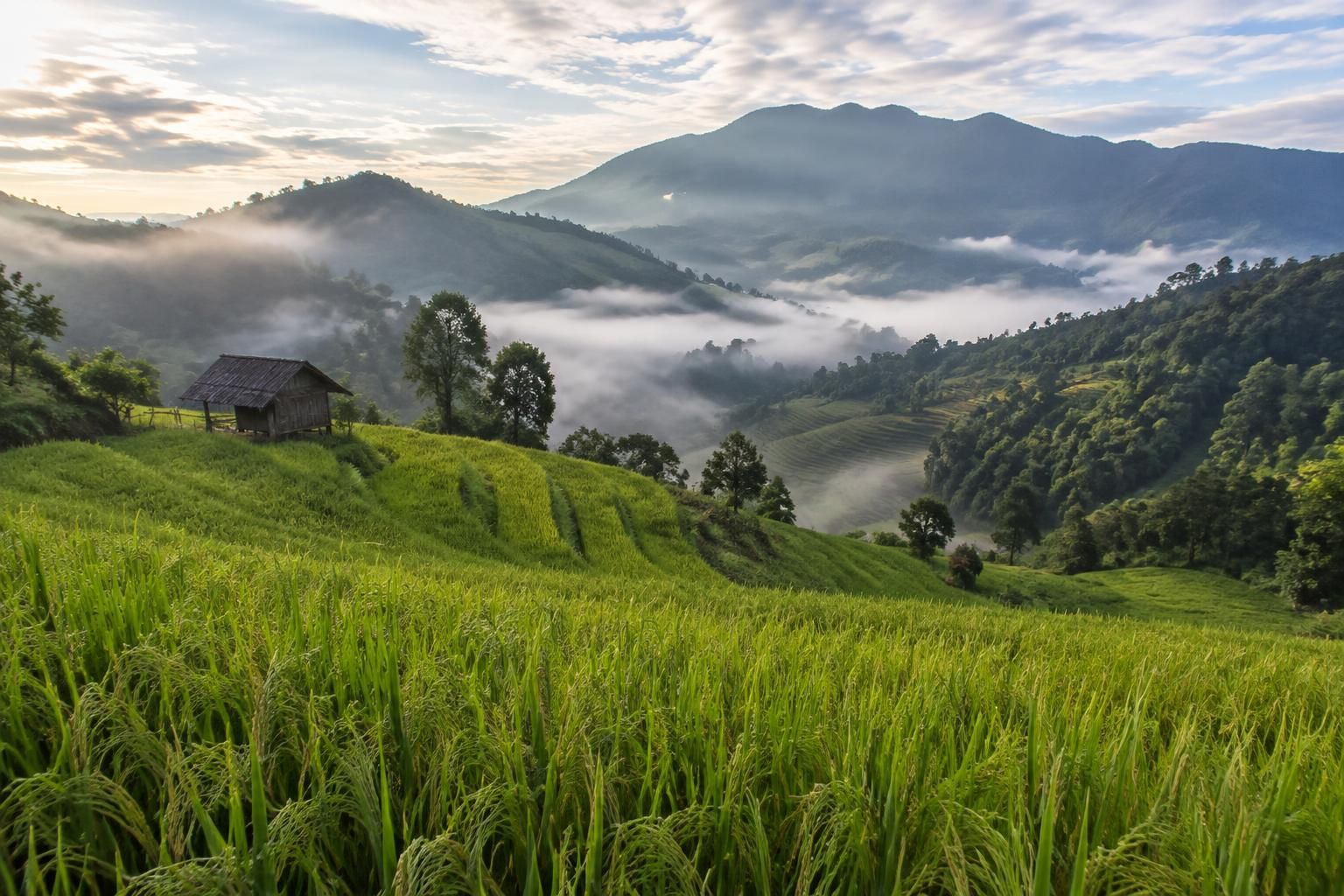
From July onward, green-season scenery becomes one of northern Thailand’s strongest attractions. Rice-growing areas brighten, waterfalls gain volume and mist can gather around the mountains, creating a softer landscape than the clear, dry views of winter.
July and August are humid and frequently wet, while August and September are often among the rainiest months. October usually brings a gradual easing, although storms and flooding can still occur.
July and August: Rice Fields, Markets and Wet Trails
July is a good month for travelers who enjoy slow journeys and have several days available. Instead of attempting a distant viewpoint, waterfall and cooking class in one outing, choose one outdoor activity and keep the rest of the day adaptable.
Rice planting brings activity to rural valleys, but the appearance of individual fields depends on location, rainfall and agricultural timing. A local driver can advise which areas are accessible without promising that every terrace will look identical to a photograph.
In August, expect more frequent downpours and allow extra time for travel. A light rain jacket is useful, but it is also worth carrying a dry layer for air-conditioned vehicles and chilly evenings after a storm.
Chiang Mai’s markets continue to offer food and craft experiences in wet weather. Mina could browse a covered section during a shower, then return to an open-air walking street when the rain eases rather than abandoning the evening altogether.
Trails may be muddy and leeches can be present in damp forest. Guides can advise on footwear, route conditions and whether a walk is suitable for children or anyone with limited mobility.
September and October: Rain Risk, Then a Seasonal Shift
September can be particularly attractive for travelers watching their budget, but low room rates come with a greater chance of disrupted plans. Heavy rain can cause flash flooding, swollen streams and landslides, especially in mountain areas.
Check weather warnings and national park notices before setting off. Do not enter fast-moving water or approach a waterfall after intense rain merely because the sky has cleared at the hotel.
If an excursion is canceled, alternatives include a craft workshop, a northern Thai cooking class or a visit to indoor exhibitions. Keeping a spare day is useful when a particular mountain trip matters more than the rest of the schedule.
October often feels like a bridge between seasons. The countryside can remain lush while cooler mornings begin to appear, and accommodation demand generally rises as the month approaches its end.
That makes October an appealing compromise for Mina if she wants greenery without committing to the wettest weeks. She should still check river conditions and forecasts, particularly early in the month, because the transition is gradual rather than guaranteed.
Travel insurance terms deserve attention during this period: policies differ on weather disruption, missed connections and activities such as motorbike riding. For inexperienced riders, hiring a licensed driver can be a safer way to enjoy slippery mountain roads.
The green months favor travelers who can respond to the weather rather than fight it; the approaching cool season offers a more predictable setting for Chiang Mai’s busiest celebrations.
Best Time to Visit Chiang Mai in November and December: Lanterns and Cool-Season Travel
November and December bring the combination many first-time visitors imagine: greener hills after the rains, more comfortable evenings and generally favorable conditions for temples, markets and mountain excursions. They also bring higher prices and competition for popular rooms.
November is especially attractive for travelers interested in Chiang Mai festivals, while December suits those who want a classic cool-season itinerary without centering the trip on a single event.
November: Yi Peng and Loy Krathong
The Yi Peng Lantern Festival is a northern Thai tradition associated with lights, temple decorations and Lanna culture. Around the same period, Loy Krathong is observed by placing small decorated floats on water as an act of reflection and respect.
In 2026, major ticketed Yi Peng events have been advertised for 24 and 25 November. Public ceremonies and processions may follow a different schedule, so confirm dates, locations and transport arrangements with organizers and official city announcements before paying.
Not every memorable moment requires a mass lantern release. Mina might visit a decorated temple, watch a procession or spend an evening near the Ping River, choosing a respectful vantage point and leaving room for local worshippers and residents.
Lantern releases are subject to local rules and aviation restrictions. Do not assume that buying a lantern means it can be launched anywhere; use only authorized events and follow the instructions in force.
Festival nights can affect road traffic and flight schedules, so avoid a tight airport connection. Reserve accommodation early, check cancellation terms and confirm the return journey from any event outside the city before purchasing a ticket.
December: Mountains, Markets and Holiday Demand
December days are generally warm rather than cold, with temperatures around 29°C in the city, but early starts in the mountains call for an extra layer. An open-sided vehicle ride before sunrise can feel surprisingly chilly even when the afternoon forecast looks tropical.
A practical day might begin at Doi Suthep, continue with lunch and a rest in the Old City, then finish at a night market. Travelers with more time can add Doi Inthanon or Chiang Dao, checking trail access and local rules before committing to a route.
For wildlife experiences, look for operators that prioritize animal welfare and transparent care practices. Avoid assuming that a facility is ethical simply because it uses the word “sanctuary”; ask about riding, bathing, handling and how much space the animals have.
Christmas and New Year bring particular pressure on rooms and transport. A place near the Old City may reduce journey times, while a quieter neighborhood can offer a welcome retreat after a long day out.
Chiang Mai Monthly Weather at a Glance
This Chiang Mai travel guide uses broad seasonal patterns rather than a daily forecast. The table helps compare months quickly, but live weather, park and air-quality updates should shape the final itinerary.
| Month | Typical conditions | Planning priority |
|---|---|---|
| January | Cool mornings and mostly dry days | Book popular mountain trips early |
| February | Warm and generally dry; haze risk rises | Check festival dates and air quality |
| March | Hot, dry and often smoky | Limit outdoor exertion when air is poor |
| April | Very hot; smoke and occasional storms | Plan carefully around Songkran |
| May | Humid, with increasing showers | Monitor the transition and live readings |
| June | Green, warm and intermittently rainy | Keep afternoon plans flexible |
| July | Humid, with frequent rain | Allow time for rural excursions |
| August | Wet and lush | Check trails and road conditions |
| September | Often very rainy | Watch flood and park warnings |
| October | Rain gradually eases; hills remain green | Leave room for lingering storms |
| November | Cooler, generally drier and festive | Reserve rooms and festival transport |
| December | Dry, pleasant days and cool nights | Pack mountain layers and book early |
For late-year travel, the most valuable reservation is often not the longest tour but the one that protects the experience: a suitable room, a reliable ride and enough time to enjoy the city at a comfortable pace.