

Three full days in Chiang Mai offer a rewarding first visit; five give most travelers room to enjoy it without rushing. The difference is not simply the number of attractions on a calendar. It is the chance to linger over lunch, adjust to the heat, or return from the mountains without feeling obliged to head straight out again.
A practical Chiang Mai itinerary starts by distinguishing full sightseeing days from arrival and departure days. Someone landing late in the afternoon has a pleasant evening ahead, but not a complete day for temples and markets. Travelers who want an elephant sanctuary, a cooking class and a mountain excursion should allow more time than those content with an Old City walk and a memorable meal. For Maya, a fictional first-time visitor planning a wider Thailand route, the right answer depends as much on her energy and interests as on the dates of her flights.
At a glance
- One or two days: Treat the visit as a stopover, with the Old City and one additional experience.
- Three full days: See the city highlights and choose one substantial activity.
- Four or five days: Add flexibility, a cooking class or a day trip without filling every hour.
- Seven days or more: Consider overnight time elsewhere in northern Thailand or a slower city stay.
- Count travel realistically: Airport transfers, mountain roads and weather all affect usable sightseeing time.
How Many Days in Chiang Mai for a Short Stopover?
A one- or two-day stay can be enjoyable when the expectations match the time available. It is best understood as a first look at the city rather than a complete exploration of northern Thailand. A tightly scheduled stopover becomes tiring when a traveler tries to combine a temple circuit, a mountain excursion, a cooking class and an elephant visit before the next flight.
Start by counting usable hours rather than hotel nights. Two nights may provide only one full day if the first flight arrives after dinner and the departure is early. By contrast, an early arrival and a late departure can create enough time for two gentle sightseeing periods, provided luggage storage and transfers are straightforward.
One Day in Chiang Mai: Old City Temples and an Evening Market
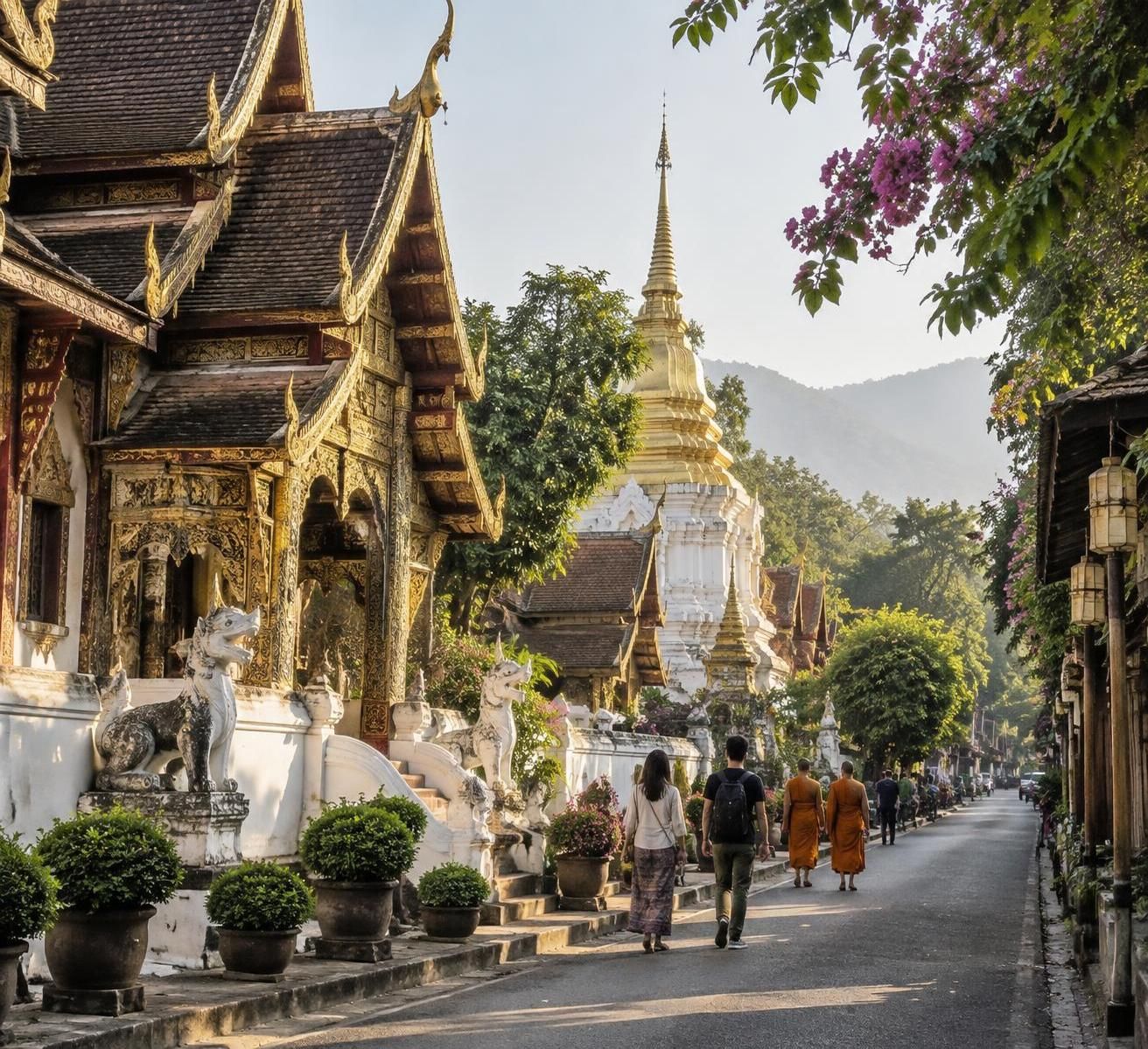
For a single full day, the Old City makes a practical base because several important sights sit within the historic moat. Maya could begin at Wat Phra Singh, known for its Lanna-style architecture, before walking to Wat Chedi Luang and its imposing brick chedi. The former capital of the Lanna kingdom, Chiang Mai has layers of history that are easier to appreciate when there is time to pause rather than hurry between gates.
Lunch nearby gives the afternoon some breathing space. A bowl of khao soi, the northern Thai curry noodle dish, is a fitting choice, followed by a café stop or another short walk if the heat allows. Comfortable shoes, water and clothing that covers shoulders and knees make temple visits easier; some sites may have additional rules or fees, so check on arrival.
In the evening, choose a market that suits the day of the week and the location of the accommodation. The Sunday Walking Street is an appealing option when dates align, but it should not be assumed to run every evening. Other night markets provide opportunities to browse food and crafts without reorganizing the entire trip around one event.
Two Days in Chiang Mai: Choose One Additional Experience
A second day allows Maya to add either Wat Phra That Doi Suthep or a carefully selected half-day elephant sanctuary visit. Doi Suthep is a mountain temple with important religious significance and, when visibility is good, views across the city. Travel time and the climb to the temple should be considered alongside the visit itself, particularly for anyone who prefers a gentler pace.
An elephant experience takes a different kind of planning. Look beyond the word “sanctuary”: avoid riding and performances, ask how the animals spend their time, and favor observation-led visits where elephants can move freely and are not compelled to interact with visitors. Policies and conditions vary, so recent independent reviews and direct questions are more useful than a label alone.
If the visit is limited by an onward journey, the simplest version is usually the strongest: temples and a market on one day, then a single well-chosen activity on the other. That distinction becomes especially useful when planning a three-day stay, where there is more scope but still a need to prioritize.
Three-Day Chiang Mai Itinerary: What Fits Without Rushing?
Three full days in Chiang Mai are enough for a meaningful first visit, especially when one substantial experience is chosen in advance. The challenge is not finding things to do; it is deciding which appealing options can wait for another trip. A long excursion, a sanctuary visit and a cooking class may all sound manageable on paper, yet combining them with temple sightseeing leaves little room for meals, transfers or rest.
For Maya, the first step is separating arrival time from sightseeing time. If she lands at noon, her first afternoon can still be useful, but it should not carry the same workload as a full day. If she arrives late, the following three-day plan works better when she has three complete days after arrival.
Day One: Settle In and Explore the Old City
Begin with an easy walk around the Old City, using the moat and gates as orientation points. Wat Phra Singh and Wat Chedi Luang are sensible choices for a first visit, but there is no need to tour every temple in the neighborhood. A quieter side street, a shaded café or a local lunch can make the city feel more approachable after a journey.
Leave the evening open for a market and an uncomplicated dinner. Travelers staying in a hostel can ask reception which market is operating that night and how best to get back afterward. That small check avoids crossing town for an event that is not open or discovering too late that a return ride needs arranging.
Day Two: Doi Suthep and a Relaxed Afternoon
Visit Wat Phra That Doi Suthep in the morning or later in the afternoon, allowing time for the mountain road and the temple itself. Shared red trucks, private drivers and organized tours are among the transport options; agree on the fare and return arrangements before setting off. A clear day improves the view, but the temple remains a significant cultural stop even when the city is hazy.
Back in town, lunch and a quiet afternoon can be enough. Nimmanhaemin, often shortened to Nimman, offers cafés and shops for travelers who want a change from the Old City. Adding another temple is reasonable if energy remains, but trying to compensate for a relaxed lunch by racing through several sites rarely improves the day.
Day Three: Pick One Anchor Activity
The final full day works best around one main choice: an elephant sanctuary, a nature outing or a cooking class. A half-day sanctuary visit may include transfers and lunch, but schedules differ, so check the actual pickup and return times before booking. Popular operators can fill in advance, especially during busy periods.
A cooking class offers a different perspective, often combining ingredients, instruction and a shared meal. A full-day nature trip provides mountain scenery but generally leaves less time for anything else. If Maya wants both a sanctuary and a distant national park, a fourth or fifth day would give those experiences the space they deserve.
The evening after the main activity should remain light. The most useful Chiang Mai travel tips are often simple: keep one transport option in reserve, carry water and remove a stop when the day runs long. More time changes the itinerary not by demanding more bookings, but by making room for choices.
Four or Five Days in Chiang Mai: A More Comfortable Itinerary
Four days give a short visit breathing room; five make it easier to combine cultural experiences with a longer excursion. This is a particularly useful length for travelers who want several Chiang Mai attractions but do not want every morning to begin with an early pickup. The extra time can also absorb an unexpected downpour, a delayed arrival or a day when the heat makes a slower pace appealing.
The table shows how different trip lengths change the choices available. Its day counts refer to full or mostly usable days, not simply the number of nights booked.
| Length | Realistic focus | Main trade-off |
|---|---|---|
| 1–2 days | Old City and one extra activity | Little room for the surrounding region |
| 3 days | Temples, Doi Suthep and one major experience | Cooking classes and longer trips compete for time |
| 4 days | Three-day plan plus a flexible day | Still requires selectivity with full-day outings |
| 5 days | City highlights, one excursion and slower activities | Several distant trips would still feel crowded |
| 7–10 days | City time and a wider northern Thailand route | More transfers and accommodation decisions |
Day Four: Cafés, Markets and Unscheduled Time
After three active days, Maya can use the fourth for a gentler rhythm. A late breakfast, a visit to Nimman, a massage or time browsing a neighborhood market can all fit without a strict timetable. Staying closer to the accommodation is useful if earlier excursions involved long drives.
This flexible day also solves practical problems. Laundry can be done before the next leg, a delayed activity can be rescheduled, and a favorite neighborhood can be revisited without sacrificing a major booking. For families or travelers adjusting to a long flight, that open space may be more valuable than another ticketed attraction.
Day Five: Cooking, Mountains or a Cultural Workshop
A fifth day can accommodate a cooking class, a workshop or a day trip such as Doi Inthanon National Park. Choose according to the rest of the schedule: if a sanctuary visit already involved an early start and a drive, a half-day cooking class may offer a welcome contrast. If Maya is most excited by mountain landscapes, the national park may deserve the full day instead.
Doi Inthanon outings often include several stops and significant road time. Ask an operator what is included, whether park fees are covered and how long the group spends at each location. Travelers who prefer a less structured visit can explore private transport or an overnight stay, while checking current access and weather conditions before setting out.
A five-day plan can include a sanctuary, a half-day class and one full excursion, but it depends on their timing and on how much of the arrival and departure days remains usable. A class on a light city day is different from adding it after a long mountain journey. The aim is a sequence that feels manageable in practice, not merely possible on a timetable.
When Maya moves on to another part of Thailand, a final unhurried meal or market visit can be more satisfying than a last-minute dash across town. Longer stays open a different question: whether to remain based in the city or give the surrounding region its own nights.
Seven to Ten Days in Chiang Mai and Northern Thailand
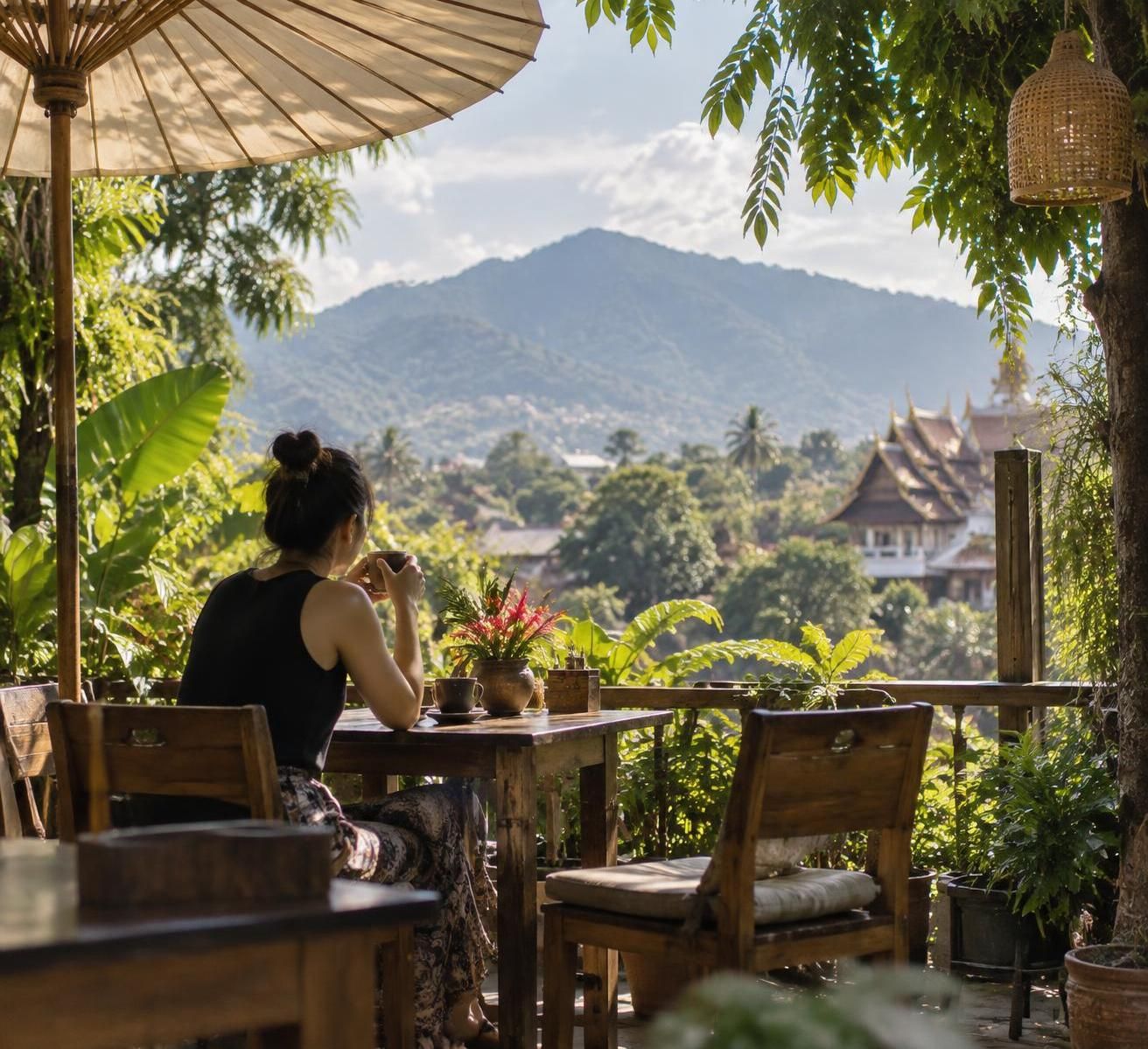
A week changes the possibilities. Instead of trying to fit every experience into a city break, travelers can keep Chiang Mai as a base, add an overnight elsewhere or divide the trip between two places. The best arrangement depends on whether the appeal is regional sightseeing or the pleasure of settling into one neighborhood.
For Maya, a seven-day trip might mean four or five days around Chiang Mai and two or three nights in Pai. Another traveler might prefer six city-based days and a long day trip to Chiang Rai. Neither route is automatically better: moving accommodation adds variety, while staying put reduces packing and transport decisions.
Pai or Chiang Rai: How to Choose an Extension
Pai is a mountain town reached by a winding road, so an overnight stay generally makes more sense than a hurried return on the same day. Two nights provide more time to enjoy the setting and recover from the journey. Travelers prone to motion sickness should consider that before choosing a minivan, and everyone should allow for road and weather conditions.
Chiang Rai offers a different emphasis, with sights such as the White Temple and Blue Temple. It can be visited on a long organized day trip, but many hours will be spent on the road. Staying overnight gives visitors more time at individual sites and reduces the pressure to squeeze the return journey into the same day.
It is important to count nights accurately. Four nights in Chiang Mai followed by three in Pai form a seven-night trip, but transfer days are shared between destinations rather than functioning as full sightseeing days in both. Planning in this way prevents an attractive regional route from becoming a chain of early departures.
Ten Days or More: Build a Northern Thailand Route
With ten days or more, Chiang Mai day trips can be spread across a wider itinerary. Doi Inthanon, Chiang Dao and Chiang Rai each offer a different reason to leave the city, from mountain scenery to caves and temples. Choose the places that genuinely appeal rather than treating the extra time as a requirement to visit them all.
Some outings take most of a day once pickup, driving, stops and the return journey are included. Chiang Rai can be particularly long as a round trip, while shorter excursions vary depending on traffic and the chosen itinerary. Ask for a realistic door-to-door schedule and keep the evening free for dinner close to the accommodation.
Longer stays also make a neighborhood change possible. The Old City is convenient for temples and first-time orientation, while Nimman is popular for cafés and a different urban atmosphere. Splitting accommodation can be worthwhile on an extended trip, but moving for a single night may add more effort than it saves.
Remote workers considering a month or more face a different set of decisions, including accommodation terms, reliable internet and current entry or visa conditions. Those details should be checked with official sources before committing. For a shorter holiday, an unscheduled day after a regional excursion serves a simpler purpose: it lets the next stage begin with energy rather than fatigue.
Chiang Mai Trip Planning: Seasons, Transport and Travel Pace
The best time to visit Chiang Mai depends on what matters most to the traveler. Weather affects not only what to pack, but also how much can comfortably fit into a day. A plan built around long afternoon walks may feel pleasant in cooler conditions and exhausting during hotter or smokier periods.
November to February is generally the cooler season and is popular for outdoor sightseeing. February through April can bring intense heat and smoke from regional burning, although timing and severity vary. During the rainy season, broadly June to October, showers can interrupt plans, and persistent rain is possible; an outdoor morning and a flexible afternoon offer more resilience than a schedule that depends on perfect conditions.
Adjust Your Chiang Mai Itinerary for Weather and Air Quality
If Maya visits during a hot or hazy period, she can move temple walks earlier, keep afternoons lighter and check current air-quality information from reliable local or official sources. People with respiratory conditions, children and older travelers may need particular care when pollution is high. Changing an outdoor excursion, spending time indoors or reconsidering dates can be more sensible than pushing through uncomfortable conditions.
Rain calls for a different adjustment. A cooking class, museum visit or café break can replace an exposed outdoor activity, while mountain plans may need changing if trails or roads are affected. Extra time is helpful because it allows a traveler to move a booking rather than abandon it entirely, but refund and cancellation policies should be checked before paying.
Fit Chiang Mai Into a Wider Thailand Itinerary
For a two- or three-week Thailand itinerary that also includes Bangkok and the coast, four or five days in the north can provide a satisfying contrast without requiring too many transfers. A Bangkok–Chiang Mai flight is relatively short, but airport travel, check-in and onward transport still occupy part of the day. It is more realistic to plan a relaxed arrival afternoon than a full program immediately after landing.
Families may prefer to stretch a five-day plan over six or seven days, especially when naps, meal breaks or pool time are important. Travelers with limited mobility should check access at temples and attractions in advance, including steps, steep paths and available transport. A well-paced itinerary makes room for the people taking the trip, not just the places on a map.
Practical Chiang Mai Travel Tips Before Booking
Choose accommodation near the activities that matter most, then check its arrival arrangements and luggage storage. Ask whether an excursion includes pickup, meals, entrance fees and insurance, and establish the expected group size. For shared transport, confirm the destination and price before departure; for any rental vehicle, check licensing, insurance and local driving conditions carefully.
Keep cash available for small purchases while confirming which businesses accept cards or digital payments. At religious sites, dress respectfully and follow posted instructions, including rules about shoes and photography. Responsible animal experiences require similar attention: observation and welfare should come before a promise of close contact.
A useful Chiang Mai travel guide should make the trip feel less complicated, not persuade travelers to fill every gap. If Maya repeatedly runs behind schedule, dropping the next optional stop is a better adjustment than turning dinner into another deadline. The right number of days is the one that accommodates both the experiences chosen and the time needed to enjoy them.