
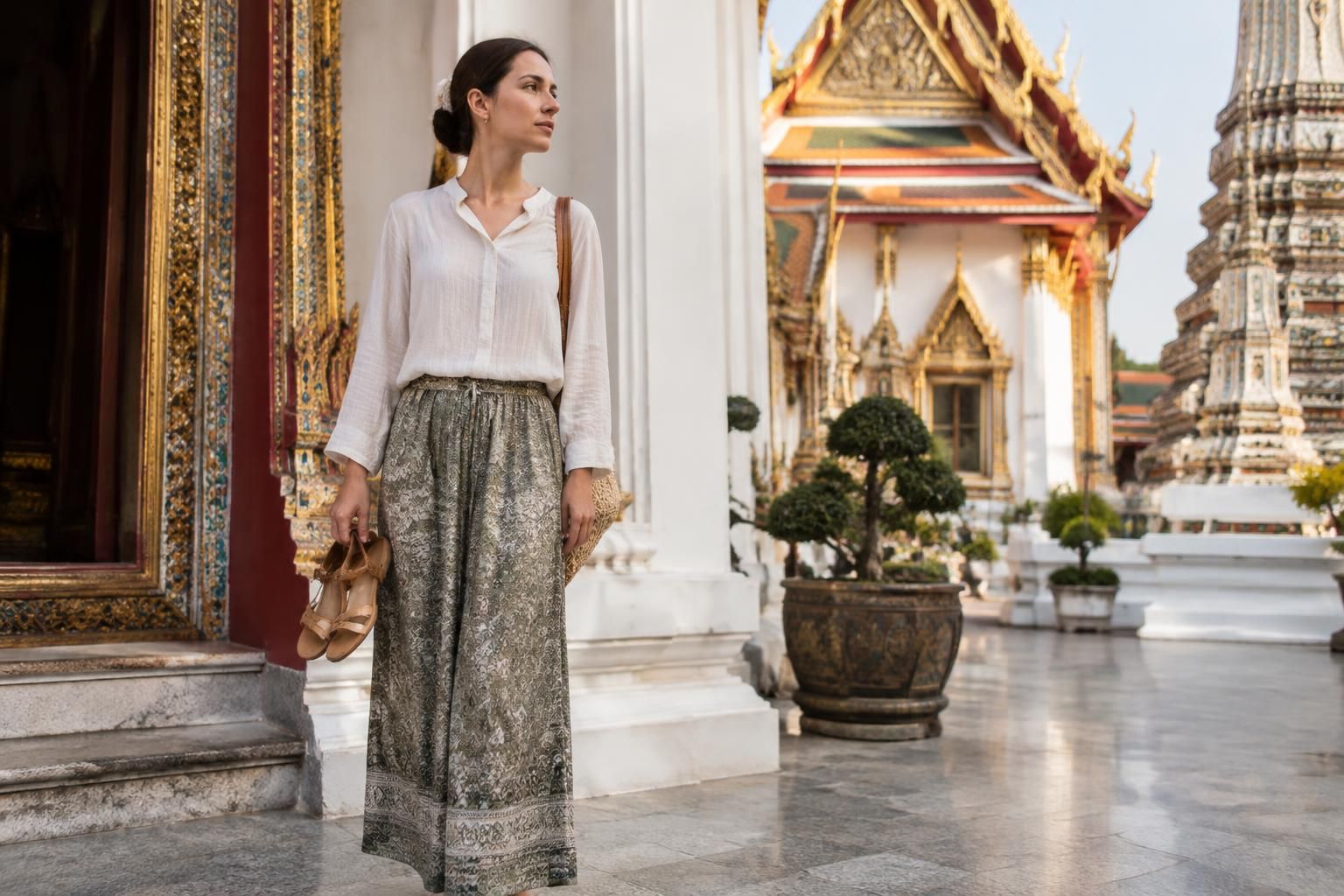
A temple visit in Thailand might begin with a walk through a busy market, a ferry crossing or a quick stop on the way to the beach. Once inside the gates, though, the surroundings change: these are places where people come to pray, make offerings and spend time with their communities. Clothing that feels perfectly ordinary on a hot city street may not be suitable there.
The most useful starting point is simple: keep shoulders and knees covered, and choose clothes that are opaque, comfortable and easy to move in. Long, loose trousers and a sleeved shirt work for many visitors, while the Grand Palace in Bangkok has a stricter published dress code that deserves a closer look. Shoes matter too, both for walking on hot or slippery surfaces and for entering buildings where footwear must come off.
For a traveler such as Maya, a fictional visitor planning several temple stops, one adaptable outfit can make the day much easier. A little preparation leaves more room to notice the architecture, observe local customs and enjoy the visit without worrying about being turned away.
At a glance
- Choose modest clothing that covers the shoulders and knees; long trousers or a long skirt are a practical choice.
- For the Grand Palace and Wat Phra Kaew, wear a sleeved, opaque top and loose, full-length bottoms.
- Carry a light layer or sarong as a backup, but do not assume every entrance accepts a wrap as a substitute for proper clothing.
- Bring shoes that are secure for walking and easy to take off when entering a worship hall.
- Check individual site signs: rules and the availability of loaned clothing can differ.
Thailand Temple Dress Code: What Respectful Clothing Means
Thailand’s Buddhist temples, often called wats, are more than sightseeing stops. Their courtyards, shrines and halls may be used by monks and local worshippers throughout the day, so visitor clothing is part of acknowledging that another activity is taking place alongside tourism.
The safest everyday rule is to arrive with shoulders covered and knees covered, regardless of gender. A short-sleeved T-shirt with loose full-length trousers is a straightforward combination; a sleeved dress or blouse with a long skirt can work just as well.
Coverage does not have to mean heavy or formal clothes. A clean, loose outfit in a light fabric is generally more practical in Thailand’s climate than a thick jacket or a restrictive pair of jeans.
Why Temple Attire Calls for More Than a Quick Cover-Up
Think about how an outfit behaves as well as how it looks while standing still. A skirt that covers the knees when standing may rise above them when sitting, while a wide-necked top can slip off one shoulder when reaching for a bag.
Suppose Maya plans to sit quietly in a temple hall after walking around the grounds. A roomy blouse and ankle-length trousers let her settle comfortably without needing to adjust her clothes each time she moves.
Fabric also matters. An opaque garment provides more reliable coverage than a sheer beach layer, particularly in strong sunlight or after a sudden shower. Holding a pale shirt up to the light before packing is a useful way to spot a fabric that may reveal more than intended.
Avoid tops with offensive slogans or images, too. Even where an entrance sign does not spell out every detail, respectful dress means choosing clothes suited to a working place of worship rather than testing the narrowest possible interpretation of a rule.
Where Temple Rules Can Differ
Not every temple displays the same list of prohibited items, and staff may apply local rules differently. A small neighborhood wat may feel informal, while a major attraction may check clothing carefully before visitors enter.
That variation is a reason to prepare conservatively, not a reason to worry. Long bottoms and an ordinary sleeved top provide a useful margin if the day’s plans change or a traveler decides to visit an additional site.
A scarf can help with sun protection or provide an extra layer, but it is less dependable than a shirt with sleeves. Some venues may not accept a loose wrap over a sleeveless top, so carrying a lightweight overshirt is a more reliable solution.
It is also worth distinguishing between the grounds and individual buildings. Signs may specify where a particular rule begins, and a staff member’s instruction takes priority if it differs from a traveler’s expectations.
If an outfit is questioned at the gate, a calm response is enough: ask what needs to be changed and look for a nearby shop or an available cover-up. The aim is not to look like anyone else; it is to make space for the customs of the place being visited.
Useful coverage should stay in place when walking, sitting and climbing—a principle that makes choosing the rest of the outfit much easier.
What to Wear to Thai Temples: Outfit Ideas for Men and Women
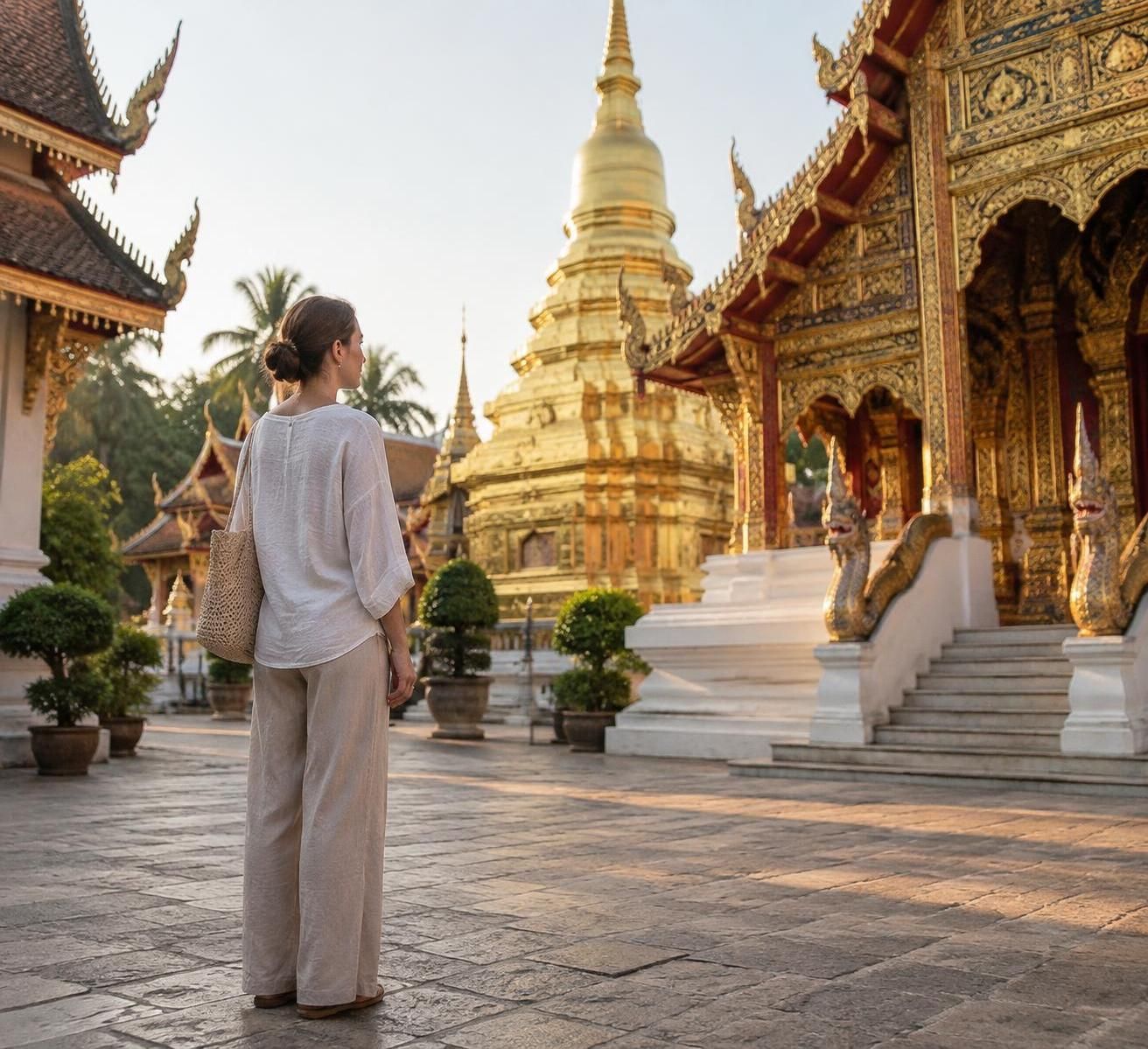
A good temple outfit starts with pieces that can handle a full day, not just a moment at the entrance. Loose shapes help air circulate, while sleeves and longer hems make it easier to move between a temple, a café and public transport without changing.
For men, a T-shirt or polo with long linen, cotton-blend or travel trousers is an uncomplicated choice. For women, the same combination works, as do a sleeved maxi dress or an opaque blouse with a long, flowing skirt.
These are suggestions rather than separate rules for different people. Coverage and appropriateness matter more than gender, and visitors can choose the combination that feels comfortable and reflects their own style.
Easy Temple Outfit Combinations
| Outfit | Why it works | What to check |
|---|---|---|
| Sleeved T-shirt and loose trousers | Easy to walk in and suitable for a range of temple visits | The shirt is opaque and the trousers are intact |
| Sleeved blouse and long skirt | Cool and comfortable when the cut allows movement | The skirt covers the knees when sitting and is not sheer |
| Sleeved maxi dress | A simple one-piece option for a mixed sightseeing day | The neckline, sleeves and fabric provide secure coverage |
| Loose printed trousers and a plain shirt | Lightweight, easy to pack and adaptable for everyday travel | The waistband and hems stay comfortable during a long walk |
Loose printed “elephant pants” are popular with travelers for a practical reason: they offer leg coverage without the weight of denim. They are not inherently disrespectful, although their quality varies, so inspect the seams and hold the fabric up to the light before buying.
Maya might pair market-bought trousers with a plain T-shirt for a morning at a Bangkok wat. The same clothes can take her to lunch afterward, provided they are clean, secure and comfortable enough for the weather.
Clothes That Can Cause Problems at the Entrance
Short shorts, miniskirts, sleeveless shirts and cropped tops are poor choices for a planned visit. Even when a garment feels suitable in town, it may leave too much skin exposed for a worship space.
Ripped jeans can also be problematic, especially if the tears expose the knees or thighs. Plain jeans offer better coverage, but in hot, humid weather lighter trousers are often more pleasant.
Leggings and other tight athletic clothing are less dependable than loose bottoms. Individual temples vary, but a garment that covers the skin while clinging closely to the body may not meet a venue’s idea of modest dress; at the Grand Palace, tight pants are specifically prohibited.
Sheer blouses, mesh layers and beach cover-ups create another complication. A camisole underneath may make a top opaque, but the outer garment should still cover the shoulders securely and comply with the site’s instructions.
A sarong can be useful over shorts when a temple permits it, yet it needs enough fabric to cover the knees while walking and sitting. Tie it firmly and keep a spare shirt in the bag rather than assuming one wrap will solve every clothing issue.
The best outfit is one that needs no constant adjustment; that leaves visitors free to pay attention to the temple rather than their hems.
Grand Palace, Wat Pho and Wat Arun: Temple Dress Rules by Site
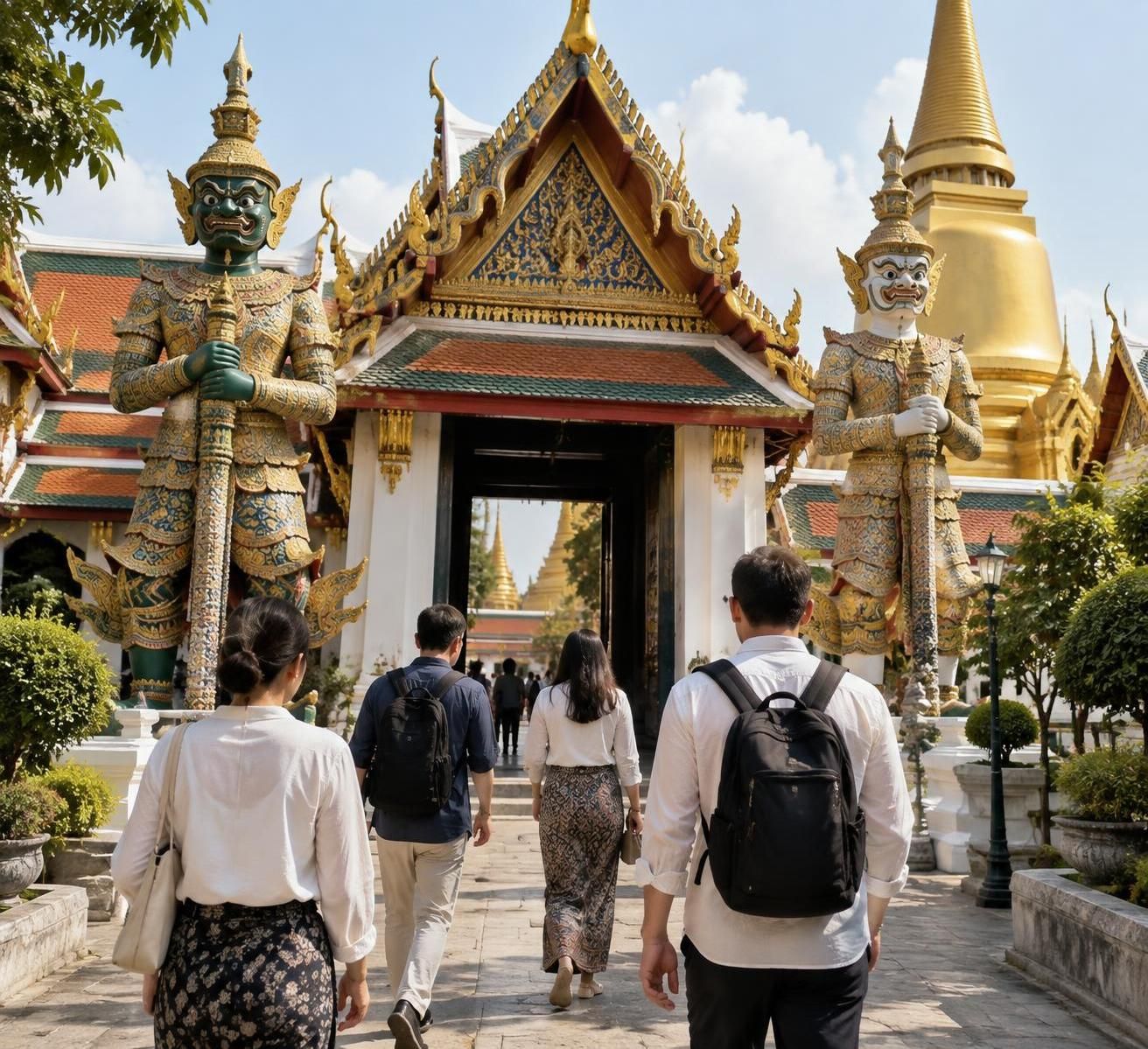
A day visiting Bangkok’s major landmarks can involve several entrances, each with its own signs and staff. Planning for the strictest stop first is an easy way to avoid buying clothes in a rush between attractions.
For Maya, that means dressing for the Grand Palace before leaving her accommodation, even if she also intends to visit Wat Pho later. A loose, full-length outfit is easier to wear all day than to assemble at a crowded gate.
Grand Palace and Wat Phra Kaew Dress Code
The Grand Palace complex, which includes Wat Phra Kaew, the Temple of the Emerald Buddha, publishes a more detailed clothing policy than the basic shoulders-and-knees guideline. Visitors should check the palace’s official visitor information before their trip, as policies and arrangements can change.
Its prohibited items include sleeveless shirts, short or see-through tops, short pants, torn pants and tight pants. Mini skirts and certain divided-skirt styles also appear on the published list, making loose, full-length trousers or a long skirt the safer option.
A practical outfit is an opaque sleeved shirt that covers the midriff, paired with intact, loose trousers reaching the ankles. A long, opaque skirt with a sleeved top is another sensible choice; avoid relying on leggings, cycling shorts or a sheer blouse.
Do not build the day around finding a rental at the entrance. Cover-up availability can change, and buying suitable clothing outside may take time, particularly when queues are long and the pavement is hot.
What to Wear at Wat Pho and Wat Arun
At Wat Pho, home to the famous reclining Buddha, choose a sleeved top and long bottoms, then follow the instructions posted at the entrance to each building. The complex is extensive, so an outfit that remains comfortable through a long walk is especially useful.
Wat Arun calls for similar modest coverage, but its steps add another consideration: freedom of movement. Loose trousers or a skirt with enough room to lift the legs make uneven stairs easier to manage than a narrow, restrictive hem.
Where climbing areas are open, follow the barriers and staff directions. A securely tied wrap and shoes with a sound grip are more useful than an elaborate outfit that needs attention on every step.
At either temple, a visitor may find clothing for sale or a cover-up offered nearby, but stock and policies are not guaranteed. Carrying a suitable layer is kinder to a tight schedule than assuming one will be available.
Reading Signs Without Guessing
Entrance notices may show pictures as well as text. If a garment seems borderline, compare it with the examples on the sign or ask a staff member before joining a long queue.
Keep practical details separate from assumptions: opening hours, ticket prices and access to particular areas can change. Checking the venue directly shortly before visiting helps travelers plan without relying on an old social media post.
A site-specific check is particularly valuable for groups. One person may be dressed for the strictest stop while another has brought shorts or a sleeveless top, making an early conversation much easier than a last-minute search for a shop.
Dress for the most demanding entrance on the itinerary, and the transition between Bangkok’s temples becomes far more relaxed.
Temple Shoes and Thai Temple Etiquette: What to Expect Inside
Clothing is only one part of preparing for a temple visit. Shoes, hats and the way visitors move through a worship area can matter just as much once they leave the courtyard and approach a hall.
Look for a rack, a row of footwear or a sign at the entrance. Visitors generally need to remove shoes before entering a chapel, shrine room or other designated indoor space, though footwear may remain on in many outdoor areas.
Comfortable Footwear for Temple Grounds
The ideal pair balances two needs: it should come off easily at a doorway and stay secure on steps or uneven paving. Walking sandals with a grippy sole, slip-on shoes or lightweight trainers can all work, depending on the itinerary.
Flip-flops are convenient to remove, but a loose or worn pair can feel unstable on wet tiles. If Maya plans to visit Wat Arun after rain, a sandal that holds the foot firmly offers more control than one that slides with each step.
Socks are useful for anyone who prefers a layer between their feet and the floor, and they can help on hot paving when moving between indoor areas. They should still be removed if a particular sign or staff member asks visitors to do so.
Leave footwear neatly in the place provided rather than blocking an entrance. If shoes look similar to many others on the rack, choosing a distinctive pair can make them easier to find without disturbing someone else’s belongings.
Thai Temple Etiquette Beyond Clothing
Inside a worship hall, speak quietly and give people space to pray. A temple may be visually striking, but approaching it as an active religious setting changes small decisions: where to stand, when to lower a voice and whether to take a photograph.
Photography rules differ. Look for notices and ask permission before photographing individuals, ceremonies or monks; if photography is restricted, put the camera away rather than trying to take a discreet shot.
When sitting, avoid pointing the soles of the feet toward Buddha images or other people. Sitting to one side or kneeling, if comfortable, makes it easier to keep feet directed away from the shrine.
Remove hats where requested, particularly inside worship buildings, and avoid climbing on religious structures for a photograph. Buddha images should be treated respectfully rather than used as props for playful poses.
Visitors may also encounter monks collecting alms or moving through the grounds. Allow them room to pass, observe local practice and avoid assuming that an interaction or photograph is welcome.
Making a Thoughtful Visit Feel Natural
It is normal not to know every custom on a first visit. Watching where other visitors leave their shoes, pausing at signs and following staff instructions provide a useful guide without requiring anyone to perform a ritual they do not understand.
If a child needs help sitting quietly, stepping outside for a short break is often easier than trying to manage frustration inside a crowded hall. The same approach works for anyone who needs water, shade or a moment away from a busy space.
Good Thai temple etiquette is ultimately attentive rather than theatrical. A quiet voice, orderly shoes and awareness of worshippers allow the place to remain welcoming to visitors and useful to the community.
With footwear and indoor customs sorted, the remaining question is how to stay comfortable from the first walk to the final ferry.
Temple Clothing for Thailand’s Heat, Rain and Family Travel
A respectful outfit is easier to wear when it suits the weather. Thailand can be hot and humid throughout the year, and the hottest period often falls between March and May, although conditions vary by location.
Choose breathable clothing that hangs away from the body. Linen, rayon, light cotton and quick-drying travel fabrics can all work; the weave, cut and personal comfort matter as much as the label.
Heavy cotton may feel pleasant at first but can stay damp after a sweaty walk. A loose shirt in a lighter material gives air room to circulate and can be washed and dried more easily during a longer trip.
Lightweight Fabrics and Sun Protection
Long sleeves are not generally required by the basic temple guideline, but a loose overshirt can be useful for sun protection and for air-conditioned transport. It also gives Maya a reliable backup if a top underneath proves unsuitable for a particular entrance.
Light colors can feel more comfortable in direct sun, while an opaque weave preserves the coverage the outfit needs. Check pale fabrics in daylight, especially if rain or perspiration might make them more transparent.
A hat and sunglasses are helpful outdoors; carry a small bag or case so they can be put away when entering a hall. Apply broad-spectrum sunscreen to exposed skin and reapply according to the product directions, especially after heavy sweating.
Water and shade belong in the plan too. A loose outfit helps, but it cannot replace regular drinks or a break when the heat becomes tiring.
Rainy-Season Shoes and a Practical Day Bag
The rainy season generally affects much of Thailand from around May to October, with local and coastal patterns varying. A dry morning can still turn into a heavy downpour, so a small rain layer is useful even when the forecast looks manageable.
For temple days, quick-drying sandals with reliable grip are often more practical than canvas shoes that remain damp for hours. Wet stone and polished tiles can be slippery, so slow down and use handrails where available.
A compact bag might contain an opaque overshirt, a securely tied sarong, water, sunscreen and a light rain jacket. Keep the sarong as a backup rather than the main plan, and protect a spare shirt from rain in a reusable waterproof pouch.
If the day starts at a beach or pool, change into proper clothes before traveling to a temple. Swimwear is suitable for swimming, but a shirt and shorts or a dress are more appropriate for shops and streets; a temple visit calls for the additional coverage described at the entrance.
Temple Outfits for Children and Different Regions
Families can make the day simpler by dressing children in light tops with sleeves and comfortable longer bottoms. Enforcement for very young children may be more flexible, but policies differ, so a spare layer prevents a rushed search at the gate.
Slip-on sandals can make repeated shoe removal easier for small children, provided they fit securely for walking. Pack water and allow time for breaks: discomfort is often a bigger obstacle to a peaceful visit than the outfit itself.
Outside major tourist areas, including rural communities and parts of southern Thailand, everyday clothing may be more conservative than on a resort beach. Watching local practice and choosing understated coverage is a considerate way to adapt without making assumptions about every community.
Pack for the whole journey, not just the temple door: secure shoes, lightweight fabrics and an easy extra layer make a varied day more comfortable for everyone.