

Chiang Mai can be wonderfully manageable without a scooter, but the right address makes a bigger difference than the neighborhood name alone. A guesthouse near a temple, market and reliable pickup point offers a very different experience from a resort that looks central on a map but requires a car for every meal.
The Old City suits short visits and temple-filled days, while Nimman makes everyday life convenient for longer stays. The Night Bazaar, Riverside and Santitham offer different balances of food, quiet and local atmosphere. For a traveler arriving tired, with luggage and no appetite for negotiating traffic, those distinctions matter.
At a glance
- First visit: Choose the Old City for temples, hostels and short walks.
- Longer stay: Choose Nimman for cafés, coworking and everyday conveniences.
- Evening food: Stay near the Night Bazaar, preferably on a quieter side street.
- Relaxed setting: Look near the Ping River, but check the distance to a bridge and restaurants.
- Getting around: Combine walking with Grab rides, shared songthaews and prearranged trips outside town.
Old City Chiang Mai: Where to Stay for Walkable Temples and Short Visits
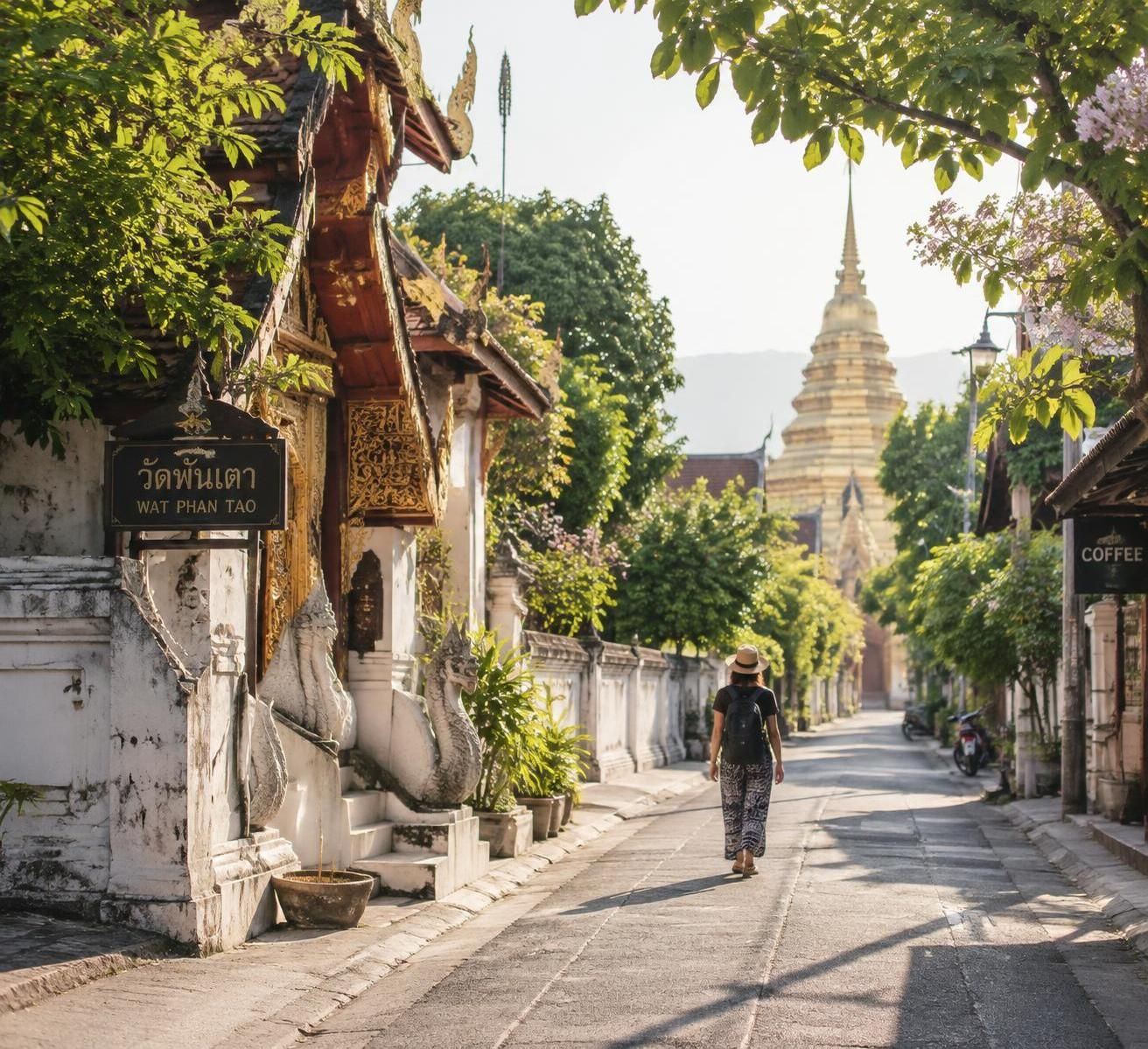
The Old City is the strongest starting point for a first trip without a scooter. Its moat and surviving walls frame a compact historic center where temples, breakfast spots, guesthouses and small shops often sit within the same few streets.
That concentration reduces the pressure to plan every journey. A traveler can leave after breakfast, visit Wat Chedi Luang, stop for coffee and return to a room for a rest before heading out again.
Choosing an Old City address without relying on transport
Location within the neighborhood still matters. Staying toward the eastern side puts Tha Phae Gate and routes toward the Night Bazaar within easier reach, while a more central address can make temple visits and the Sunday walking street particularly convenient.
For a quieter night, look a little way back from busy roads rather than directly beside a bar or market route. Check recent guest comments for noise, air conditioning and the condition of the entrance after dark; a peaceful room is especially valuable after an early arrival.
Consider Maya, a fictional solo traveler spending three nights in Chiang Mai. By choosing a guesthouse near the center of the Old City, she can visit a temple in the morning, return when the heat builds and meet other guests over dinner without arranging a ride for each outing.
That flexibility is useful for families and older travelers too. It allows a day to be divided into manageable walks rather than one long sightseeing circuit, although uneven paving and occasional missing sidewalks still require attention.
Hostels, hotels and the practical trade-offs
The area has options across a broad range of budgets, from dorm beds to boutique hotels. Hostel Lullaby and Khunluang Hostel are examples to check for a sociable stay; travelers seeking a hotel can look at POR Thapae Gate or The Inside House and compare current room details before booking.
Solo guests who want company without a party atmosphere should read recent reviews rather than relying on the word “social.” A communal breakfast, shared lounge and helpful reception can make introductions feel easy, while a room away from common areas gives light sleepers more control over their evenings.
There are compromises. The historic center is popular with visitors, market streets can become crowded, and busy moat roads are not always pleasant to cross. During major festivals, book ahead and check whether road closures will affect access to the property.
The Sunday walking street is an excellent example of why proximity helps: staying nearby makes it possible to browse food and craft stalls, drop purchases at the room and return later. It also means a tired traveler can leave the crowds without searching for a pickup in the busiest part of the evening.
For scooter-free travel, the Old City’s greatest strength is not that every attraction is nearby. It is that enough useful places are close together to make each day feel less like a transport puzzle.
Nimman Chiang Mai: Best Area for Cafés, Coworking and Longer Stays
Nimmanhaemin, usually called Nimman, is a useful alternative for travelers who want a comfortable daily routine rather than a different temple every morning. Cafés, restaurants, boutiques and work-friendly spaces are clustered around its main road and smaller side streets.
It is one of Chiang Mai’s most convenient walkable neighborhoods for food and errands. A traveler can start the morning with coffee, work for a few hours, buy supplies near Maya Mall and meet friends for dinner without needing to leave the district.
How to choose a useful Nimman location
Instead of booking solely because a listing says “Nimman,” pin its exact entrance on a map and check the route to the places needed most often. A hotel close to restaurants but on a quieter lane can provide a better balance than a room directly above a late-night venue.
Busy intersections around the main roads deserve attention. Cross at designated places where available, watch for turning vehicles and allow extra time if traveling with a stroller or heavy luggage; a short distance on a map does not always mean a comfortable crossing.
Maya, staying for two weeks on a later trip, might choose a room near a café and laundry service rather than near a sightseeing landmark. Her mornings become easier because basic tasks fit into a short loop, leaving a ride to the Old City for days when she actually wants to visit.
The trip between Nimman and the historic center is often short by car, but traffic, rain and pickup location affect the journey. Budget for occasional Grab rides instead of assuming that every cross-town trip will be convenient on foot.
Working, sleeping and eating comfortably
Nimman has plenty of places to work, but a pleasant café is not automatically a dependable office. Ask about Wi-Fi, power outlets, opening hours and whether long laptop sessions are welcome; a coworking space can be worthwhile when reliable calls or a quieter desk are essential.
Maya Mall and the surrounding shops provide an easy place for groceries, household items and a break from the heat. Restaurants range from inexpensive Thai meals to international menus, so it is possible to vary spending rather than treating every meal as a special occasion.
For accommodation, U Nimman and Akyra Manor are examples of hotels to investigate at different price points. Compare the total booking cost, cancellation terms and current facilities instead of assuming that a pool or breakfast is included in every rate.
Aircraft noise is a genuine consideration because parts of the neighborhood sit near the airport flight path. Light sleepers should read recent room-specific reviews and ask for a quieter room; nightlife noise can also vary considerably between adjacent streets.
Nimman may feel more contemporary and international than the Old City, which is either a benefit or a drawback depending on the trip. Its real advantage is the ease of an ordinary Tuesday: work, food and errands can all fit into the same neighborhood, while the historic center remains available for a planned visit.
Chiang Mai Night Bazaar: Where to Stay for Markets and Evening Food
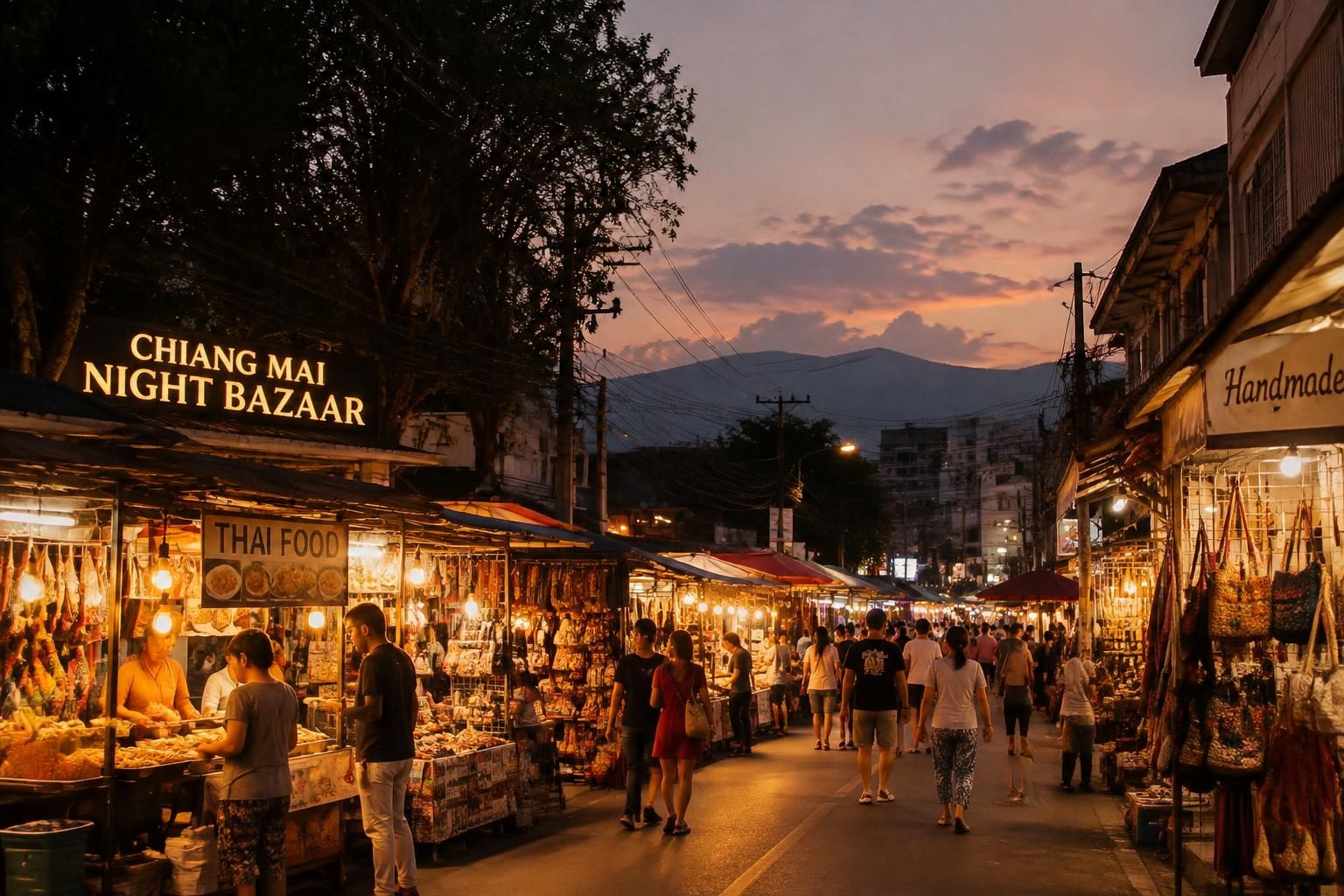
The Night Bazaar area sits east of the Old City and appeals to travelers who want their busiest hours to begin after sunset. Stalls, restaurants and entertainment make it easy to find dinner without arranging a ride back across town afterward.
It also offers a useful middle ground between the historic center and the Ping River. Depending on the exact address and walking conditions, Tha Phae Gate and parts of the riverside can be reached on foot, while longer journeys are simple to arrange by car.
Finding a room that balances energy and sleep
A market-facing room can sound appealing until music, traffic or delivery activity continues after bedtime. Look for a property on a side street, ask whether rooms face the main road and check reviews from guests who stayed on similar nights of the week.
Maya might choose this district for a short food-focused stay. She can browse the stalls in the evening, try a northern Thai dish, return to leave shopping in her room and head out again without needing to coordinate a pickup in the middle of the crowds.
Travelers who prefer quiet mornings may appreciate that the market’s evening character differs from its daytime atmosphere. Still, this is a commercial district, not a residential retreat, so a little street activity should be expected at most hours.
Hotels range from smaller properties to large full-service establishments. Check current listings around Chang Klan Road and the streets leading toward Tha Phae Gate, then compare the walking route rather than choosing solely by star rating or a photo of the pool.
Making the most of the market without overplanning
Leave room for a leisurely circuit rather than treating the bazaar as a single shopping stop. Browse several stalls, compare prices for souvenirs and choose food that is freshly prepared and busy with customers; a short walk can produce a varied dinner without requiring reservations.
Warorot Market, closer to the river, offers a different daytime experience with food, flowers and everyday goods. It is a useful contrast to the evening souvenir stalls, though the distance depends on where the hotel sits and the heat can make a ride more appealing.
The area around Li Khro Road has nightlife as well as places to eat, so travelers should choose a route that feels comfortable and well lit. If returning late, arrange a pickup from a recognizable hotel entrance or shop rather than waiting in a poorly lit side street.
For families, the question is less whether the area is lively than whether the property provides a retreat from that liveliness. A room set back from the street, a pool and easy access to familiar meals can make evenings straightforward without putting children in the middle of the noise.
Market locations can change and individual stalls do not always keep identical hours, so reception staff are worth asking for current suggestions. The best reason to stay here is simple: dinner and evening entertainment are close, but a carefully chosen room keeps the option of an early night open.
Riverside and Santitham: Quieter Chiang Mai Accommodation Without a Scooter
Riverside and Santitham offer two distinct alternatives to the better-known visitor hubs. One emphasizes waterside meals and slower evenings; the other offers a residential atmosphere with local restaurants and convenient access to surrounding districts.
Neither should be booked on neighborhood reputation alone. Both reward a closer look at the exact address, because a peaceful setting can become inconvenient if every meal and errand requires a separate car journey.
Riverside stays near the Ping River
The river running through Chiang Mai is the Ping River, and properties along it range from boutique hotels to upscale resorts. Couples and families may appreciate spacious grounds, views and a calmer base after a busy day in the center.
Look for accommodation near a bridge if walking to markets or restaurants across the water is important. A hotel farther south may offer lovely views but require a ride for most outings; ask reception about walking routes, pickup points and any currently available shuttle services before booking.
Maya could choose a riverside hotel for the last two nights of a longer trip, when she values a quiet breakfast more than being steps from several temples. She might arrange one car into town for a morning visit and return before dinner, rather than making multiple cross-city journeys.
Anantara Chiang Mai Resort and Ping Nakara are examples of properties to investigate, with prices and facilities varying by season and room type. Families should check bed arrangements, accessibility and the actual distance to nearby meals rather than relying on the general phrase “riverside location.”
Wat Ket, on the eastern side of the river, can be appealing for cafés and a more relaxed pace. Even there, sidewalks and bridge approaches vary, so check the route in daylight before assuming an evening stroll will be equally comfortable.
Santitham for a residential routine
Santitham lies north and northwest of the Old City, between the historic center and the broader Nimman area. It suits travelers who enjoy neighborhood eateries and want a base that feels less dominated by short-stay tourism.
A longer-stay guest might build a simple routine around a local breakfast shop, a laundry service and a favorite khao soi restaurant. That everyday convenience can offer better value than paying for a central address, particularly when the property is near the places the guest actually uses.
The trade-off is that walks to the heart of Nimman or the Old City vary substantially by address. Heat, rain, traffic and aircraft noise can affect the experience, so test the route on a map and keep a ride budget for days when walking is uncomfortable.
Outside the central districts, resort areas near Doi Suthep or in Mae Rim can be rewarding for scenery, but they demand more transport planning. A low nightly rate may not save money if every restaurant visit and sightseeing trip requires a return car; a quiet location works best when the hotel itself provides much of what guests need.
Chiang Mai Transport Tips: Grab, Songthaews and Safer Walking Routes
Getting around without a scooter is easiest when the accommodation and transport plan are considered together. A central room reduces the number of journeys, while a reliable pickup point makes the trips that remain less stressful.
Chiang Mai’s public transportation options do not provide the same simple, comprehensive network as a large metro system. Visitors often combine walking with app-based cars, shared red trucks, tuk-tuks and prearranged transfers according to the trip.
Using Grab rides and red songthaews
Grab is useful when travelers want to see a fare before confirming a car and share the destination clearly through an app. Check the pickup pin carefully: a driver may stop on the opposite side of a divided road, and crossing with luggage can be awkward.
A songthaew is a shared pickup truck with covered seating in the back. To use one, flag it where stopping is safe, tell the driver the destination and confirm the fare before boarding; the driver may accept other passengers and take a route that reflects several stops.
For example, Maya and another guest heading toward a nearby market might find a shared truck convenient during the day. If she needs to reach the airport at a fixed time, a prebooked car offers a more predictable choice than waiting to find a driver going in the right direction.
Tuk-tuks can be enjoyable for short rides, but agree on the total price and destination before setting off. At busy markets, moving a short distance away from the entrance can make it easier to identify a safe pickup place without standing among traffic.
Planning airport arrivals and day trips
For an airport arrival, save the hotel name and address in both the booking app and a screenshot. Compare the official airport taxi arrangements, app pickup instructions and any hotel transfer quote, then choose the option that makes sense for the arrival time and amount of luggage.
For Doi Suthep, travelers can arrange a driver, join a tour with pickup or use a songthaew where a suitable service is available. Confirm whether the price includes waiting time, temple stops and the return journey; a one-way agreement is not the same as a private excursion.
Trips to Doi Inthanon, Chiang Dao or other outlying destinations need more planning than a ride across the city. Ask about pickup coverage, group size, entrance fees and cancellation terms, and avoid building an itinerary around an unconfirmed return car.
| Area | Best on foot for | Transport consideration |
|---|---|---|
| Old City | Temples, cafés and guesthouses | Use a car for outlying sights and heavy luggage. |
| Nimman | Cafés, shopping and coworking | Allow for major-road crossings and rides to historic sights. |
| Night Bazaar | Evening food and shopping | Choose a clear pickup point outside the busiest stalls. |
| Riverside | Waterside dining near the hotel | Check bridge access and the distance to the center. |
| Santitham | Neighborhood meals and errands | Budget for rides when heat or distance makes walking tiring. |
Season matters as much as distance. Rain can make broken paving slippery, while smoke and poor air quality can affect northern Thailand during the dry season; check current conditions and adjust outdoor plans rather than assuming every day will be comfortable for long walks.
Before reserving Chiang Mai accommodation, travelers can also browse more Thailand travel ideas and additional trip-planning inspiration. The most useful test of the best areas to stay remains practical: can the day’s first meal, the evening return and the occasional longer excursion all be managed comfortably from the chosen door?