
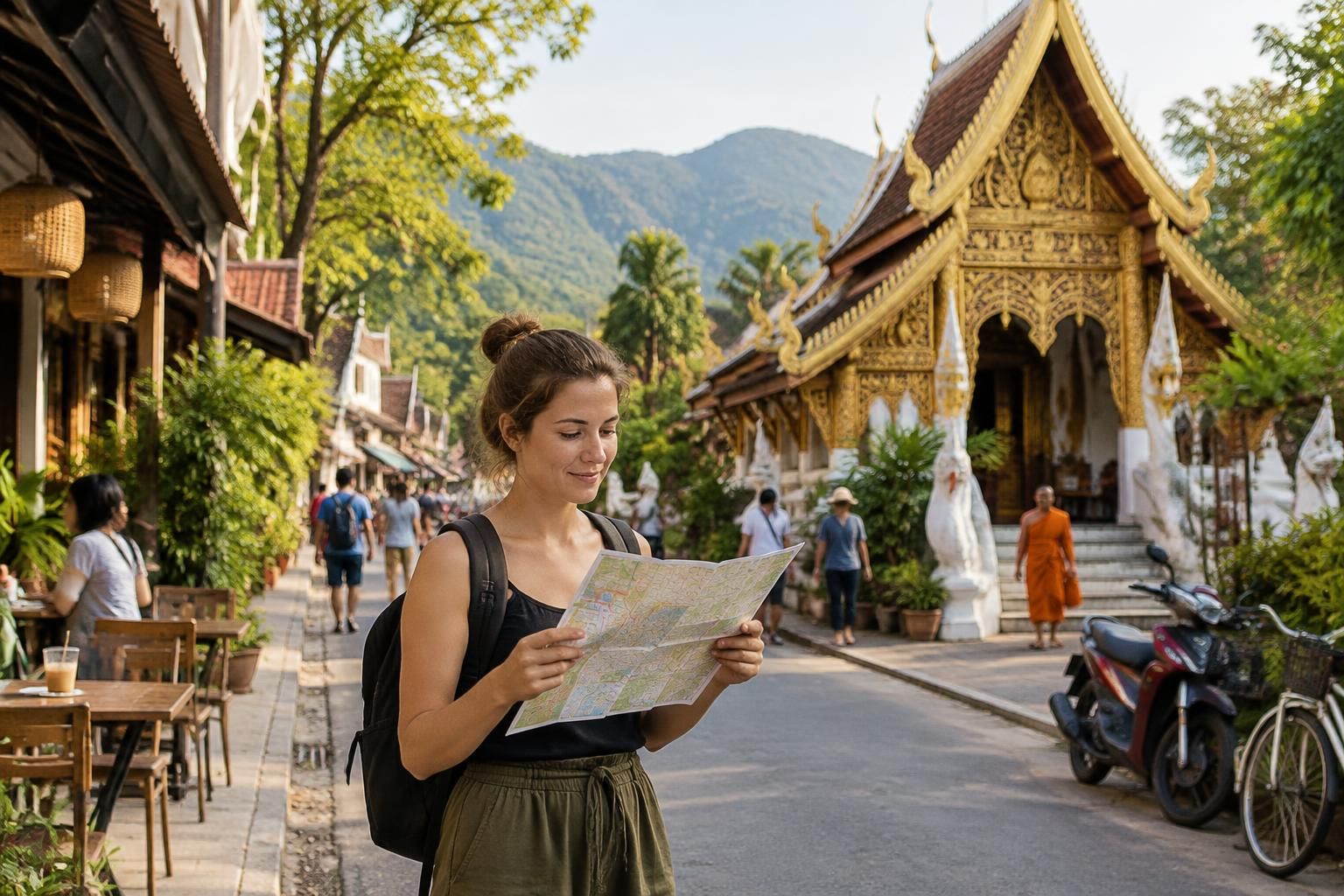
Chiang Mai is a good place for solo travellers who want independence without having to organise every moment from scratch. Its compact Old City brings temples, inexpensive meals and welcoming places to stay within relatively easy reach, while cooking classes and shared excursions offer company when it is wanted.
That ease comes with a few practical qualifications. Pavements can be uneven, the wider city is spread out, and northern Thailand’s seasonal smoke can affect both health and mountain views. Traffic deserves particular respect: a scooter may look convenient, but it is not the safest choice for an inexperienced rider.
For a first solo trip, the most useful approach is to choose a walkable base, plan transport for longer journeys and leave room for both social days and quiet ones. Eating alone is ordinary, joining a group activity does not require staying in a dorm, and a little preparation makes it easier to enjoy the city at a comfortable pace.
At a glance
- Best base for a first visit: the Old City, especially for temples, restaurants and social hostels.
- Getting around: walk short distances, use Grab for a quoted fare and agree on songthaew prices before boarding.
- Travel safety: take ordinary precautions after dark and treat road safety as a priority.
- Meeting people: try a cooking class, a small-group tour or an accommodation common area.
- Seasonal planning: November to February is generally cooler; smoke often affects the region from roughly February through April.
Is Chiang Mai Safe for Solo Travellers, Including Women?
Chiang Mai is generally approachable for solo travel, and many visitors, including women travelling alone, feel comfortable exploring its well-used neighbourhoods. That does not mean every street or situation is risk-free: good decisions still depend on the hour, the route and the person’s own comfort level.
Consider Maya, a fictional traveller arriving for her first independent trip. Rather than assuming the whole city will feel familiar immediately, she saves her accommodation’s address, checks the route from the airport and gives herself time to settle in before going out after dark.
Chiang Mai Travel Safety After Dark
The Old City has busy restaurants and accommodation clustered around its streets, but a lively main road can lead quickly into a quieter lane. If a return route feels poorly lit or deserted, choosing a busier street or ordering a car is a sensible adjustment, not an overreaction.
Before an evening out, Maya asks the reception desk which entrance stays open late and whether the route she has chosen is easy to follow. She keeps her phone charged, shares her plans with someone she trusts and knows she can change course if a situation feels uncomfortable.
At crowded night markets, keep a bag closed and valuables close, particularly when stopping to photograph a stall. A passport can usually stay secured at the accommodation if it is not needed for the outing; keep a copy separately and follow local identification requirements.
Solo women need not avoid restaurants, cafés or popular evening areas simply because they are alone. The more useful precautions are specific: watch drinks, be selective about sharing accommodation details with strangers and leave a venue if attention becomes unwanted.
Road Safety and Scooter Rentals in Chiang Mai
Traffic is a more immediate concern than many visitors expect. Scooters share roads with cars, trucks and pedestrians, and mountain routes add bends, steep sections and changing weather. A short rental lesson is not a substitute for riding experience.
Anyone considering a motorbike should have the appropriate licence entitlement, an International Driving Permit accepted for that entitlement, a properly fitted helmet and insurance that explicitly covers the vehicle and intended use. Check the policy’s conditions as well as its headline coverage; an inexpensive rental is not useful if a claim is excluded.
For an inexperienced rider, a Grab car, a shared red songthaew or an organised excursion avoids the pressure of learning in unfamiliar traffic. Even as a passenger, wear a suitable helmet on a motorcycle and decline a ride if the driver or vehicle feels unsafe.
Help and Emergency Numbers for Solo Travellers
Save 1155 for Tourist Police, 191 for a general emergency and 1669 for medical emergencies. Keep accommodation details and insurance contacts available offline in case a phone connection fails.
If something goes wrong, a reception desk can help locate a clinic, contact a driver or explain how to report a lost item. Asking early is often easier than trying to solve a problem alone, especially when travel fatigue or a language barrier makes a small issue feel much larger.
The practical lesson is to prepare for ordinary risks without letting them dominate the visit. A well-chosen place to stay makes those decisions easier from the first evening onward.
Where to Stay in Chiang Mai for Solo Travel
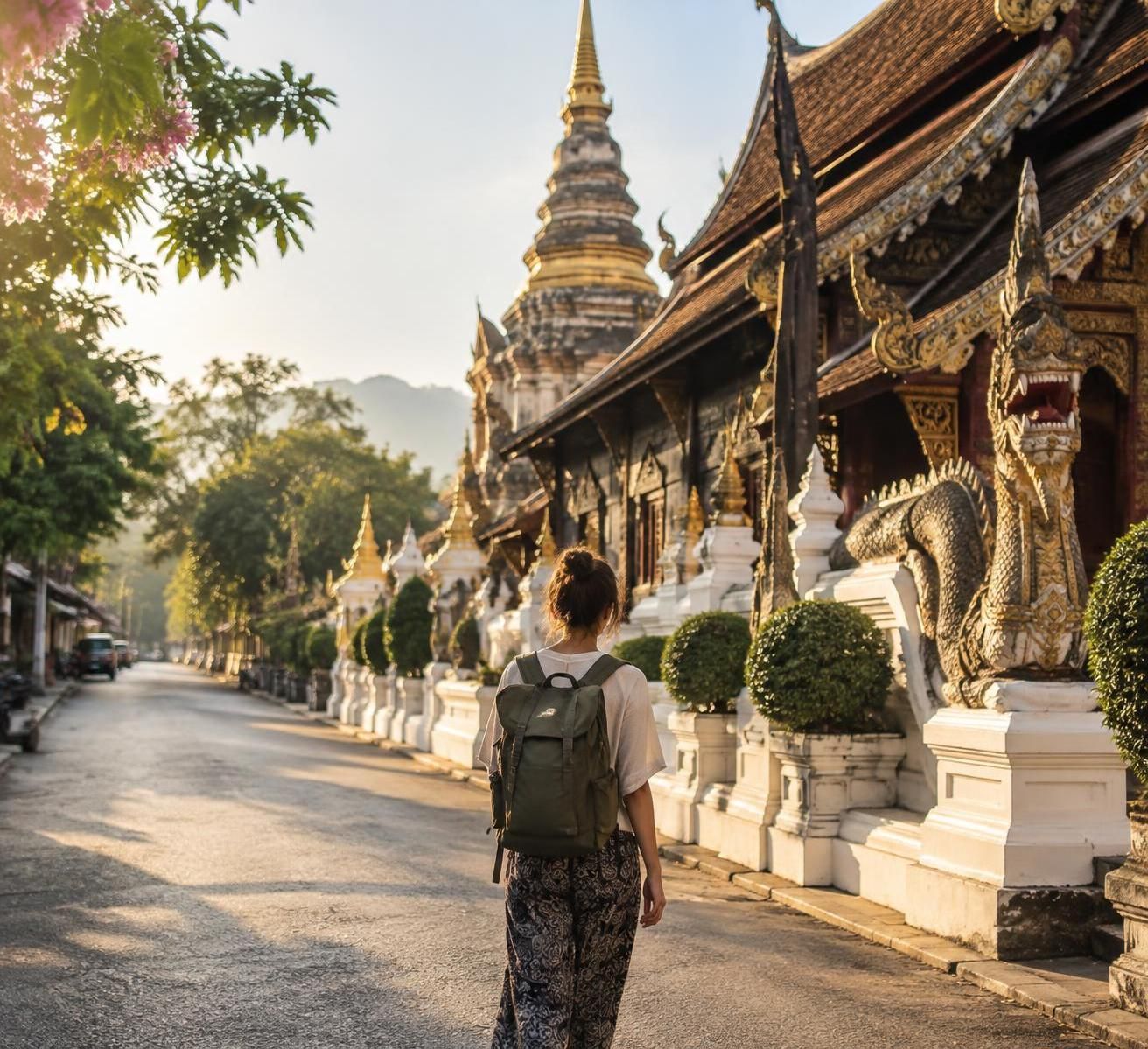
Choosing a neighbourhood shapes the rhythm of a solo trip more than choosing the perfect room photograph. The Old City suits travellers who want historic sights nearby, Nimmanhaemin appeals to café-goers and remote workers, and the Night Bazaar area offers a convenient mix of food and evening activity.
For Maya’s first three nights, an Old City guesthouse near a main road makes more sense than a distant bargain. She can reach meals and temples on foot, return for a break and decide later whether another neighbourhood better suits her routine.
Old City Hostels and Guesthouses for First-Time Visitors
The area inside and around the old walls contains many hostels, small hotels and guesthouses. Tha Phae Gate and the eastern side are useful reference points, although the best address depends on whether a traveller values nightlife, a quiet room or a shorter walk to a particular sight.
A social hostel can reduce the effort of meeting people because conversations happen naturally around shared tables and organised outings. It can also be tiring after a long journey, so look beyond the word “social” in the listing: recent reviews may reveal whether the atmosphere is relaxed, party-focused or somewhere in between.
Travellers do not have to choose between a dorm and complete isolation. A private room in a hostel or guesthouse may provide access to communal spaces while allowing a quiet night and a door that closes.
Check whether lockers fit a daypack, whether reception is staffed when arrival is expected and how late guests can enter. For dorms, curtains, individual lights and accessible charging points can make a noticeable difference to sleep and privacy.
Nimman and the Night Bazaar for Solo Visitors
Nimmanhaemin, often shortened to Nimman, has modern cafés, restaurants and coworking options that attract digital nomads as well as visitors who simply enjoy sitting with a book. It is useful for a longer stay or a working week, though journeys to Old City sights will usually require more planning than they would from a central guesthouse.
Before booking there, check recent comments about Wi-Fi, street noise and aircraft noise, which varies by location. Someone who needs to take calls should ask about the connection and working spaces rather than assume every attractive café is suitable for a full working day.
The Night Bazaar area, east of the Old City, can work well for travellers who want evening food and shopping close to their room. As with any busy district, the exact street matters: a hotel just off the main activity may feel different from one directly beside a late-night venue.
How to Choose a Solo-Friendly Stay in Chiang Mai
Look for recent reviews from guests with similar priorities, especially comments about cleanliness, staff availability, noise and the walk back after dark. A map is equally valuable: a place that looks close to an attraction may sit across a busy road or lack comfortable pavements.
Contact the property before booking if a late arrival, luggage storage or accessibility requirement matters. A clear answer about practical arrangements is often more useful than a long list of facilities that may not affect the stay.
Once Maya has settled in, she can ask whether the property runs a group dinner or walking tour without committing to a full social calendar. The right base should make both company and independence easy, while keeping transport choices straightforward.
Getting Around Chiang Mai Alone Without a Scooter
Chiang Mai has no metro or skytrain, but that does not make a solo visit difficult. The key is to distinguish the relatively compact Old City from the larger urban area: a temple walk inside the walls is very different from a journey to Nimman, a mountain viewpoint or a national park.
Before leaving her room, Maya checks the distance and the route rather than relying only on the map’s estimated walking time. Heat, crossings and uneven or obstructed pavements can make a short-looking journey slower than expected.
Walking, Grab and Songthaews in Chiang Mai
Walking works particularly well for a flexible Old City day, with café stops between sights. Comfortable shoes and water help, while a downloadable map is useful when a small lane or a sudden shower changes the plan.
For longer trips, Grab lets travellers request a car and see a quoted fare in the app. Prices vary with distance, traffic and demand, so the figure on the screen is more useful than a fixed estimate; check the vehicle and registration details before getting in.
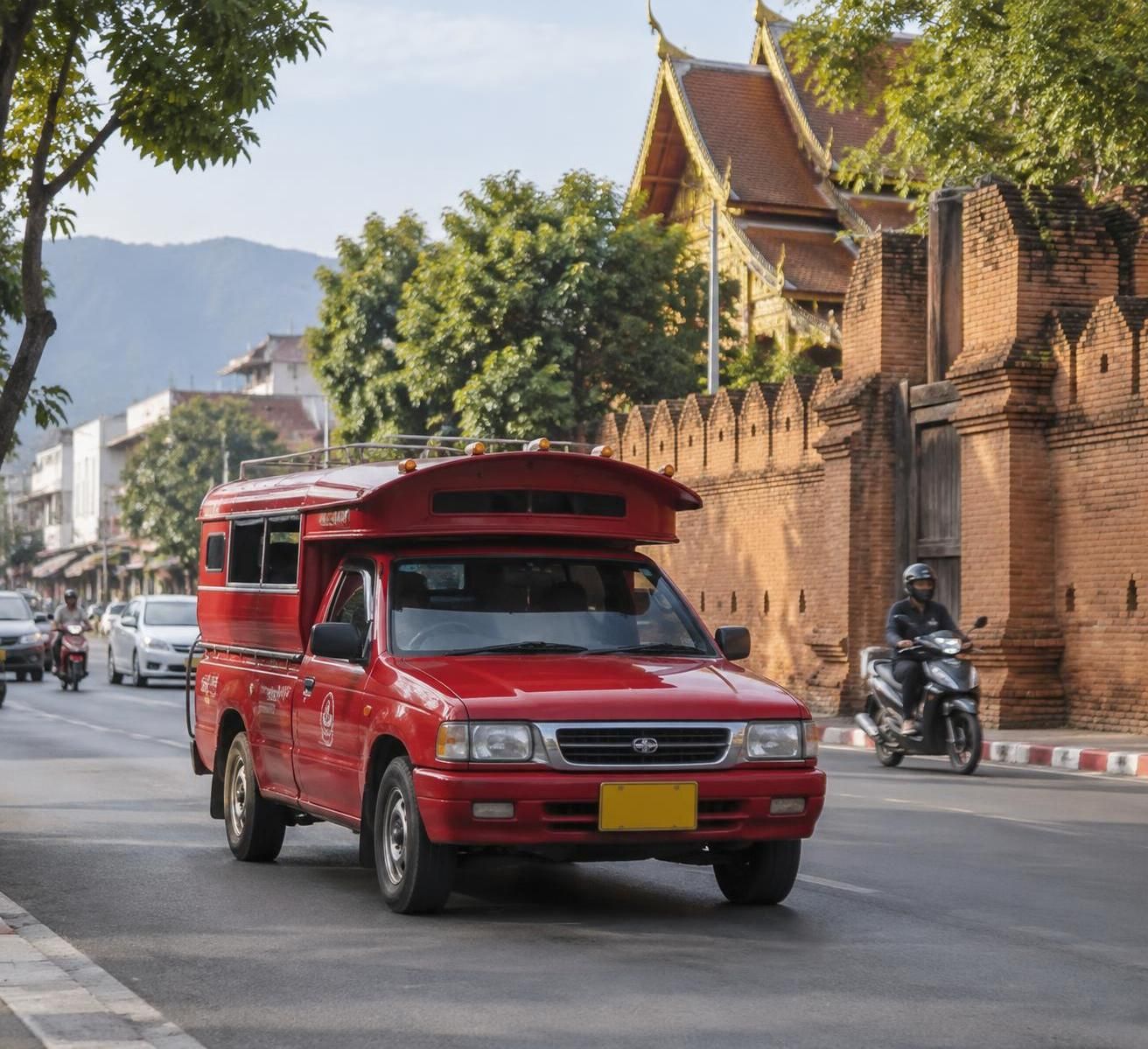
Red songthaews are shared pickup trucks with covered seating in the back. Tell the driver the destination and agree on the fare before boarding; short shared trips in town are often around 30–50 baht per person, but distance, route and whether the vehicle is being hired privately can change the price.
A songthaew may collect or drop off other passengers, so it is less predictable than a direct car. That can be perfectly acceptable for a relaxed afternoon, but it is worth allowing extra time when a class or bus has a fixed departure.
| Option | Best use for a solo traveller | Practical check |
|---|---|---|
| Walking | Short Old City journeys | Check crossings, heat and the route after dark |
| Grab car | Direct trips across town | Confirm the quoted fare and vehicle details |
| Red songthaew | Shared local journeys | Agree on the destination and fare first |
| Group tour | Mountain attractions and day trips | Confirm pickup, inclusions and return time |
Airport Arrivals and Mountain Day Trips from Chiang Mai
For an airport arrival, arrange a pickup through the accommodation or use an official airport transport option or a ride-hailing service where available. Confirm the pickup point before leaving the terminal, and keep the property’s address available in both English and Thai if possible.
Wat Phra That Doi Suthep is close enough for a shorter excursion, while Doi Inthanon National Park generally requires more time. A small-group trip can be convenient when travelling alone because transport is organised, though the schedule may leave less freedom at each stop.
Before paying, ask whether entrance fees, meals and hotel transfers are included, and check the expected group size. If arranging a car independently, agree on waiting time and the return journey as well as the outbound fare; a remote viewpoint is not the place to discover that a driver was booked one way.
A bicycle can be pleasant for short, flat stretches, but it still means sharing the road with motor traffic. Choose a bike with working brakes and lights, wear a helmet, and avoid riding when the route or conditions feel beyond your experience.
Good transport planning preserves energy for the reason behind the journey. Once the logistics are settled, Chiang Mai’s food and activities are especially easy to enjoy at a solo pace.
Things to Do Alone in Chiang Mai and How to Meet People
A satisfying day in Chiang Mai does not require finding a travel companion. A visitor can explore temples in the morning, eat a single bowl of noodles for lunch and join a group activity later, without treating solitude as a problem that needs fixing.
Maya starts with Wat Chedi Luang and Wat Phra Singh, leaving time to notice the architecture rather than rushing between photographs. The temples offer an introduction to the region’s Lanna heritage, but they are also active religious places, so modest clothing and respectful behaviour matter.
Temple Visits, Markets and Local Culture
At temples, cover shoulders and knees, remove shoes where required and follow signs around worship areas. Keep voices low and avoid interrupting people who are praying; a quieter pace is not just courteous, it also makes the visit more rewarding.
The Sunday Walking Street along Ratchadamnoen Road brings crafts, snacks and crowds into the Old City. Arriving earlier gives a solo traveller more space to browse, while visiting later offers a livelier atmosphere and more reason to keep belongings secure.
Warorot Market offers another perspective on everyday commerce, with food and goods beyond the familiar souvenir stalls. Browse without expecting every interaction to become a performance of local culture, and ask before taking close photographs of people or their stalls.
Cooking Classes and Solo-Friendly Chiang Mai Food
A Thai cooking class is a comfortable way to meet others because participants have a shared task from the start. Many include a market visit, ingredient explanations and several dishes; check the menu, dietary options, group size and transport arrangements before booking.
After preparing curry paste or a noodle dish together, conversation has a natural starting point. If Maya enjoys the group, she can suggest meeting for a meal later; if she prefers a quiet evening, the class is still worthwhile on its own.
Eating alone is uncomplicated in many casual restaurants. Try khao soi, a northern curry noodle soup, or look for khanom jeen nam ngiao, noodle soups and khao kha moo, a pork-and-rice dish served in an individual portion.
At night markets, buying one small dish at a time makes it possible to sample different flavours without ordering a tableful of food. Northern sai ua sausage and mango sticky rice are useful starting points, while a stall with steady turnover can be a reassuring choice for freshly prepared food.
Vegetarians and travellers with allergies should explain their requirements clearly rather than relying on a dish name alone. A translation on a phone can help communicate concerns about fish sauce, shrimp paste, nuts or cross-contact, although it cannot guarantee a kitchen is allergen-free.
Workshops, Day Tours and Responsible Elephant Visits
Small-group walks and craft workshops offer company alongside context. Silverwork in Wua Lai, umbrella painting around Bo Sang or a guided Old City walk can give a visitor a clearer understanding of the skill and history behind an object that might otherwise look like just another souvenir.
For an elephant visit, no riding is a starting point, not a complete welfare guarantee. Look for operators that allow elephants space, social contact and choice, avoid performances and forced interaction, and explain their care practices openly.
Be cautious of programmes that promise bathing, close contact or constant handling as the main attraction. Reading independent reports and asking how animals spend their day can be more revealing than relying on the word “sanctuary” in a brochure.
Social opportunities work best when they remain optional. A traveller who has enjoyed a market alone can choose a shared excursion the next day, with the season and available spending money helping determine which plans make sense.
Chiang Mai Solo Travel Budget, Seasons and Practical Planning
Budget travel in Chiang Mai can be comfortable, but the final cost depends on the room, transport habits and activities rather than a single universal daily figure. A dorm bed and market meals cost less than a private hotel, frequent car rides and a full-day excursion, especially during popular travel periods.
For planning, Maya separates fixed costs from flexible ones. Accommodation and insurance are arranged before departure, while meals, local transport and optional activities sit in a daily allowance that can rise on a tour day and fall on a quieter temple day.
How Much Should a Solo Traveller Budget for Chiang Mai?
A simple dorm-based day with local meals and limited transport might be planned around 800–1,200 baht, while a private room, a mix of restaurants and several car rides can push spending considerably higher. These are planning estimates, not promises: room rates, season and personal preferences can shift the total.
As an example, a traveller might allow 350 baht for a dorm bed, 300 baht for meals and drinks, 150 baht for local transport and 100 baht for small purchases. That adds up to 900 baht before insurance, laundry, substantial entrance fees or a paid excursion, all of which need their own allowance.
Solo visitors should also watch for costs that are easier to share as a couple or group. A private driver or hotel room is charged per vehicle or room, not per person, so a group tour or a guesthouse with a single room may be better value.
Carry small cash notes for markets, street food and songthaews. Some businesses accept cards or QR payments, but a Thai QR payment option is not necessarily available to every foreign banking app; check before assuming a cashless purchase will work.
When to Visit Chiang Mai and How to Handle Smoke
November to February is generally cooler and a popular period for walking and mountain trips, although weather and air quality still vary. Accommodation may cost more around busy holidays, so booking the first few nights in advance can remove unnecessary pressure.
Smoke from regional burning can cause poor air quality, often from roughly February through April, though timing and severity change from year to year. Check current PM2.5 or air-quality readings rather than relying on the calendar alone, particularly before strenuous outdoor activities or a mountain excursion.
Travellers with asthma, heart or lung conditions, children and other people sensitive to pollution should discuss their plans with a clinician and take poor readings seriously. When air is unhealthy, reduce outdoor exertion, consider a well-fitting particulate respirator and seek cleaner indoor air; a face covering does not remove every risk.
June to October is generally wetter and greener. Rain can interrupt walks or affect mountain roads, but flexible indoor plans, a light rain jacket and footwear that dries reasonably quickly make the season manageable for many visitors.
Phone Data, Health and Useful Solo Travel Tips
A local SIM or travel eSIM makes it easier to use maps, message accommodation and request a ride. Download key addresses and maps before leaving Wi-Fi, and carry a portable charger if a long day away from the room is planned.
English is commonly used in visitor-focused businesses, while a translation app and a few polite Thai phrases can help elsewhere. At a small food stall, pointing to an item and confirming the price before ordering is often simpler than worrying about a perfect sentence.
Pack mosquito repellent, sunscreen, comfortable shoes and any essential medication in its original packaging. Drink enough water in the heat, and choose travel insurance that matches the activities planned rather than adding it as an afterthought.
For a day trip, Maya checks the weather and air quality, confirms the pickup time and keeps enough cash for food and unexpected changes. Those small preparations leave more room to pay attention to the place itself.