

A comfortable Thailand trip is not simply a matter of choosing the sunniest month. The country stretches from cool northern mountains to two southern coastlines, and the weather that makes one beach inviting can bring rough seas to another. November to February generally offers the easiest conditions for city sightseeing and northern excursions, while the best beach timing depends on whether the destination is Phuket, Krabi or the Gulf islands.
For a traveler such as Maya, a fictional guest planning a first visit, the choice is about more than a forecast. She wants time for Bangkok’s markets, a few days by the sea and enough flexibility to avoid rushing through every stop. Hotel prices, festival dates, air quality and ferry conditions all shape that journey. A quieter month may mean better value and greener scenery, but it also calls for a little more patience when showers interrupt an afternoon. With realistic expectations and a route suited to the season, Thailand can reward visitors throughout the year.
At a glance
- Best overall for sightseeing: November to February, when many regions are cooler and drier.
- Best for Phuket and Krabi beaches: December to March generally brings favorable Andaman Sea conditions.
- Best for Koh Samui: February to August is often a useful window, although showers remain possible.
- Best for value: May, June and September can offer lower accommodation prices, with more weather-related flexibility needed.
- Best for festivals: April brings Songkran; Loy Krathong and Yi Peng usually fall in November.
Thailand Seasons: Choosing Between Cool, Hot and Rainy Months
The best time to visit Thailand depends on what a good travel day looks like to each visitor. Someone who wants to walk between temples and food stalls may value mild mornings more than an empty beach, while a budget-conscious traveler may happily trade a daily shower for a quieter guesthouse and a longer stay.
Thailand seasons are commonly described as cool and dry from November to February, hot from March to May, and wetter from roughly June to October. These are useful planning categories rather than fixed borders: the rains can arrive earlier or later, and the southern Gulf coast follows a different pattern from much of the country.
Cool and Dry Season: Comfortable Days, Busy Hotels
During the dry season, Bangkok and much of the north generally experience less rain and more comfortable conditions for being outdoors. Daytime temperatures often remain warm, while evenings in northern towns and mountain areas can feel noticeably cooler. A light layer is useful for an early departure from Chiang Mai, even when the afternoon calls for a T-shirt.
For Maya, this period makes a first itinerary relatively straightforward. She can visit the Grand Palace early, take a break over lunch and explore a riverside neighborhood later without building every day around rain. In Chiang Rai, a similar rhythm leaves time for temples and countryside visits without the intense afternoon heat common later in the year.
The trade-off is demand. High season brings fuller trains, busier attractions and higher room rates, especially around Christmas and New Year. Reserving accommodation with a clear cancellation policy gives travelers more choice while preserving some flexibility if their route changes.
Hot Season: Early Starts and Long Breaks
From March into May, heat builds across central and northern Thailand. Temperatures can rise into the high 30s Celsius, and humidity makes exposed pavements feel especially demanding. Bangkok’s shaded markets and air-conditioned museums become more appealing when a midday temple circuit starts to feel exhausting.
An early breakfast and a single major outdoor activity can make a hot day enjoyable rather than punishing. Maya might visit Ayutthaya’s ruins in the morning, return for a rest and save a street-food walk for the evening. Carrying water, wearing a hat and recognizing when to stop are more valuable than trying to complete every attraction on a list.
April also brings Songkran, Thailand’s New Year celebrations. Popular destinations can become very busy during the festivities, so the possibility of lower rates outside the holiday should not be mistaken for a guarantee of cheap rooms throughout the month.
Rainy Season: Green Landscapes and Flexible Plans
The rainy season brings greener hills, fuller waterfalls and fewer visitors to many places. Showers can be brief and intense, but prolonged rain, flooding and rough seas also occur; there is no reliable rule that every morning will be sunny. September and October can be especially wet in parts of the country.
For travelers watching their spending, the low season can make a longer stay affordable. Compare the total cost rather than assuming every deal is exceptional, and leave room in the itinerary for a postponed boat trip or a relaxed day indoors. Understanding those trade-offs becomes even more useful when choosing between Thailand’s distinct regions.

Regional Thailand Weather: When to Visit the North, Bangkok and Both Coasts
Thailand weather changes considerably from one region to another. The same week can bring workable beach days to the Gulf of Thailand and unsettled seas to the Andaman coast, while the north may be dealing with a separate issue altogether: seasonal smoke.
That contrast matters for a route combining Bangkok, Chiang Mai and an island. Rather than booking every destination because a guide labels the country “dry” or “wet,” Maya can check the likely conditions at each stop and decide where a change of plan would be easiest.
Chiang Mai and Chiang Rai: Cool Mornings and Smoke Season
November to February is generally a pleasant window for northern Thailand. Cooler mornings suit temple visits, markets and walks in the hills, and evenings can be refreshingly mild. Higher elevations may feel chilly, particularly before sunrise, so a thin fleece or jacket earns its place in a small backpack.
From roughly February to April, agricultural burning and wildfires can cause significant air pollution in the north, often peaking around March. Timing and severity vary, but haze can obscure mountain views and make outdoor activity uncomfortable or unsafe, particularly for children and people with asthma or other respiratory conditions.
Anyone planning a northern visit in that period should check current air-quality readings shortly before departure and keep transport or accommodation changes possible. A flexible city day indoors may help with a short episode, but it is not a substitute for taking poor air quality seriously.
Bangkok and Central Thailand: Plan Around the Heat
Bangkok and Ayutthaya are generally most comfortable for extended sightseeing from November to February. Even then, Bangkok remains a warm city, and a boat ride or shaded café can make a welcome break between busy streets and temple compounds.
In hotter months, the difference between a pleasant excursion and an exhausting one is often timing. Maya could visit Ayutthaya’s historical sites soon after opening, then return to Bangkok for a museum or an unhurried meal. During wetter months, she can group nearby activities together and use rail transit where practical rather than depending on a long cross-city journey in heavy traffic.
Phuket and Krabi: The Andaman Coast
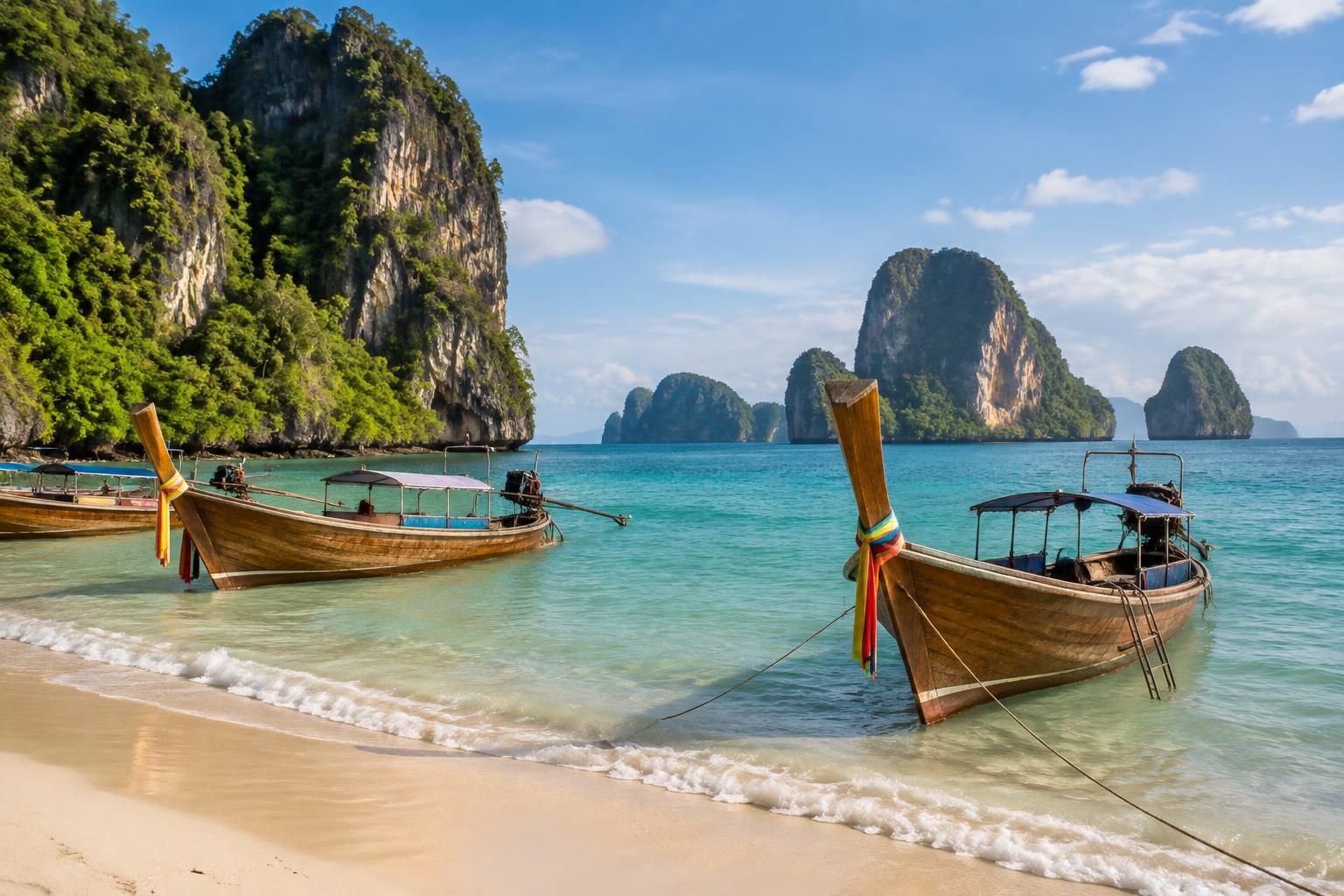
For Phuket, Krabi and nearby islands, December to March generally offers the most dependable beach weather, with calmer seas than during the wetter part of the year. Conditions still change from day to day, and even a sunny forecast does not guarantee a smooth boat crossing.
From approximately May to October, the southwest monsoon can bring heavier rain, stronger surf and disruptions to ferries or island tours. Some national park sites or island facilities close seasonally to support recovery and visitor safety; closure dates can change, so check official park notices before building an itinerary around a specific island.
Red flags on beaches are a warning, not a suggestion. Swim only where conditions are safe, follow lifeguard advice and avoid pressuring a boat operator to depart when a trip is canceled because of weather.
Koh Samui and the Gulf Islands: A Different Rainfall Pattern
Koh Samui, Koh Phangan and Koh Tao often have a more favorable stretch from February through much of the summer. Their wetter period commonly falls later in the year, particularly around October to December, although rainfall varies and tropical showers remain possible in any month.
For a July trip, Maya might therefore investigate the Gulf rather than assume every Thai island shares Phuket’s conditions. Before booking a diving or ferry connection, she can compare the local forecast, sailing schedules and the operator’s cancellation terms. Geography gives the itinerary its direction; the calendar helps refine the details.
Thailand Weather by Month: A Practical Planning Calendar
A month-by-month view helps turn broad climate patterns into booking decisions. The table describes typical conditions, not a forecast, and should be read alongside regional advice: a rainy month in Bangkok does not necessarily mean identical conditions on every island.
| Month | Typical conditions | Useful planning approach |
|---|---|---|
| January | Generally dry and busy across many popular destinations | Reserve sought-after rooms and island trips early |
| February | Warm, often dry; northern haze may begin | Combine sightseeing and beaches while checking air quality |
| March | Hotter afternoons; smoke risk in the north | Schedule outdoor activities early and keep afternoons light |
| April | Very hot, with Songkran travel demand | Book holiday transport and protect belongings from water |
| May | More showers in many regions; seasonal transition | Look for flexible accommodation and tour terms |
| June | Greener landscapes and changeable rainfall | Allow a buffer day and consider Gulf coast options |
| July | Rain is common in many areas, with regional variation | Mix cultural activities with short outdoor excursions |
| August | Humid and wet in many regions | Compare prices and avoid an inflexible boat-heavy itinerary |
| September | High rainfall risk in much of the country | Choose indoor alternatives and monitor local conditions |
| October | Transition in some regions; Gulf rainfall can increase | Check forecasts and ferry schedules close to travel |
| November | Cooler and drier in many places; Gulf conditions vary | Plan ahead for festival stays and regional transfers |
| December | Popular for sightseeing and Andaman beaches | Book holiday-period accommodation well ahead |
January to April: Popular Routes and Rising Heat
January is appealing for a classic Bangkok-and-Andaman itinerary, but popular hostels and family rooms can fill quickly. February remains useful for combining city visits with beaches; travelers adding Chiang Mai should begin checking air-quality conditions rather than assuming clear mountain views.
March can still suit a beach-focused trip, with warm days and many boat options on the Andaman coast. On land, however, a full afternoon of walking becomes less appealing. April adds Songkran celebrations to the heat, so book important transfers before the holiday and leave extra time for journeys through busy city centers.
May to August: Adjusting to Changeable Days
May is often a transition month, when the first heavier showers appear in many destinations and some room rates become more attractive. June and July bring greener scenery, making a northern countryside stay or a slower city itinerary rewarding for visitors who can accept interruptions.
By August, a day may need several versions: an outdoor plan, a shorter version if clouds build and an indoor alternative if rain persists. For Maya, a cooking class or a museum can be as memorable as a canceled excursion, provided the backup is chosen before everyone else has the same idea.
September to December: From Rainy Days to Peak Demand
September can offer quieter attractions and lower prices, but heavy rain is a meaningful possibility. October improves gradually in some areas while becoming wetter around parts of the Gulf, so a single national forecast is not enough for choosing a beach.
November brings cooler conditions to many popular routes and often coincides with lantern and floating-offering festivals. December is a strong choice for first-time sightseeing and Andaman beaches, with the highest holiday demand appearing around the end of the month. The next decision is whether a festival is worth organizing the trip around.
Thailand Festival Dates and Cultural Travel Tips for 2026
Festivals can turn an ordinary travel date into the most memorable part of a journey, but they also change how a destination functions. Rooms fill, roads close and familiar neighborhoods become much busier. A little preparation helps visitors enjoy the atmosphere while respecting the meaning of the occasion for local communities.
For Maya, a festival-centered trip means choosing accommodation near the area she wants to explore rather than relying on a last-minute ride across town. It also means keeping an open mind: public celebrations, religious observances and ticketed performances are not necessarily the same experience.
Songkran: Thai New Year in April
Songkran marks the Thai New Year and is widely celebrated around 13–15 April, although local events may run for longer. Water play is the most visible feature for many visitors, especially in Bangkok, Chiang Mai and other popular destinations. The holiday also includes family gatherings, temple visits and gestures of respect toward elders.
Anyone joining the street celebrations should wear clothes that can get wet, use a waterproof pouch for valuables and leave passports safely stored when possible. Ask before soaking someone, avoid directing water at people riding motorcycles and respect those who are working or clearly do not want to participate.
The heat remains a serious consideration even during a water festival. Take breaks, drink water and arrange a meeting point with companions in case crowds or splashes make phones difficult to use. Transport can be busy around the holiday, so advance reservations matter more than they might on an ordinary April weekday.
Loy Krathong and Yi Peng: November Evenings
Loy Krathong is associated with floating small decorated offerings on water, while northern Thailand’s Yi Peng is known for lantern traditions. The occasions often overlap in November, but their exact timing follows the lunar calendar and local programs can differ.
For 2026 planning, check the municipality’s official announcements and the details of any event before purchasing tickets. Some advertised lantern experiences are private, paid gatherings rather than the whole of a city’s public celebration, and permissions or release areas can change for safety reasons.
Choose environmentally considerate offerings where they are permitted, avoid releasing anything into waterways or the sky where local rules prohibit it, and give residents space during ceremonies. A quieter riverside observance may be more meaningful than trying to find the largest possible crowd.
Phuket’s Vegetarian Festival and Local Etiquette
Phuket’s Vegetarian Festival usually takes place around September or October, with dates determined by the Chinese lunar calendar. Visitors may encounter vegetarian food stalls, processions and intense religious rituals. Not every part of the event will be comfortable for everyone, and families can choose which activities suit them.
Photograph respectfully, especially during religious observances, and follow directions from organizers. For more ideas when building a culturally focused itinerary, explore more Thailand travel inspiration alongside current local event information.
Festival travel works best when the celebration is treated as part of a living community, not simply a photo opportunity. Once the dates are chosen, thoughtful packing and booking make it easier to enjoy the experience without unnecessary stress.
Thailand Travel Tips: Booking, Packing and Staying Flexible
Good Thailand travel tips begin with an honest itinerary. A week divided among Bangkok, Chiang Mai and two islands may look exciting on a map, but airport transfers, check-in times and possible delays can quickly consume the days. Fewer stops often leave more room for the encounters that make a trip feel personal.
Maya’s first booking decision is therefore not which tour to buy, but how much movement she wants. She chooses a few nights in Bangkok, a longer beach stay and one unscheduled day. That spare day can absorb a delayed ferry, a sudden downpour or simply the pleasure of discovering a neighborhood market.
Book for the Season, Not Just the Price
In the busiest months, reserve accommodation in the location that matters most, especially during Christmas, New Year and major festivals. A room close to public transport or within walking distance of an evening food area may save both money and energy, even if its nightly rate is slightly higher.
During the monsoon season, examine cancellation and rescheduling policies before paying for boat trips. Ask what happens if an operator cancels because of unsafe seas, whether transport to the pier is included and how refunds are handled. A cheap tour is less attractive if one canceled crossing disrupts several nonrefundable bookings.
Flights and hotel prices fluctuate for many reasons, including school holidays and local events. Compare a few nearby dates rather than assuming every rainy-month departure will be inexpensive. Travelers seeking more route ideas can also browse additional inspiration for a Thailand itinerary before making reservations.
Pack Lightly, With a Few Seasonal Adjustments
Breathable clothing, comfortable shoes and sun protection are useful throughout the year. For temples, carry clothing that covers shoulders and knees, and follow the rules posted at each site. A scarf may help with sun or air-conditioning, but it should not be relied on as a substitute for appropriate clothing where stricter dress codes apply.
In cooler northern months, add a light layer for evenings and early journeys. During hotter weather, a reusable water bottle and a wide-brimmed hat help make outdoor visits manageable. For wet months, quick-drying clothes, a compact rain jacket and a dry bag for electronics are practical without taking up much space.
Mosquito repellent is useful year-round, particularly around dawn and dusk. Check travel-health advice before departure, consider suitable insurance and keep copies of important documents accessible. Pack any essential medication in its original packaging and verify relevant entry rules before traveling.
Make Room for Weather and Everyday Comfort
Before a beach day, check local warnings as well as the weather forecast. Operators and lifeguards can assess current sea conditions more usefully than a sunny icon on a phone. If a ferry is essential to an international flight connection, consider returning to the mainland at least a day early rather than leaving no margin.
In cities, keep a short list of nearby indoor options: a museum, a cooking class, a café or a covered market. When rain arrives, the day can change shape without feeling lost. For a traveler settling into an unfamiliar place, that breathing room is often the difference between merely completing an itinerary and genuinely enjoying it.