
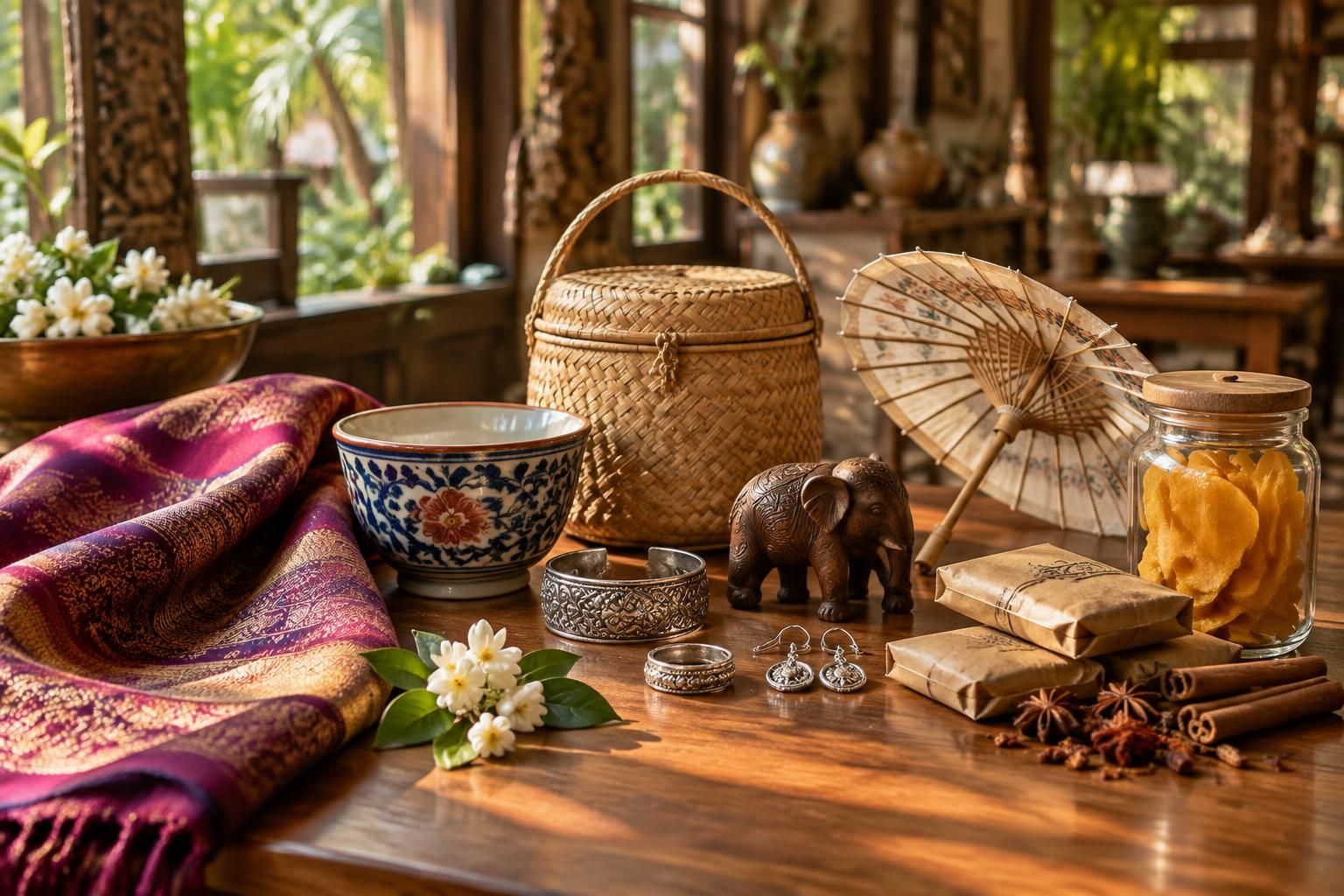
In Thailand, the most memorable souvenirs are often the ones that find a place in everyday life: a silk scarf worn on a chilly morning, a fragrant tea brewed after work, or a small basket that recalls an afternoon at a market. Others carry the story of an artisan’s hands, from the painted details of a Khon mask to the woven patterns of northern textiles.
For travelers balancing curiosity, luggage space and a budget, the choices can feel overwhelming. A market stall may offer inexpensive elephant pants beside fabric described as handwoven silk, while food shops display everything from fiery sauces to delicate dried fruit. The best purchase is not necessarily the largest or most expensive one; it is something chosen with care, understood in context and practical to carry home. A little planning also makes room for thoughtful questions about who made an item, how it should be used and whether it can cross a border.
At a glance
- Easy-to-pack gifts: Thai silk scarves, tea mixes, herbal inhalers and packaged snacks.
- For craft lovers: hand-painted Benjarong porcelain, northern embroidery, woven baskets and wood carvings.
- For food lovers: curry pastes, dried mango, palm sugar and locally roasted coffee.
- Best places to browse: Chatuchak Market in Bangkok and Chiang Mai’s night markets offer broad selections.
- Before departure: check customs rules, airline liquid limits and export requirements for religious objects.
Thai Silk, Elephant Pants and Clothing Souvenirs Worth Wearing
Thai silk has a reputation that reaches far beyond Thailand’s markets. Its appeal lies in the depth of its color, the way it catches the light and the skill involved in turning thread into cloth. A scarf or small length of fabric can feel special without taking up much room in a backpack.
Silk weaving has deep roots in northeastern Thailand, especially in Isaan, where communities have developed distinctive patterns and techniques. Some pieces are handwoven, while others are produced by machine or blended with synthetic fibers. Neither a glossy finish nor a high price alone proves how a fabric was made.
How to Choose Thai Silk and Handwoven Textiles
Ask the seller whether a piece is pure silk, a blend or another material, and whether it was woven by hand. A knowledgeable maker or shopkeeper may also explain where the fabric comes from and how it should be cared for. Keep the answer with the gift: a small note about its origin can make a scarf more meaningful than elaborate wrapping.
Handwoven cloth may show slight variations in its texture, but irregularity on its own is not a guarantee of authenticity. If the distinction matters, purchase from a reputable textile shop or directly from a producer who can describe the process. In Bangkok, Jim Thompson stores are a well-known option; local boutiques and markets offer a wider range of styles and prices.
For an imagined traveler named Maya, a scarf might solve a familiar problem: finding a present that feels considered but will fit into a nearly full carry-on. She could fold it around a small gift, ask for washing instructions and avoid the worry of protecting a fragile object on a long journey.
Prices for sarongs and silk items can start around 150 baht for simple wraps and rise beyond 3,000 baht for finer pieces. These are broad shopping estimates, not guarantees; fiber, workmanship, size and retailer all affect the price. A handwoven silk scarf will generally cost more than a printed market wrap.
Elephant Pants, Sarongs and Cotton Finds
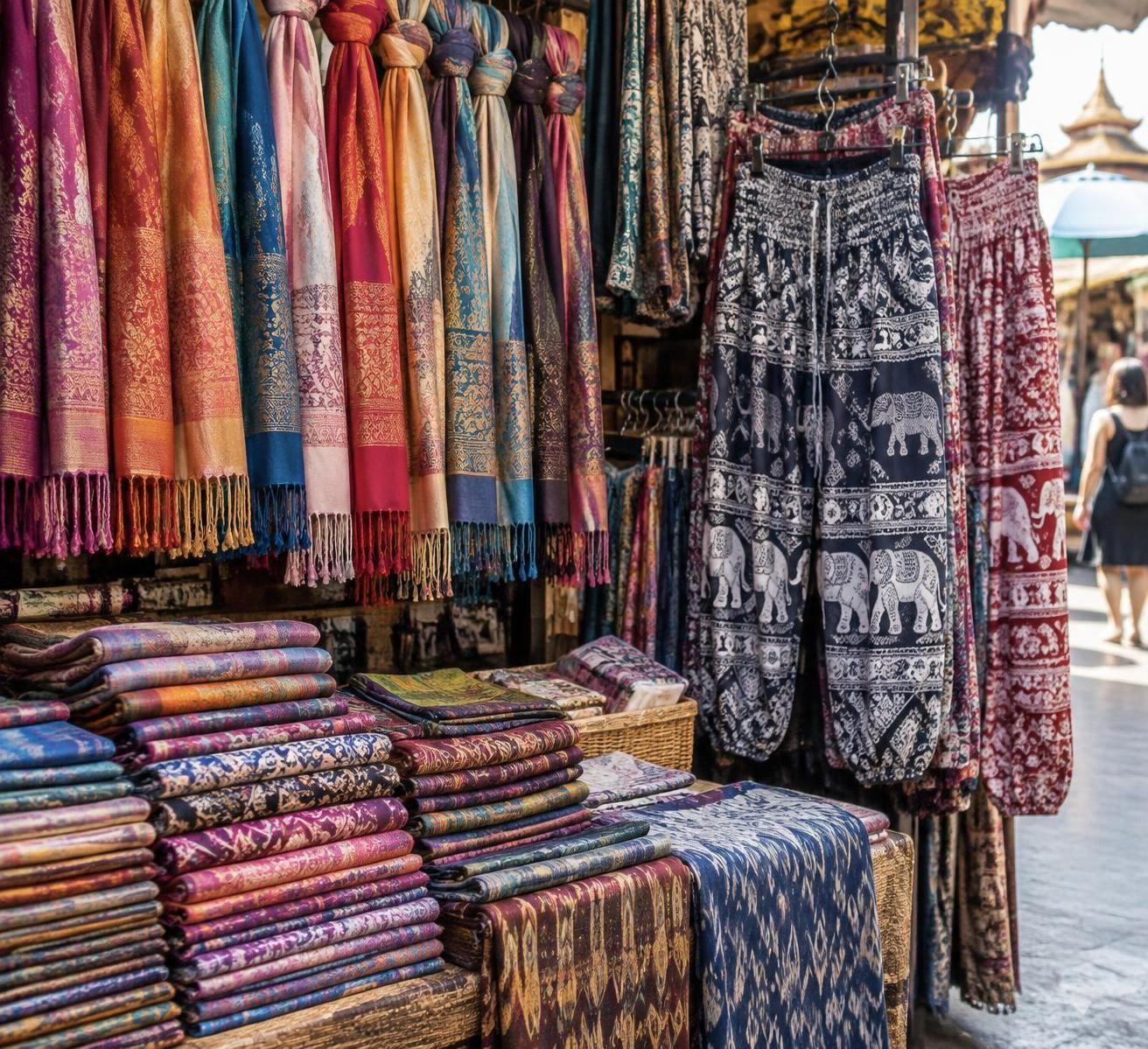
Elephant pants are an inexpensive, lighthearted choice, usually found for approximately 100–300 baht at street markets in Bangkok, Chiang Mai and Pai. Their loose cut makes them comfortable for long bus rides or relaxed days at home. Before paying, check the stitching, waistband and fabric thickness rather than relying on the label alone.
Buying for someone else? Ask about sizing and hold the garment up to judge its length. Some versions use thin synthetic fabric, while others feel softer or sturdier; a quick inspection helps prevent disappointment when the novelty of the print wears off.
Sarongs work as beach wraps, lightweight shawls or casual table coverings, depending on their size and fabric. Cotton clothing is another useful choice, especially for travelers who prefer a quieter pattern. Chiang Mai’s Jing Jai Market is a good place to look for local designers alongside more familiar market styles.
Wash brightly colored garments separately at first, follow any care instructions and let them dry completely before packing. A textile earns its place in a suitcase when its beauty is matched by a purpose, leaving the next challenge to the senses: choosing flavors that can travel just as well.
Thai Spices, Tea and Local Snacks to Bring Home
A packet of food can bring back a trip with surprising immediacy. The aroma of a tea blend or the sharp heat of a chili sauce may recall a market meal more vividly than a decorative object. For friends who prefer useful gifts, Thai spices and shelf-stable treats also offer an easy way to share a taste of the journey.
Thai Curry Pastes, Sauces and Cooking Ingredients
Look for red, green, panang or massaman curry paste in sealed containers, or choose dried seasonings such as chili flakes, lemongrass and makrut lime leaves. Tamarind paste adds a sweet-sour note to cooking, while bottled Sriracha offers a familiar choice for someone who enjoys heat. Small spice and sauce purchases commonly fall around 50–300 baht, depending on the product and size.
Supermarkets are convenient for ingredient labels and sealed packaging. Bangkok’s Or Tor Kor Market is another appealing place to browse food, while some cooking schools sell mixes with instructions that make a thoughtful companion to the purchase. Check whether a paste contains shrimp or fish if the recipient avoids seafood.
Consider how the ingredient will actually be used. A cook with a well-stocked pantry might appreciate an unusual paste, whereas a beginner may prefer a clearly labeled blend and a simple recipe. Maya, for example, could pair a sealed packet of curry paste with a handwritten suggestion for vegetables and coconut milk, turning a small item into an invitation to cook.
Local Snacks, Dried Fruit and Palm Sugar
Local snacks range from crisp seaweed and flavored chips to fruit candies and dried mango. Convenience stores are useful for inexpensive individual packs, especially when several people are expecting something small. For a more substantial food gift, look for neatly packaged dried fruit or palm sugar at supermarkets and food markets.
Dried mango, papaya and coconut vary in sweetness and texture, so read the ingredients if the recipient prefers less added sugar. Vacuum-sealed packs help protect freshness and reduce the chance of sticky luggage. Dried fruit and palm sugar often cost roughly 100–400 baht, depending on weight and presentation.
Palm sugar can add a rounded sweetness to sauces and desserts. It is also a useful reminder that a souvenir need not be exotic to be meaningful: an everyday cooking ingredient can tell a story about the meals encountered on the road.
Thai Tea Mixes and Northern Coffee
ChaTraMue tea mix is a familiar choice for recreating Thai-style iced tea, with small packs often around 50–150 baht. Look for it at the brand’s shops or in convenience stores, and check whether the mix already contains sugar or milk powder. A packet is easy to divide among several people, provided the original labeling remains available.
Coffee lovers might instead seek locally roasted beans from northern Thailand. Cafés in Chiang Mai often sell bags with information about the roast and origin, making it easier to choose between a lighter, fruitier cup and a darker style. Buy close to departure for freshness, and choose ground coffee only if the recipient does not have a grinder.
Before paying, check destination rules for plant products and declare food when required. Sauces, pastes and liquids may be subject to cabin-baggage restrictions, while sealed packaging does not guarantee entry through customs. Thoughtful packing protects both the flavors and the next set of purchases: the more delicate work of Thai artisans.
Handmade Crafts, Traditional Ceramics and Wood Carvings from Thailand
Handmade crafts can carry a sense of place that a mass-produced ornament cannot. The appeal is not simply that an object looks unusual; it is the evidence of decisions made by a maker, from a brushstroke on porcelain to the rhythm of a woven basket. Asking a few questions helps turn an attractive purchase into a more informed one.
Benjarong Porcelain and Traditional Ceramics
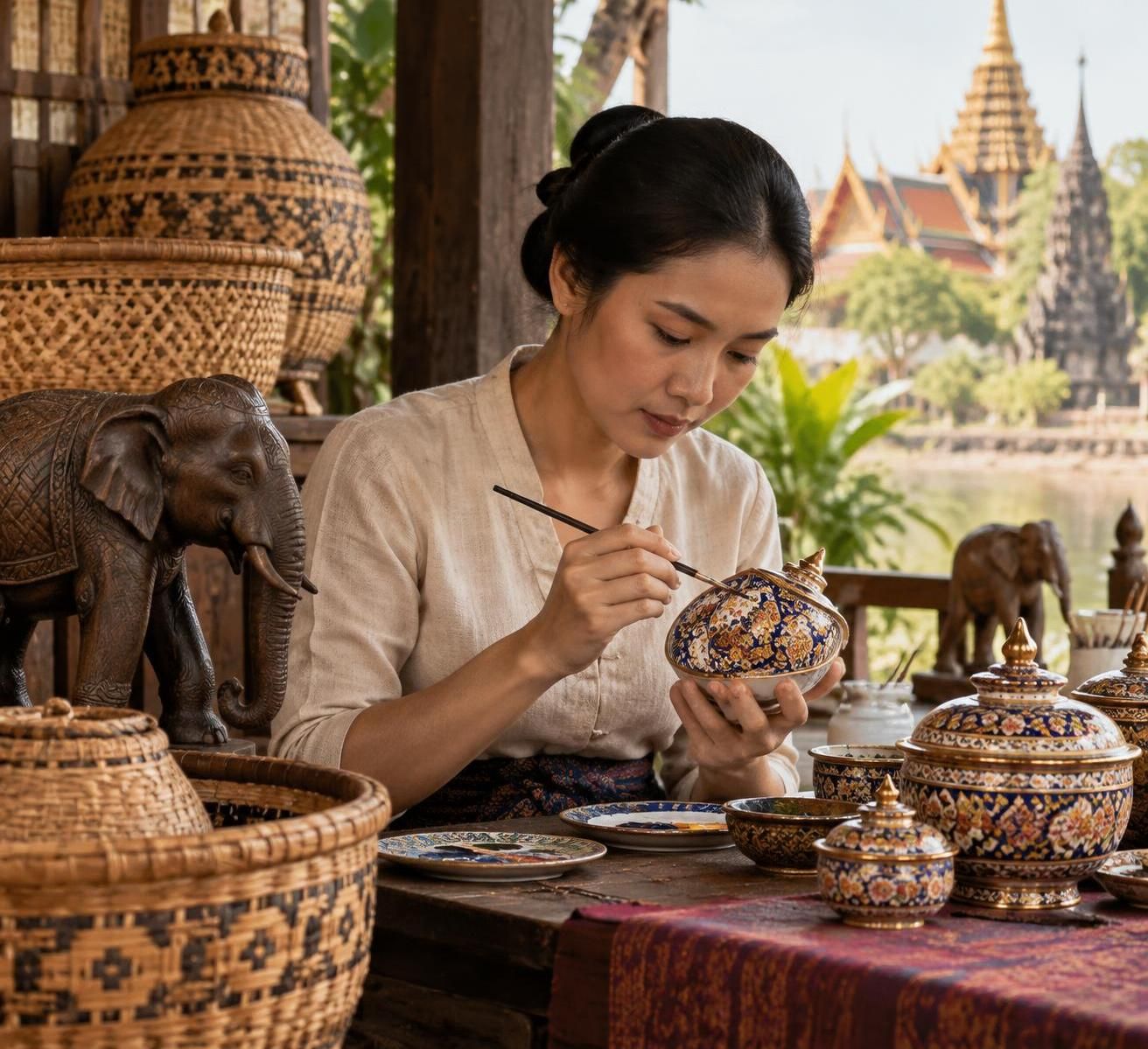
Traditional ceramics include Benjarong, a brightly decorated porcelain associated with Siamese courtly life. Its intricate motifs and often-gilded details make even a small lidded bowl feel ceremonial. Prices vary widely, with an indicative range of 500–5,000 baht or more depending on size, finish and workmanship.
Ban Don Kai Dee, a village known for Benjarong production, offers an opportunity to encounter the craft closer to its source. Pieces also appear at Chatuchak Market and specialist retailers. Ask whether the design is hand-painted, and inspect the rim, lid and base for cracks before purchasing.
For Maya, a small bowl might be more practical than a full tea set: it still shows the pattern but requires less protective packing. Ask the seller to wrap it securely, then cushion it in clothing and keep it away from the suitcase edges. If the piece is intended for food, ask the retailer about its suitability rather than assuming decorative porcelain is food-safe.
Wood Carvings, Khon Masks and Northern Embroidery
Wood carvings range from elephant figures to playful wooden frogs that make a croaking sound when rubbed with a stick. Small items often cost around 100–800 baht at Chiang Mai night markets, Pratunam or Chatuchak. Look for smooth finishing and stable joins, and ask about the wood’s origin when buying a larger or more expensive piece.
Some carved motifs have religious or cultural significance, while others are playful decorations. A respectful question about the meaning of an unfamiliar design is more rewarding than treating every object as interchangeable. Avoid wildlife products and check import rules for untreated wood or plant material.
Khon masks take their inspiration from Thailand’s masked dance-drama, whose performances draw on stories from the Ramakien. The expressive faces, colors and details reflect characters from a rich theatrical tradition. Decorative examples at Chatuchak may cost around 300–1,500 baht; ask how the piece was made and request protective wrapping for raised details.
Northern Thailand is also home to diverse communities with distinct weaving and embroidery traditions. At Chiang Mai’s Night Bazaar, walking streets and markets near Doi Inthanon, look for bags, accessories and textiles whose sellers can identify the maker or community. Buying directly from an artisan can make the connection clearer and helps ensure more of the purchase price reaches the producer.
Woven Baskets, Umbrellas and Respectful Choices
Rattan bags and bamboo sticky-rice baskets are useful as well as decorative, with many priced around 200–1,000 baht. Check for loose ends and consider how a structured bag will fit in luggage without being crushed. Customs authorities in some destinations inspect natural fibers, so declare them where required.
Near Chiang Mai, Bo Sang is known for hand-painted umbrellas made with bamboo and saa paper. A small decorative version can be easier to carry than a full-sized umbrella, but its paper still needs protection from moisture and pressure.
Buddha statues deserve particular care: they are sacred objects, not merely decorative souvenirs. Thailand restricts the export of Buddha images and antiques, and permission may be required even for pieces sold in markets. Check current requirements with Thailand’s Fine Arts Department before buying; small size alone does not guarantee an exemption.
Choosing an object with an understanding of its maker and meaning gives it a longer life than an impulsive purchase. For lighter gifts with a different kind of everyday use, the next stop might be a pharmacy or a fragrant market stall.
Herbal Balms, Coconut Products and Thai Spa Gifts
Some of Thailand’s most practical souvenirs are small enough to disappear into a toiletry bag. Herbal balms, soaps and scented oils are easy to find in pharmacies, convenience stores, markets and specialist wellness shops. Their appeal is simple: they can bring a familiar fragrance or a small moment of comfort into an ordinary day.
Herbal Inhalers and Balms for Everyday Use
Thai herbal inhalers, often called ya dom, come in pocket-sized sticks and small tubs. Many contain aromatic ingredients such as menthol, camphor or eucalyptus, though formulas vary. They make inexpensive gifts, but the scent can be strong, so they are best chosen for someone who enjoys herbal fragrances.
Golden Cup is one Thai balm brand travelers may encounter, alongside many other local products. Tiger Balm is also widely sold in Thailand, although the brand originated in Singapore. Read the label and instructions rather than assuming that every jar has the same ingredients or recommended use.
Balms are commonly used for a warming or cooling sensation, but they are not substitutes for medical treatment. Avoid applying them to broken skin, keep them away from eyes and follow age and safety warnings. Anyone with sensitive skin or allergies should check the ingredients and test a small area as directed.
Maya might pick up a few sealed inhalers for friends who prefer useful souvenirs, while choosing a mild soap for someone who dislikes strong scents. That small distinction matters: a thoughtful gift reflects the recipient’s habits rather than simply the popularity of a product.
Coconut Products, Lemongrass and Scented Soap
Coconut products appear as soaps, lotions, scrubs and oils, while lemongrass brings a bright citrus-like fragrance to many Thai-inspired wellness items. Market stalls offer inexpensive options, and brands such as Harnn and Pañpuri sell more elaborate spa products. Prices for this broad category may range from roughly 100 to 1,000 baht, with premium sets costing more.
Check the ingredient list, expiry date and intended use before buying. Coconut oil sold for cooking is not automatically packaged or formulated in the same way as a cosmetic product. A sealed bar of soap is often easier to carry than a bottle of oil, particularly for travelers with only hand luggage.
Carved soap flowers offer a more decorative alternative. At artisan stalls and Chiang Rai night markets, delicate petals are shaped from scented soap and sometimes presented in painted boxes. A typical price range is around 180–360 baht; keep the purchase away from heat and protect it from being crushed.
How to Pack Thai Wellness Souvenirs
Even a tightly closed jar can leak when squeezed between clothes. Place balms and lotions in a separate sealed bag, cushion glass containers and keep labels readable for customs. For cabin baggage, check the airline and airport rules for liquids, gels and pastes; a soft balm may be treated differently from a solid soap.
For a present, a small pair of items can feel more personal than a bulky boxed set: perhaps a lemongrass soap with a cotton washcloth, or a mild balm with a note explaining where it was bought. Avoid promising that any product will cure a condition, and let the recipient decide how to use it.
Scent is personal, and luggage space is limited. Testing a fragrance and checking the label before purchase can make a modest gift far more welcome; knowing where and how to shop makes that process easier still.
Where to Buy Thailand Souvenirs and How to Shop Responsibly
The right shopping stop depends on the kind of memory a traveler wants to bring home. Bangkok offers a broad choice across large markets, food halls and boutiques, while Chiang Mai is particularly rewarding for textiles, silver and northern crafts. Allowing time to browse makes it easier to compare quality without feeling pressured.
Bangkok, Chiang Mai and Phuket Souvenir Markets
Chatuchak Weekend Market in Bangkok is useful when several types of gift are on the list: clothing, home décor, ceramics and small crafts can all be found across its many sections. It is large and busy, so note the location of a stall if an item catches your eye. Opening hours can vary by section and vendor.
For food, Or Tor Kor Market offers produce and packaged ingredients, while Pratunam is known for budget clothing and accessories. Khao San Road is convenient for T-shirts, elephant-print trousers and small keepsakes, especially for travelers staying nearby.
In Chiang Mai, the Night Bazaar offers woodwork and accessories, while the Saturday Wua Lai and Sunday walking streets are popular places to browse jewelry and crafts. Baan Kang Wat brings together small creative shops, and Bo Sang is worth considering for painted umbrellas. In Phuket, OTOP Market in Patong is a convenient stop for clothing, snacks and modest gifts.
The following ranges are indicative prices in baht, useful for planning rather than fixed quotations. Quality, location and the seller’s workmanship can change the final cost considerably.
| Souvenir | Approximate price | Where to look |
|---|---|---|
| Elephant-print trousers | 100–300 baht | Street markets in Bangkok, Chiang Mai and Pai |
| Thai tea mix | 50–150 baht | ChaTraMue shops and convenience stores |
| Wooden keepsake | 100–800 baht | Chiang Mai night markets and Chatuchak |
| Silver jewelry | 300–5,000 baht or more | Chiang Mai silver shops and jewelry boutiques |
| Benjarong porcelain | 500–5,000 baht or more | Ban Don Kai Dee and specialist stalls |
Bargaining, Authenticity and Departure Rules
At informal markets, compare similar items before making an offer. Bargaining is often appropriate, but it should remain friendly: ask politely, consider a modest discount for several purchases and accept that a maker may have a firm price. Fixed-price shops and supermarkets generally are not places to negotiate.
A low price is not the only measure of value. When looking at silver, a 925 stamp can indicate a claimed sterling-silver content, but it is not proof by itself. For a costly purchase, choose a reputable seller, request a receipt and ask about material and workmanship.
Alcohol such as Thai rum or spirits may appeal to an adult recipient, but bottles add weight and breakage risk. Thailand’s legal drinking age is 20; travelers should also check airline rules and their destination’s duty-free allowances. International departures may permit eligible duty-free liquids in sealed security bags, while other liquid restrictions still apply.
VAT refunds are available to eligible visitors on qualifying purchases from participating retailers, subject to current conditions and airport procedures. Ask the shop for the required paperwork when paying, retain receipts and check the official Thai Revenue Department guidance before departure.
Finally, give purchases a practical test before leaving the stall: can they be packed safely, imported legally and used or displayed with respect? For Maya, that might mean choosing one well-made scarf over several fragile ornaments, or asking a ceramic seller to wrap a bowl before committing. A little time spent at the counter can protect both the journey home and the pleasure of opening the suitcase.