
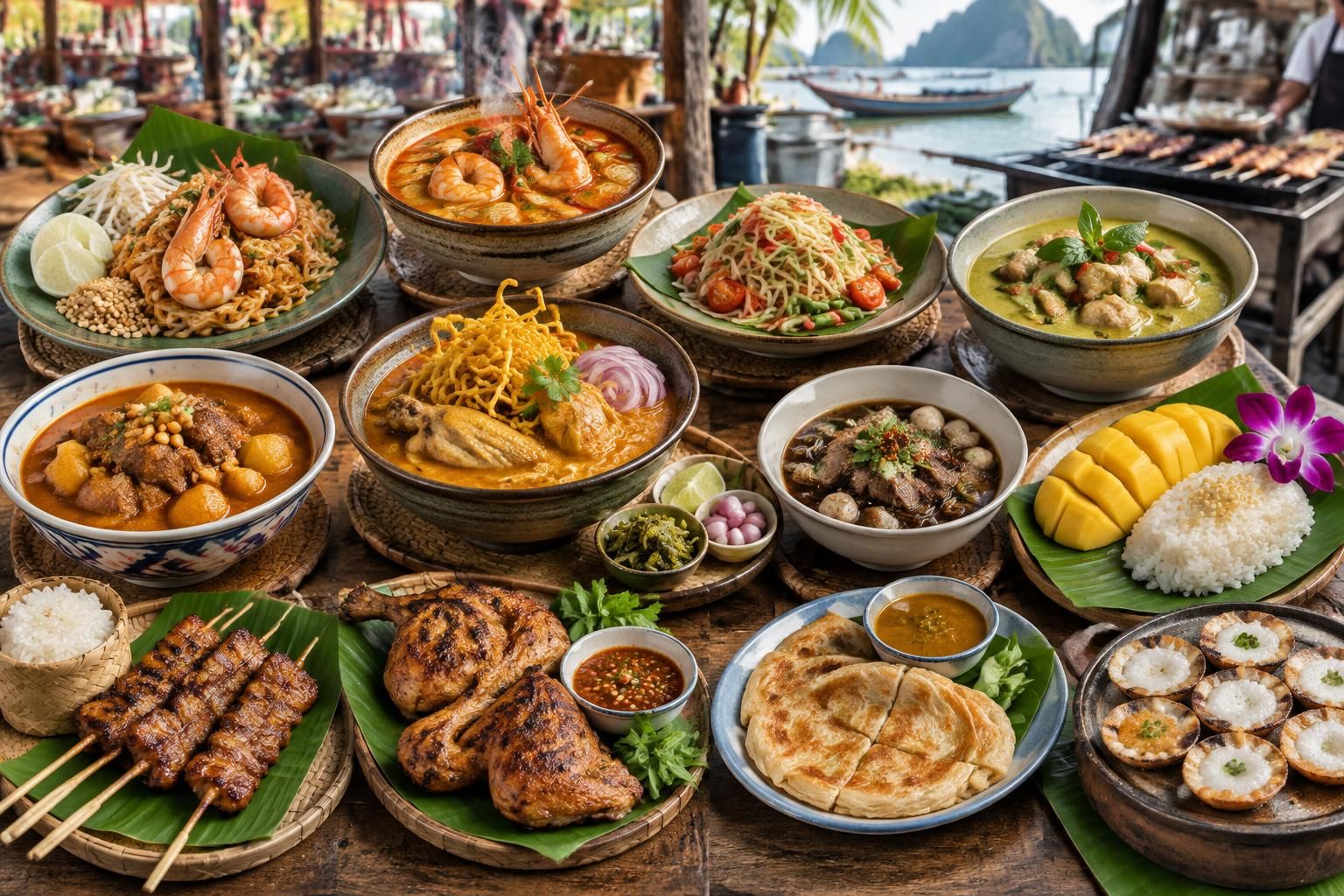
Thailand’s most memorable meals often begin with a simple choice: follow the aroma of a busy noodle stall, order a curry at a neighborhood shop, or share a papaya salad at a market table. The country’s food changes from region to region, bringing together smoky woks, fragrant herbs, coconut-rich sauces and desserts built around seasonal fruit.
For travelers planning their first food-focused journey, where to eat can be as revealing as what to order. Bangkok is a natural place to start, but northern night markets, northeastern grills and southern curry shops each offer a different perspective on the country’s cooking. These 12 dishes provide a practical route through those flavors, with room for different budgets, appetites and tolerances for heat.
At a glance
- Start with Pad Thai, basil stir-fry and Boat Noodles at Bangkok’s everyday food stalls.
- Explore aromatic soups and curries, including Tom Yum Goong, Green Curry and Massaman Curry.
- Look north for Khao Soi and sai ua, and seek out northeastern-style Som Tum and larb.
- Save room for Mango Sticky Rice and Thai roti, two sweets with very different textures.
- Ask about spice, seafood, peanuts and other ingredients before ordering; recipes vary by vendor.
Bangkok Street Food Classics: Pad Thai, Basil Stir-Fry and Boat Noodles
For a traveler arriving in Bangkok after a long journey, the first meal does not have to involve a complicated reservation. A busy open-air food court or a cluster of evening stalls can introduce the practical pleasures of Thai Street Food: dishes cooked quickly, served hot and adjusted at the table.
Pad Thai: A Wok-Fried Favorite With Room for Personal Taste
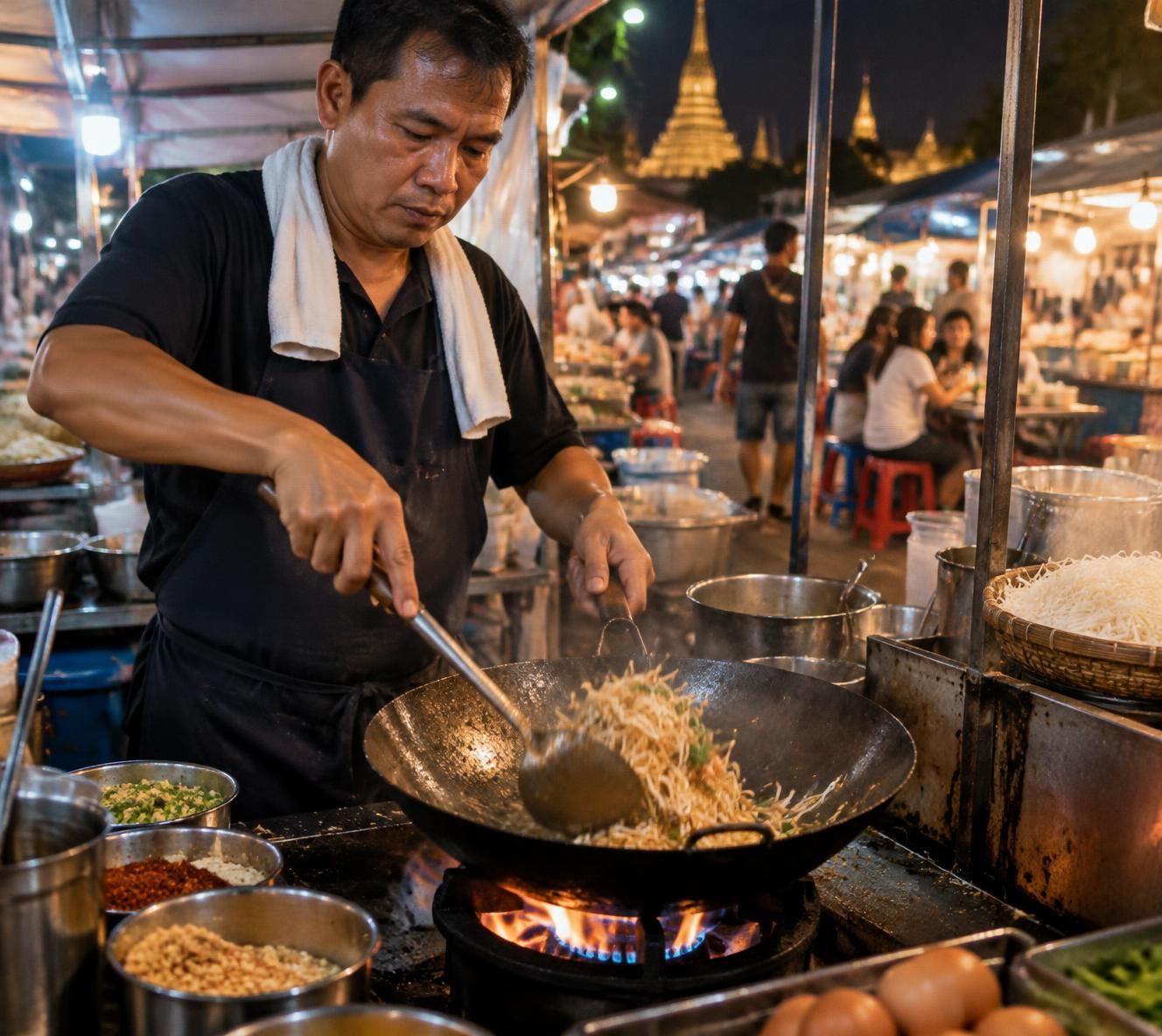
Pad Thai brings together rice noodles, egg, bean sprouts and seasonings that balance sweet, sour and savory flavors. Tofu, dried shrimp, fresh prawns or other proteins may appear, depending on the cook, while crushed peanuts and lime are often served on the side.
The dish is most satisfying when the noodles retain some bite and the sprouts offer freshness against the rich sauce. A squeeze of lime can brighten a sweeter version, while chili flakes let each diner control the heat rather than committing to a spicy plate from the start.
Look for it at street stalls and food courts around Bangkok, including the lively Chinatown district of Yaowarat. Watching a cook prepare individual portions in a hot wok is part of the appeal, but a long queue is not the only sign of a good meal: notice whether ingredients are handled carefully and cooked to order.
Travelers with peanut or shellfish allergies should ask about both toppings and the sauce before ordering. A plate that looks vegetarian may still contain fish sauce or dried shrimp, so a clear conversation matters more than appearances.
Pad Kra Pao: Thailand’s Fragrant Basil Stir-Fry
Pad kra pao is a fast-cooked stir-fry of minced or sliced meat, garlic, chili and holy basil, usually served over rice. A fried egg, often with crisp edges and a soft center, turns it into a particularly satisfying lunch.
Holy basil gives the dish its distinctive peppery aroma, setting it apart from versions made with sweet basil. Pork and chicken are common choices, although seafood and other variations also appear on menus.
Find it at made-to-order shops throughout Bangkok, especially near offices, universities and residential streets. These modest restaurants often prepare several wok dishes from the same counter, making them useful stops when a group wants different meals.
If a traveler asks for less chili, the cook can often adjust the stir-fry, although the final heat depends on the kitchen. Pointing to the ingredients and ordering one plate first is an easy way for a group to judge the spice level before choosing more.
Boat Noodles: Small Bowls With Deep Flavor
Boat Noodles, known as kuay teow ruea, are associated with a time when vendors sold food from boats along waterways. Today, diners are more likely to find them in fixed restaurants, where the bowls are often small enough to encourage ordering several.
The broth is typically dark and intensely seasoned, with pork or beef, noodles and herbs. Some versions use blood to enrich the soup, so travelers who prefer to avoid it should ask the vendor about the preparation.
Bangkok’s Victory Monument area is a well-known place to explore boat-noodle shops. Compare a couple of bowls before adding vinegar, chili or sugar: the condiments are there to personalize the broth, not to disguise it.
A useful first-day strategy is to choose one familiar noodle dish and one more assertive local favorite. That contrast prepares the palate for the aromatic soups and curries that follow.
Thai Soups and Curries to Try: Tom Yum Goong, Green Curry and Massaman
Thai soups and curries reward slower attention than a quick glance at a menu can provide. A single bowl may combine fresh herbs, fermented seasonings, coconut milk or dried spices, with the balance changing considerably from one kitchen to another.
Tom Yum Goong: A Bright, Aromatic Prawn Soup
Tom Yum Goong is a prawn soup known for its sharp, fragrant character. Lemongrass, galangal and makrut lime leaves perfume the broth, while lime juice and chilies contribute acidity and heat.
Some versions are clear and light; others are creamier, sometimes with evaporated milk or chili paste. Neither presentation automatically indicates a better bowl, because the important question is whether the herbs, sourness and seafood taste balanced.
Seafood restaurants in Bangkok and coastal destinations such as Phuket are sensible places to look. Choose an establishment where prawns are kept chilled and cooked to order, then pair the soup with plain rice if the flavors feel particularly intense.
The fibrous pieces of lemongrass, galangal and lime leaf are generally used to flavor the broth rather than eaten whole. A traveler unfamiliar with the dish can simply move them aside while enjoying the prawns, mushrooms and liquid.
Green Curry: Fragrant Heat With Coconut Milk
Green Curry, or gaeng khiao wan, gets its color and aroma from a curry paste that commonly includes green chilies and herbs. Coconut milk softens the edges, but the creamy appearance should not be mistaken for a guarantee of mildness.
Chicken is a familiar choice, often accompanied by small Thai eggplants and basil. Fish balls, beef or other ingredients may appear instead, and the consistency can range from fairly soupy to richer and thicker.
Look for a curry-and-rice shop where several prepared dishes are displayed in trays or pots. These shops are common in Bangkok and other cities, especially around lunchtime, when turnover is brisk and diners can point to what catches their eye.
A spoonful over rice makes the flavor easier to appreciate than eating the sauce alone. Anyone avoiding fish or shrimp should ask about the curry paste as well as the visible ingredients: a vegetable-heavy version may still contain shrimp paste or fish sauce.
Massaman Curry: Warming Spices and a Gentle Pace
Massaman Curry offers a different aromatic profile, often combining coconut milk with dried spices, potatoes and meat. Peanuts are a frequent ingredient, and the sauce tends toward a rich, gently sweet and savory balance.
The curry reflects Thailand’s long connections with Muslim communities and wider trading networks, though recipes and stories of origin vary. Its warming spices distinguish it from the greener, herb-driven aromas of many other Thai curries.
Seek it out at Thai Muslim restaurants or curry shops in Bangkok and southern Thailand. Beef and chicken are common, but it is worth checking the day’s preparation rather than assuming that every restaurant follows the same recipe.
For a small group, ordering massaman alongside a sharper soup creates an instructive contrast: one dish builds depth through slow-cooked richness, while the other depends on bright herbs and acidity. The next regional dishes shift attention from coconut and broth to herbs, grilling and lively shared plates.
Isan Food in Thailand: Som Tum and Larb Worth Sharing
Thailand’s northeastern region, Isan, has a distinctive food culture shaped by local agriculture, shared meals and close culinary connections across the Mekong. Its dishes are widely available elsewhere in Thailand, making an Isan restaurant a rewarding stop even for travelers who cannot visit the region itself.
Som Tum: A Papaya Salad Pounded to Order
Som Tum is built around shredded unripe papaya, pounded in a mortar with seasonings that can include lime, chili, garlic, fish sauce and palm sugar. Tomatoes and long beans frequently join the mixture, adding freshness and crunch.
The pounding matters because it bruises the ingredients and helps the dressing coat the papaya. The result is not simply a salad with sauce poured over it: each mouthful should carry a lively mix of textures and contrasting tastes.
One familiar version, som tum Thai, often includes peanuts and dried shrimp. Other styles may use fermented fish sauce or salted crab, producing a more assertive aroma, so asking which version a stall prepares can prevent surprises.
Look for vendors with a mortar and pestle at Bangkok markets, or visit a dedicated Isan restaurant in cities such as Udon Thani or Khon Kaen. Many places make each serving individually, which creates an opportunity to request fewer chilies before the ingredients are pounded together.
For a traveler who enjoys some heat but is unsure of local standards, starting gently is practical. A small amount of chili can still provide warmth, and extra seasoning is easier to add than remove.
Larb: A Warm Minced-Meat Salad With Toasted Rice
Larb is commonly made with cooked minced meat, herbs, lime and chili. Toasted ground rice adds a nutty aroma and a delicate grainy texture, distinguishing the dish from a straightforward meat salad.
Mint, shallots and other herbs bring freshness, while fish sauce contributes saltiness. Pork and chicken versions are widely available, though ingredients and preparation vary across northeastern Thailand and neighboring Laos.
An Isan restaurant is a natural place to order larb alongside sticky rice and grilled chicken. The rice can be eaten by hand: take a small portion, shape it lightly and use it to accompany bites of the salad and other dishes.
Travelers who prefer thoroughly cooked meat should specify that preference and choose a cooked version. Some regional preparations use raw meat or fish, making it important to ask rather than assume every dish with the same name is prepared identically.
These two plates work especially well for a group because they offer different forms of brightness: papaya provides a crisp, juicy base, while larb brings warm meat and fragrant toasted rice. Sharing also makes it easier to try an unfamiliar dressing without committing to an entire meal of it.
Menus at northeastern restaurants can be extensive, but there is no need to order everything at once. Begin with one salad, one protein and sticky rice, then add another dish if the table is still hungry.
For more ideas on planning food stops around the country, explore this Thailand travel resource. From Isan’s shared tables, the journey continues north, where curry noodles and grilled sausage offer a distinctly different sense of place.
Northern Thai Dishes to Find in Chiang Mai: Khao Soi and Sai Ua
Northern Thailand brings a different rhythm to a food itinerary. Chiang Mai’s markets and neighborhood restaurants are excellent places to explore dishes influenced by the region’s communities and its connections with neighboring parts of mainland Southeast Asia.
Khao Soi: Coconut Curry Noodles With a Crunchy Topping
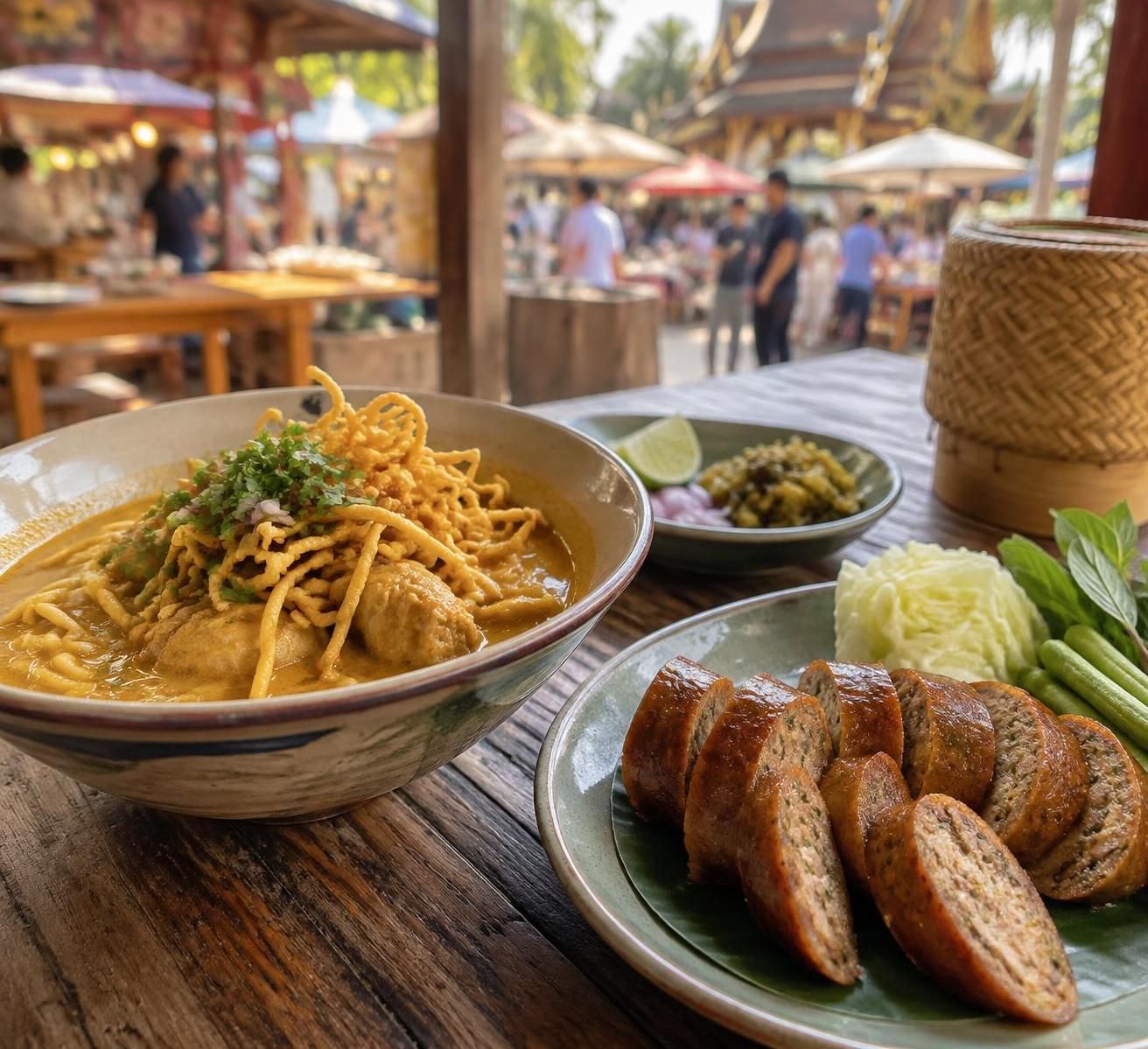
Khao Soi combines soft egg noodles with a curry broth, usually enriched with coconut milk. Crisp fried noodles are scattered over the top, creating a contrast that becomes especially appealing as some pieces soften in the soup.
Chicken is a common choice, although beef and other versions are also available. Pickled mustard greens, shallots and lime are often served alongside, allowing diners to add acidity and sharpness to the rich broth.
Chiang Mai is the most familiar place to seek out this northern specialty, but it also appears in Chiang Rai and other cities. Small restaurants may serve it as a lunchtime staple, so visiting earlier in the day is often a useful strategy.
Before mixing everything together, taste the broth on its own. Then add a little lime and a few pickled greens, noticing how their sharpness changes the experience; chili oil can be added gradually if it is available.
A bowl can look mild because of the coconut milk, yet spice levels differ. Asking about heat before ordering gives a hesitant diner a better chance of enjoying the curry’s fragrance rather than concentrating only on the burn.
Sai Ua: Northern Grilled Sausage With Herbs
Sai ua is a northern Thai sausage usually made with pork and a fragrant mixture of herbs and spices. Lemongrass, galangal, makrut lime leaf and chili may contribute to its aroma, though every maker has a preferred blend.
It is typically grilled and sold in slices, making it easy to sample at a market without ordering a full restaurant meal. The casing gives way to a firm, juicy filling that is more herbaceous than many travelers expect from sausage.
In Chiang Mai, look for it at food markets and stalls selling northern specialties. A vendor who slices a freshly cooked length to order offers a convenient opportunity to buy a small portion first, especially if spice tolerance is a concern.
Sticky rice is a useful companion because it softens the intensity of the seasoning without hiding the herbal character. Some vendors also offer vegetables or chili dips, which can turn a snack into a more varied picnic-style meal.
Travelers who do not eat pork should ask about ingredients rather than relying on the sausage’s appearance. Separate utensils and preparation surfaces may matter too, particularly for religious restrictions or allergies.
For a practical Chiang Mai food walk, a traveler could enjoy curry noodles for lunch, explore a market later in the afternoon and take a small serving of sausage for an early evening snack. That sequence leaves time to appreciate each dish rather than rushing through a checklist.
The pairing also shows why regional food deserves attention beyond Bangkok: one northern favorite is spooned from a fragrant bowl, while the other carries its character in a grilled, portable slice. After savory dishes like these, Thailand’s fruit and griddled sweets offer a welcome change of pace.
Thai Desserts and Market Stops: Mango Sticky Rice and Roti
Dessert in Thailand does not need to be reserved for the end of a formal meal. A fruit stall, market cart or small takeaway counter can provide an afternoon treat, with portions that are easy to share after a day of exploring.
Mango Sticky Rice: Sweet Fruit and Salty Coconut Cream
Mango Sticky Rice, or khao niao mamuang, pairs ripe mango with glutinous rice seasoned with sweetened coconut milk. A drizzle of coconut cream adds richness, while a little salt helps keep the dessert from tasting one-dimensional.
The best experience depends on the contrast between warm or room-temperature rice and fragrant, yielding fruit. Some vendors add crisp mung beans or sesame for texture, although toppings vary.
Find it at dessert shops and markets across Bangkok, Chiang Mai and many tourist destinations. Mangoes are especially associated with Thailand’s hot season, but availability and quality depend on the variety, location and time of year.
At a counter, look for fruit that is cut close to serving time and rice that appears moist rather than dried out. A shared portion can be a sensible choice after a substantial meal, particularly when the mango is large and the rice is generously dressed.
Anyone with a coconut allergy should avoid assuming the fruit-and-rice combination is safe: coconut milk is central to the usual preparation. Travelers avoiding animal products should still check toppings and preparation practices, since recipes differ between vendors.
Thai Roti: A Crisp Griddled Sweet
Thai roti is a thin dough stretched, folded and cooked on a hot griddle. The exterior can become crisp and golden while the layers inside remain tender, giving a simple snack an appealing contrast.
Banana and egg are common fillings, and many sweet versions receive condensed milk or sugar after cooking. Savory roti also exists, including versions served with curry, reflecting the dish’s place in several Thai Muslim food traditions.
Watch for roti carts at evening markets and along busy streets, particularly in southern Thailand and popular travel destinations. Because each portion is cooked on the griddle, diners can often see the filling being added and request less condensed milk if they prefer.
A traveler with a dairy or egg allergy should ask about the dough, cooking fat and toppings before ordering. Even a plain-looking roti may contain ingredients that are not obvious from the finished snack.
Choosing Bangkok Food Markets and Dessert Stops
Markets are useful because they let travelers compare several dishes without committing to a single restaurant. For food-focused planning, more Thailand travel ideas can help connect neighborhood visits with time for a relaxed meal.
Among Bangkok Food Markets, Chinatown’s Yaowarat area is especially lively in the evening, while markets and food courts elsewhere in the city offer their own mix of meals and snacks. Opening times and individual vendors change, so checking locally before setting out can save an unnecessary journey.
| Dish | Where to look | What to check before ordering |
|---|---|---|
| Mango Sticky Rice | Dessert shops and fresh-food markets | Ripeness of the mango and coconut ingredients |
| Thai roti | Evening carts and southern Thai markets | Fillings, cooking fat and dairy toppings |
| Pad Thai | Street stalls and food courts | Peanuts, dried shrimp and fish sauce |
| Khao Soi | Chiang Mai and northern noodle shops | Protein choice and chili level |
Paying attention to how a stall stores ingredients and handles cooked food is more useful than judging it solely by its appearance. A freshly prepared portion, a clear conversation about ingredients and a little space to sit and eat comfortably can make the final sweet stop feel as welcoming as the first savory meal.