
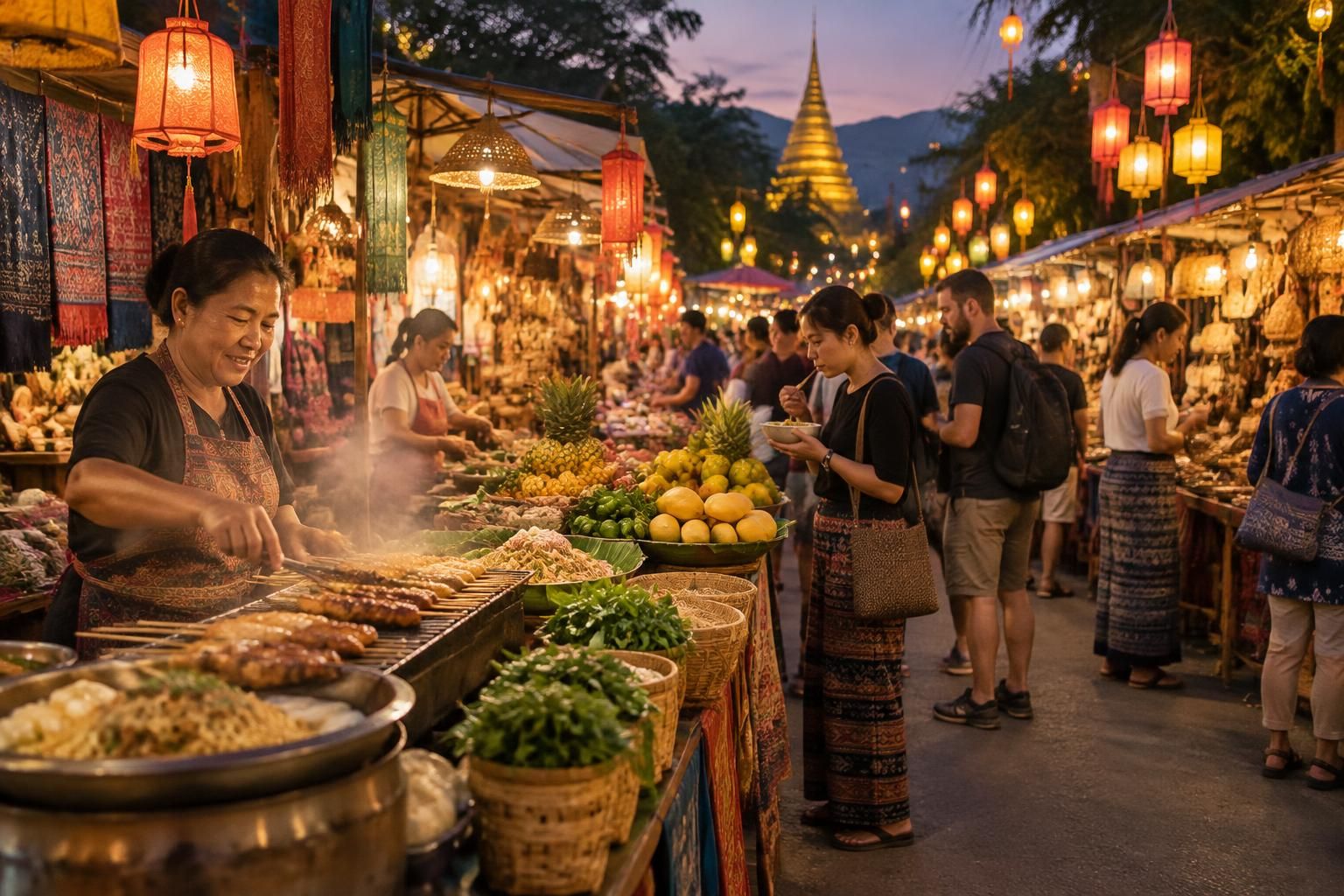
At dusk, Chiang Mai’s streets offer several different kinds of evening: a crowded Sunday promenade filled with artwork, a north-gate supper of braised pork and noodles, or a leisurely wander through the illuminated stalls along Chang Khlan Road. Choosing between them is less about finding a single “best” market than matching the day, appetite and energy level to the right neighborhood.
A first-time visitor arriving on a Saturday, for example, can browse silver near Wua Lai’s historic workshops; the same traveler on a Tuesday might find a more satisfying dinner at Chang Phuak Gate. Some places are designed for long browsing sessions, while others are essentially open-air dining rooms. This night market guide brings together the practical details that make those differences useful, from typical opening times to what to order and how to recognize a thoughtful souvenir. Schedules and individual stalls can change, so checking locally before a special trip is worthwhile.
At a glance
- Sunday: Choose Sunday Walking Street for the broadest mix of art, food and atmosphere.
- Saturday: Head to Wua Lai for silver, crafts and a generally more relaxed stroll.
- Any evening: Try the Night Bazaar district for convenience or Chang Phuak Gate for a food-focused outing.
- Shopping: Carry small baht notes, compare similar goods and negotiate politely where appropriate.
- Timing: Typical market opening hours vary by vendor, weather and special events.
Sunday and Saturday Walking Streets: Chiang Mai’s Best Weekend Markets
Sunday Walking Street is the most expansive choice when a visit falls on the right day. Ratchadamnoen Road becomes a pedestrian route through the Old City, stretching from around Tha Phae Gate toward Wat Phra Singh, with stalls also appearing along adjoining streets and in temple courtyards.
The market usually begins around 4 p.m. and continues until roughly 10:30 p.m., although vendors set their own schedules. Arriving early gives a traveler room to examine textiles and paintings before the central stretch becomes crowded; arriving later brings more lights, music and the full festival atmosphere.
What to Buy and Eat at Sunday Walking Street
This is a rewarding place to look for handmade crafts, especially small paintings, ceramics, woven accessories and paper goods. The selection is broad rather than uniformly artisanal, so it pays to ask who made an item and where the materials came from before deciding that a piece is locally produced.
Take the example of Mali, a fictional traveler choosing a gift that will fit in a carry-on. A small print can be easier to transport than a carved bowl, while a fabric pouch offers a chance to inspect stitching and speak with the seller without committing to a fragile purchase.
Food areas in temple courtyards offer a useful pause from the moving crowd. A snack, a fruit drink and a seat can turn a rushed shopping route into a comfortable evening, particularly for families or anyone who finds busy streets tiring.
Small snacks may start around 20 THB, while a simple meal often costs roughly 60–150 THB. Crafts vary much more widely: a modest souvenir might cost under 200 THB, whereas original artwork or a carefully made textile can cost considerably more.
Wua Lai Saturday Market and Its Silver Heritage
On Saturdays, the walking street along Wua Lai Road, south of the Old City near Chiang Mai Gate, provides a smaller alternative. It generally operates from about 4 p.m. to 10 p.m. and is often easier to browse, although popular stretches can still become busy.
The neighborhood has a longstanding silversmithing tradition, reflected in jewelry, decorative metalwork and the striking silver-colored panels of Wat Sri Suphan. The temple is a useful landmark, but visitors should observe posted entry rules and dress respectfully when visiting religious spaces.
Silver is the distinctive purchase here, not an automatic guarantee of quality. Ask about metal content and whether an item is solid silver or plated, inspect clasps and joins, and choose a piece because its workmanship appeals rather than because a seller describes it as a bargain.
Wua Lai also has grilled snacks, textiles, small prints and everyday clothing, making it enjoyable even for someone with no interest in jewelry. For Mali, a Saturday evening here might mean an unhurried meal and a conversation about a pendant, while Sunday would offer a longer, livelier search for art.
The key distinction is pace: Saturday favors focused browsing; Sunday rewards exploration. Travelers without a weekend evening can still find plenty to eat and see in the city’s nightly market districts.
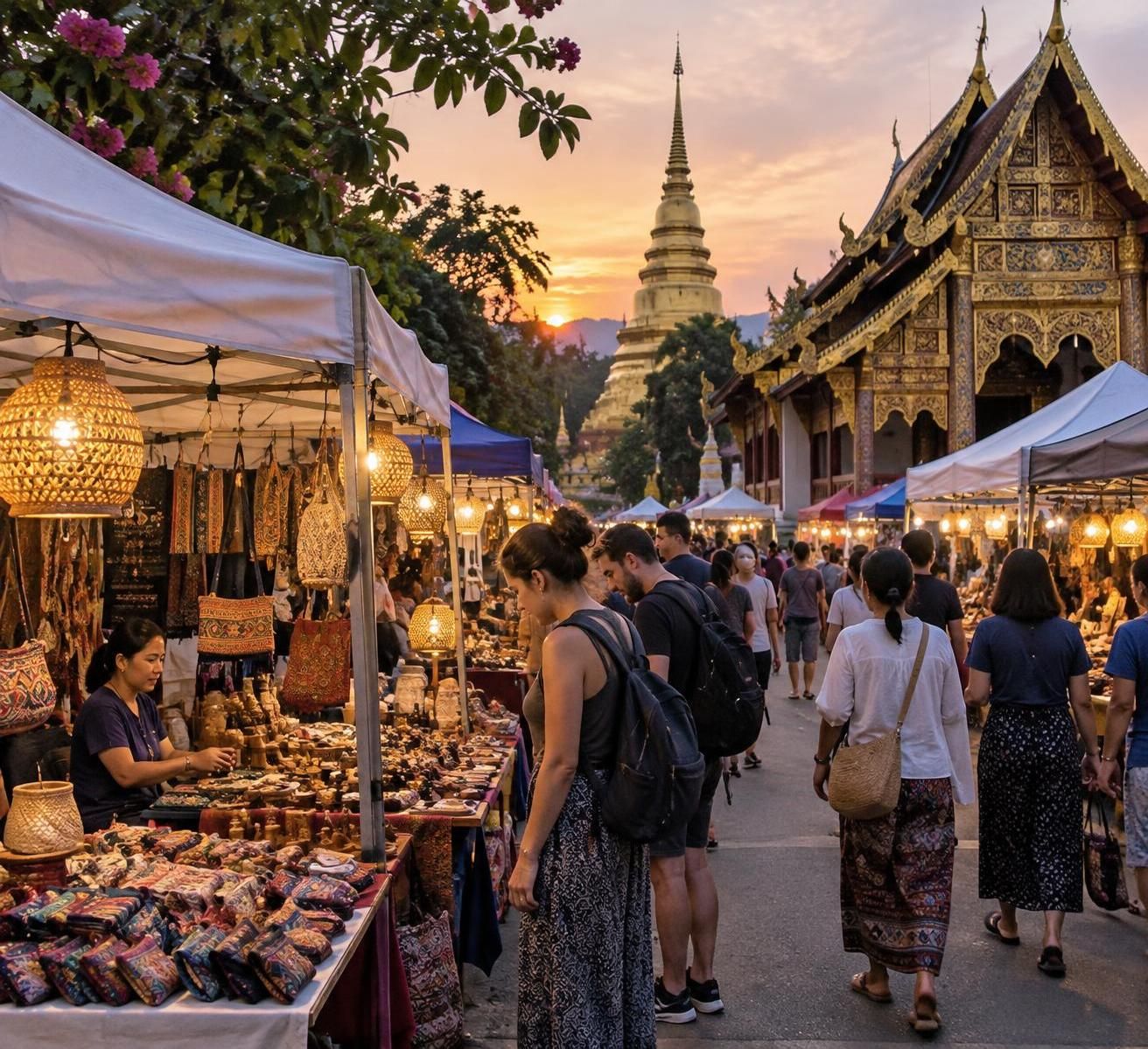
Chiang Mai Night Bazaar: Where to Shop and Eat Every Evening
The Night Bazaar is best understood as a district rather than one enclosed market. Along Chang Khlan Road, east of the Old City, street stalls, restaurants and nearby market complexes create an easy-to-navigate evening out, generally from around 5 p.m. to 11 p.m.
Its greatest advantage is reliability. A traveler checking into a nearby hotel on a weekday can walk over without reorganizing the trip around a Saturday or Sunday, browse for casual clothing and settle down for dinner in the same area.
The district developed alongside Chiang Mai’s tourism trade, and its merchandise reflects that audience. Elephant-print trousers, phone accessories and familiar souvenir designs are common, alongside more individual textiles, art and decorative pieces.
That variety makes the bazaar useful for orientation, but not every purchase represents the best value. Similar products can appear at several stalls, sometimes at noticeably different prices, so a short comparison walk is more useful than accepting the first offer as the going rate.
Kalare, Ploen Ruedee and Anusarn After Dark
Kalare and Ploen Ruedee offer food-court-style dining within the wider bazaar area. Their seating and partially covered spaces can be especially welcome when a group wants different dishes or a sudden shower makes pavement dining less appealing.
Expect convenience rather than the lowest street-food prices. A diner might choose noodles while a companion orders grilled meat, then meet at a shared table; the trade-off is that the setting can feel more visitor-oriented than the gate-side food stalls.
Nearby Anusarn Market offers another option for a slower evening, with restaurants, seafood and massage shops. Seafood sold by weight deserves a clear conversation before ordering: confirm the price per unit, the approximate weight and any cooking charge so the final bill is understood.
Some venues advertise music, boxing or other entertainment, but performance schedules and operators change. Ask at the venue before building an evening around a particular show, especially when purchasing tickets in advance.
Planning a Comfortable Bazaar Visit
Mali, arriving after a long journey, might use the district for a gentle first night: a seated meal, a walk past several stalls and a modest purchase only after comparing prices. There is no need to cover every lane or turn a convenient dinner into an exhausting shopping expedition.
Comfortable footwear helps on uneven pavements, while a small umbrella is useful during the rainy season. Keep a little cash for stalls even if a restaurant accepts cards, and agree on the price of a massage before the session begins.
Travelers interested in further ideas for their stay can explore more Chiang Mai travel inspiration alongside the market plan. The bazaar’s real strength is its flexibility: it combines browsing, food and a place to sit, while the city’s gate markets put dinner itself at the center of the evening.
Local Chiang Mai Night Markets: Gate Food Stalls and Student Favorites
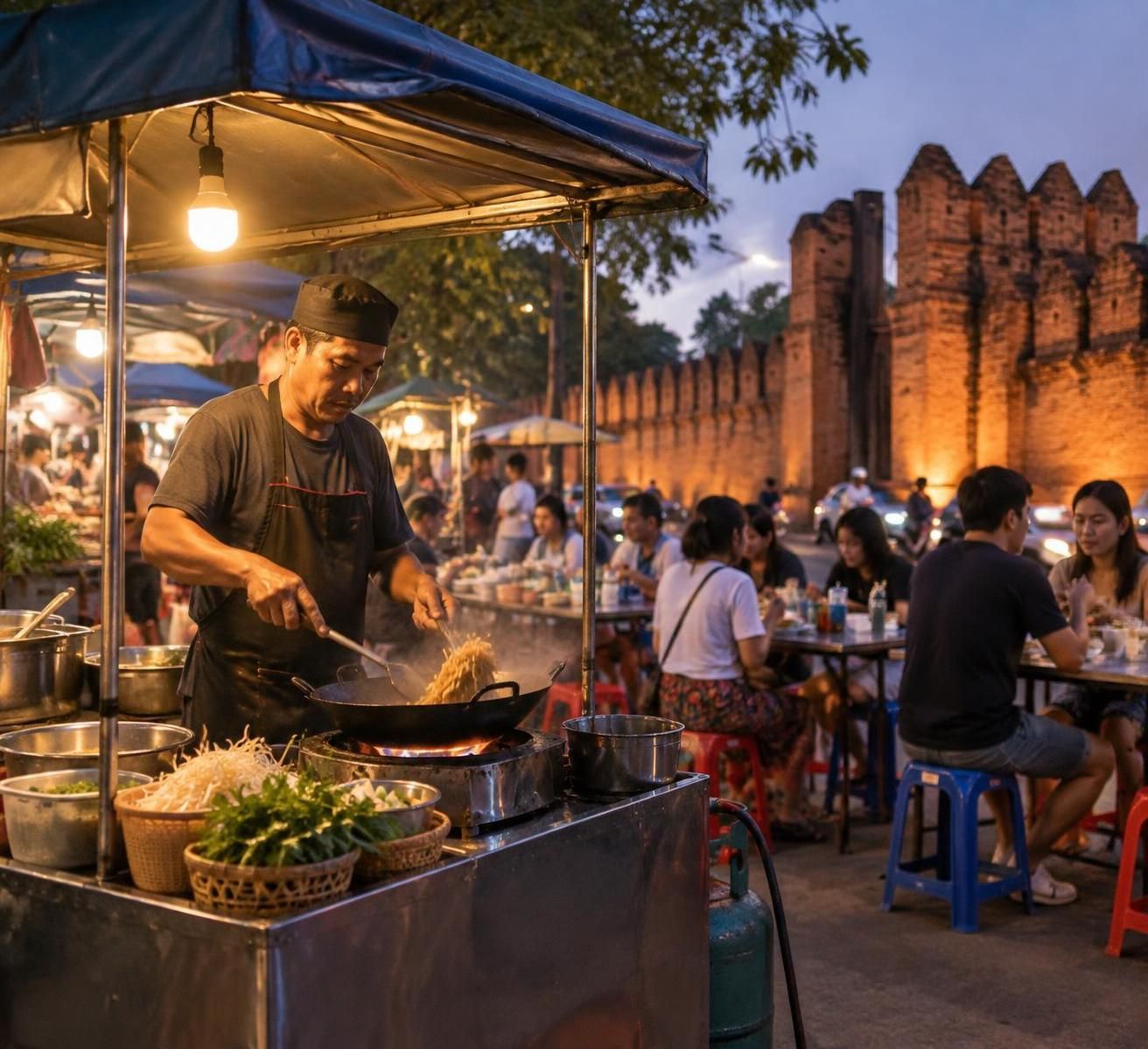
For travelers who care more about dinner than souvenirs, Chang Phuak Gate offers a compact street-food strip just outside the Old City’s northern gate. Stalls generally begin serving in the early evening and some continue late, though individual vendors take days off or sell out.
The atmosphere is practical and lively: cooks work over pots and woks, customers wait for orders, and shared tables fill with people stopping for a meal. The area welcomes visitors, but its focus remains food rather than shopping.
Chang Phuak Gate and Chiang Mai Gate
One well-known choice is khao kha moo, tender braised pork leg served over rice, often with greens and a savory sauce. The stall associated with a vendor wearing a cowboy hat is particularly recognizable, so arriving earlier can help if that dish is a priority.
Thai suki is another appealing option: vegetables and noodles are cooked with a choice of ingredients and served with a distinctive dipping sauce. A queue can indicate popularity, but watching how a stall handles orders also helps a newcomer understand where to wait and when to pay.
At the south side of the Old City, Chiang Mai Gate Market has a different daily rhythm. Morning brings produce and prepared foods for residents, while evening stalls offer an accessible dinner stop near the moat, generally from late afternoon onward.
Look for grilled meats, fruit shakes and northern specialties such as sai oua, a fragrant sausage seasoned with herbs and spices. Some vendors serve khao soi, the region’s well-known curry noodle soup, although availability depends on the day and the stall.
Mali could walk to Chiang Mai Gate from an Old City guesthouse, choose two small dishes and return without committing to a long evening out. That flexibility matters when a traveler is tired, traveling with children or simply wants a satisfying meal close to home.
Student-Style Dining Near Chiang Mai University
Near Chiang Mai University on Huay Kaew Road, Kad Na Mor, also associated with Malin Plaza, draws a younger crowd for inexpensive meals, clothing and accessories. It is generally an evening destination, with stalls often active from around 5 p.m. to 10 p.m.
The food selection can include Thai staples as well as snacks influenced by other Asian cuisines. For a group with different preferences, that range makes it easier for each person to choose independently before meeting at a table.
South of the Old City, Kad Manee has been known as a relaxed, food-first gathering place with seating near a small water feature. Because market operators and layouts can change, check current local listings before traveling there specifically for that setting.
Warorot Market, or Kad Luang, deserves a different kind of planning: its main business is daytime trade, although food and flower sellers around its edges may remain active into the early evening. It is a worthwhile early stop, not a substitute for a late-night market.
These neighborhood options demonstrate that Chiang Mai night markets do not all serve the same purpose. Some are destinations for a long browse; others are places to eat well, sit briefly and carry on with the evening.
Thai Street Food at Chiang Mai Night Markets: What to Order
The pleasure of Thai street food is not limited to a single signature dish. A good market meal can move from something smoky and savory to a cooling drink and a small dessert, with portions shared so that several flavors fit into one evening.
Start by looking around before ordering. A busy stall with ingredients handled carefully and food cooked to order is often a comfortable choice, while a clearly displayed menu helps establish the price and portion size.
Northern Thai Dishes and Easy First Orders
Khao soi combines egg noodles with a curry broth and is commonly served with toppings and condiments. It is associated with northern Thailand, but recipes vary by cook, so one bowl may taste richer or spicier than another.
Sai oua brings a different texture: slices of grilled northern sausage carry the fragrance of herbs and chili. Ask for a small portion if available and pair it with rice or another mild dish when spice is a concern.
At Chang Phuak Gate, braised pork over rice is a substantial, familiar-looking starting point for a traveler who feels unsure about ordering. Thai suki, grilled skewers and noodle soups offer further variety without requiring a complicated meal plan.
Mali might begin with a shared sausage, order a bowl of noodles for dinner and finish with mango sticky rice if it is available. The sequence gives her companions a chance to sample several local dishes without buying more than they can comfortably eat.
Ordering for Dietary Needs and Food Comfort
Vegetarian travelers should ask specifically about ingredients rather than assuming a vegetable dish contains no animal products. Fish sauce, oyster sauce, meat broth and shrimp paste can appear in dishes that look meat-free, so explaining the restriction clearly is important.
Anyone with an allergy should communicate it before ordering and consider carrying a clearly written Thai translation. Shared pans, grills and utensils can create cross-contact, and a busy stall may not be able to guarantee an allergen-free meal.
For sensitive stomachs, choose food served freshly cooked and hot, and consider bottled or otherwise safe drinking water. These habits reduce avoidable risks, but no stall or dish can guarantee that every traveler will feel well afterward.
Spice tolerance also deserves a conversation. Asking for less chili can help, although a paste or broth may already contain it; a fruit shake or plain rice can provide a gentler contrast to a fiery dish.
Market Food Budgets and Seating
Prices depend on location and ingredients, but many gate-market dishes fall around 40–100 THB, with snacks and desserts often costing less. At a visitor-oriented food court, expect some dishes and drinks to cost more; seafood and specialty items can rise well beyond those ranges.
Carry small notes, check whether seating belongs to a particular stall and clear packaging as directed. If a table is crowded, waiting for an obvious opening is kinder than assuming it is free because one chair is empty.
Food is most enjoyable when curiosity is matched with consideration: ask, observe and order at a comfortable pace. The same patient approach makes shopping for souvenirs more rewarding.
Chiang Mai Night Market Shopping Tips, Budgets and Practical Planning
Deciding where to shop begins with the object, not the reputation of the market. Sunday is strong for browsing art and varied crafts, Wua Lai suits silver enthusiasts, and the Night Bazaar is convenient for everyday clothing and quick gifts.
Some products reflect traditions from outside the market itself. Paper umbrellas associated with Bo Sang and woodcarving connected to Baan Tawai may appear at city stalls, but their presence alone does not establish where a particular item was made.
How to Compare Crafts and Bargain Respectfully
Ask a seller about the maker, materials and production process, then inspect the item closely. Neat seams on a textile, a secure clasp on jewelry and a smooth finish on a carving are practical clues to workmanship, even when the buyer is not an expert.
A “handmade” label deserves a friendly follow-up rather than automatic belief. If Mali finds two similar bags, she can compare stitching and fabric, ask whether either was made locally and choose the one whose quality and price make sense to her.
Negotiation can be appropriate for unmarked clothing, souvenirs and some crafts, but it is not required at every stall. Make a polite offer, accept a refusal graciously and remember that a maker’s price may reflect hours of skilled work rather than room for a large discount.
Do not bargain over prepared food, posted fixed prices or purchases inside fixed-price shops. These shopping tips protect both the traveler’s budget and the respectful atmosphere that makes conversation with vendors worthwhile.
Typical Market Opening Hours and Costs
The following times are planning estimates, not guarantees. Weather, holidays, individual rest days and local events can affect opening hours, so check current information before making a special journey.
| Market | Usual schedule | Best for |
|---|---|---|
| Sunday Walking Street | Sunday, approximately 4–10:30 p.m. | Art, crafts and a long Old City stroll |
| Wua Lai Walking Street | Saturday, approximately 4–10 p.m. | Silver and relaxed browsing |
| Night Bazaar district | Daily, approximately 5–11 p.m. | Convenient shopping and seated meals |
| Chang Phuak Gate | Most evenings, from around 5 p.m. | Street-food dinners |
| Chiang Mai Gate | Most evenings, from late afternoon | Casual food near the Old City |
A food-focused outing can be inexpensive: around 300 THB per person may cover several modest dishes and a drink, depending on choices. An evening involving transport and a handmade souvenir might reach 800–1,500 THB or more, particularly if the purchase is substantial.
Red songthaews, the shared pickup taxis, can be economical for short trips; agree on the fare before boarding because distance and arrangements affect the price. Ride-hailing fares also vary with traffic and demand, while weekend road closures can make walking the final stretch easier.
Rainy Evenings and Daytime Artisan Alternatives
During the rainy season, roughly June to October, an umbrella and flexible plans help. Covered areas around the bazaar provide one option, while MAYA in Nimman or Central Festival northeast of the Old City offer food and fixed-price shopping indoors.
Jing Jai Market and Baan Kang Wat appeal to visitors interested in artisan goods and café culture, but they are primarily daytime outings rather than replacements for a night market. Check their current schedules separately before setting aside a morning.
For broader planning, explore more ideas for a Chiang Mai stay and leave room for the evening that best fits the calendar. A flexible plan, small notes and time to compare make it easier to enjoy the market without feeling pressured to buy.