
At a glance
- Worth visiting: Yes, especially for northern Thai food, historic temples, creative neighborhoods and a slower pace than Bangkok.
- Best timing: November to February generally offers cooler weather; late February through April brings a significant risk of smoke.
- Ideal stay: Three to four days covers the highlights, while five to seven allows time for day trips and quieter exploration.
- Where to stay: Choose the Old City for walkability, Nimman for cafés and workspaces, or the riverside for a quieter setting.
- Daily costs: Budget travelers can plan around ฿800–1,200 on simple days; organized excursions and private rooms increase the total.
Why Chiang Mai Is Worth Visiting for Temples and Lanna Culture
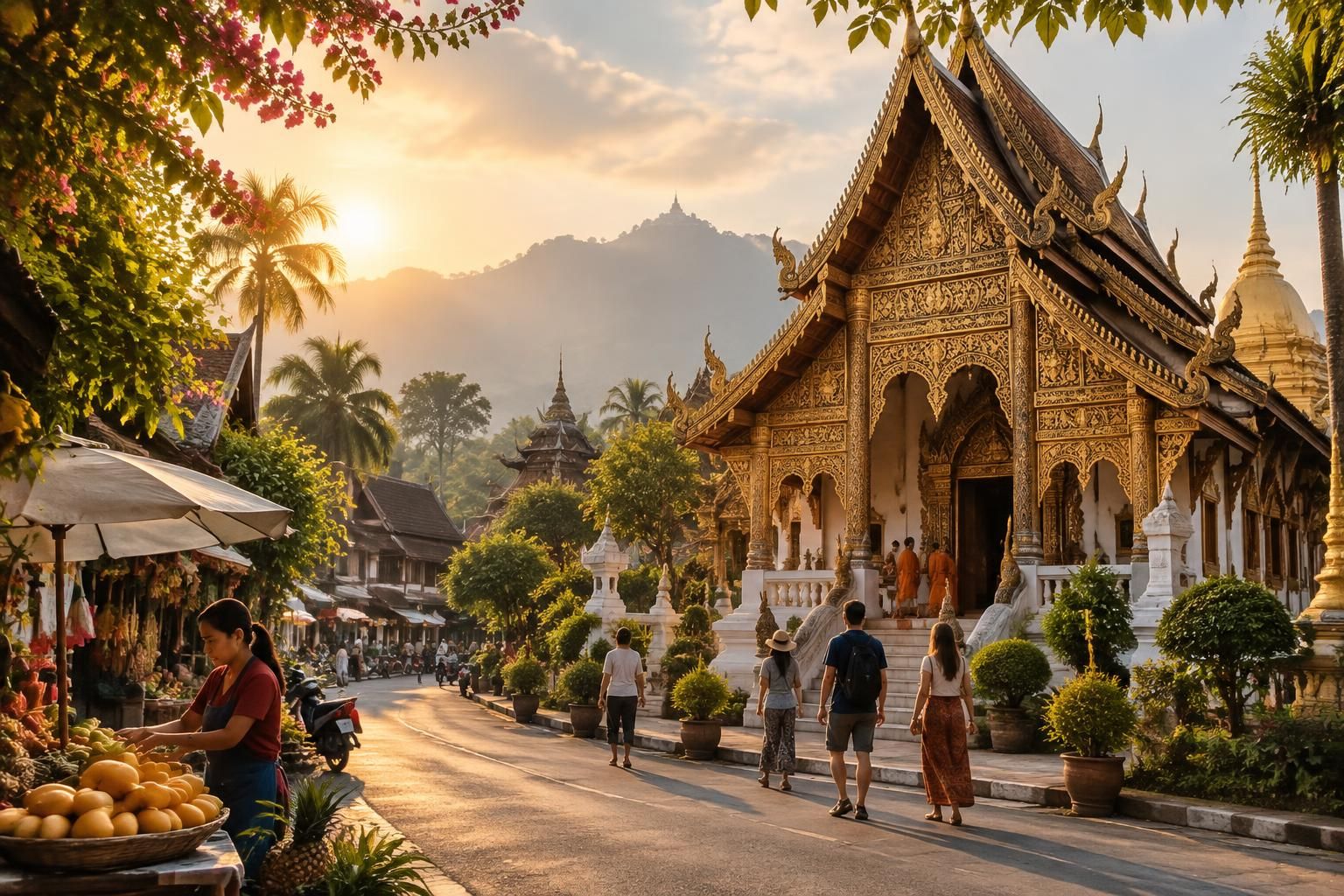
Chiang Mai offers a different experience from Thailand’s busiest beach resorts and sprawling capital. Its appeal lies in the combination of living Buddhist traditions, distinctive northern food and a city center small enough to explore at a considerate pace.
Founded in 1296, the city became a center of the Lanna Kingdom. That heritage remains visible in carved wooden buildings, temple murals, textiles and the northern Thai language heard alongside standard Thai.
Calling it Thailand’s cultural capital does not mean that everyday life is preserved for visitors. Students, families, artists and business owners share the streets with travelers, and contemporary cafés sit beside centuries-old religious sites.
Chiang Mai’s Old City Temples: Choose Quality Over Quantity
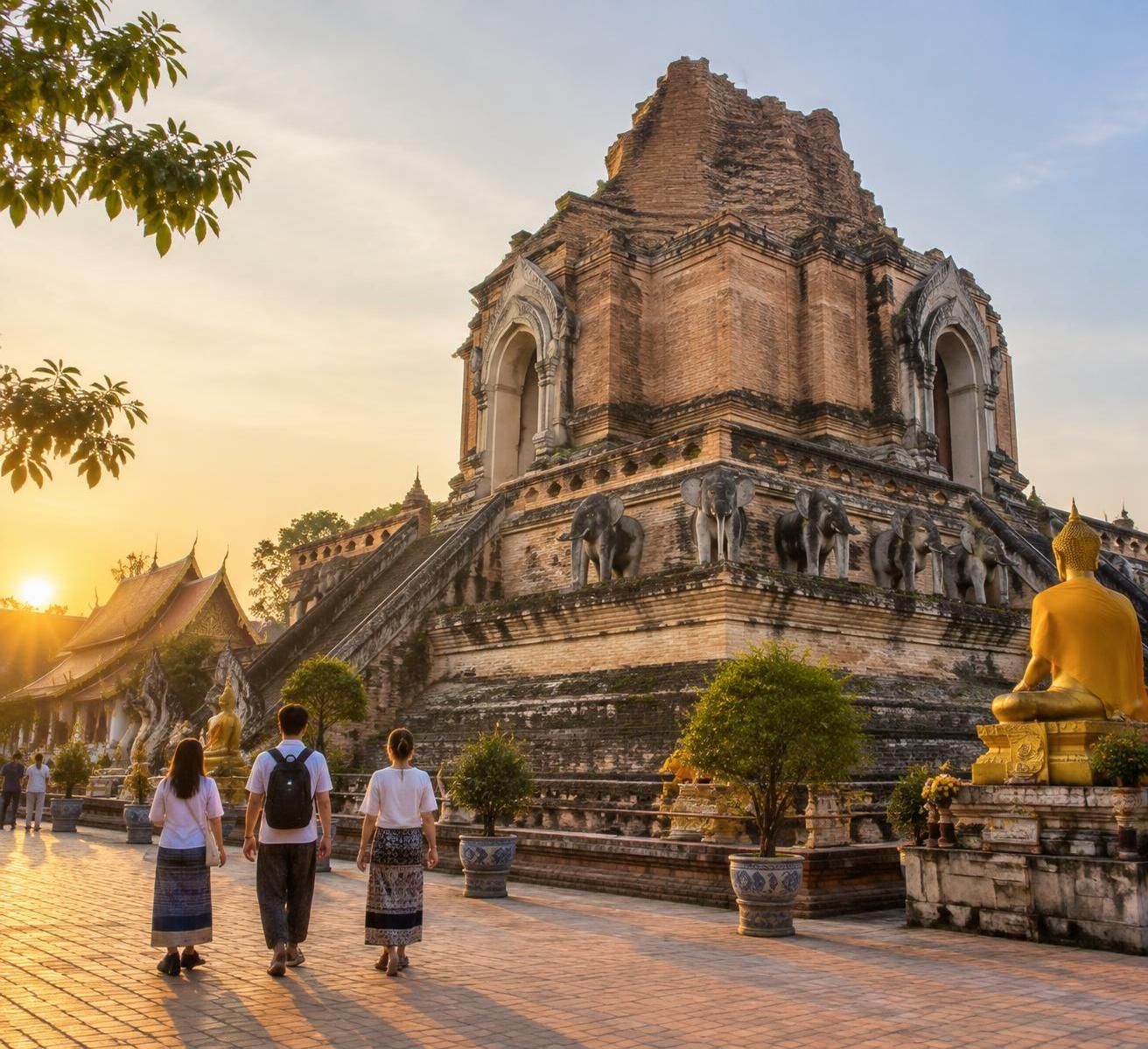
Inside the old moat, Wat Chedi Luang makes an impression with the scale of its partially ruined brick chedi. The structure is not merely a dramatic backdrop: the surrounding complex remains an active place of worship, so visitors should give worshippers space and keep their voices low.
Farther west, Wat Phra Singh is known for its Lanna architecture and the revered Phra Singh Buddha image. Its decorated buildings and murals reward a slower visit, particularly for travelers interested in how northern Thai religious art differs from styles seen elsewhere in the country.
Wat Chiang Man offers a quieter contrast. Associated with the city’s earliest years, it has an elephant-supported chedi and a more intimate atmosphere than some of the busiest stops.
Imagine a first-time visitor named Maya planning her first afternoon. Rather than rushing through six temples, she chooses two, pauses for lunch and returns to the moat later; the buildings become easier to appreciate when they are not treated as a race.
Some temples offer organized conversations with monks, sometimes called Monk Chat. These exchanges can create room for thoughtful questions about Buddhism and daily life, but schedules change, so check locally rather than arranging an entire day around a particular time.
Visiting Doi Suthep Temple With Respect
Wat Phra That Doi Suthep sits on the mountain west of the city and is one of the region’s most important pilgrimage sites. Its golden chedi, naga-lined staircase and views over the valley make it compelling, provided the air is clear enough to see the landscape.
Allow roughly half a day for the journey and visit, especially if using a shared red songthaew. Early morning can feel calmer, although crowds vary with holidays, weather and tour schedules.
Dress with shoulders and knees covered, remove shoes before entering temple buildings and follow posted photography rules. The staircase has more than 300 steps; visitors with mobility concerns should ask about the lift and current accessibility before traveling.
For Maya, the strongest memory might be the contrast between a quiet Old City courtyard and the sound of bells on the mountain, rather than the number of sites visited. That sense of place becomes even more pronounced when the trip is planned around the season.
Best Time to Visit Chiang Mai: Weather, Smoke and Festivals
Timing can change a rewarding city break into an uncomfortable one. Chiang Mai sits in a valley surrounded by mountains, and seasonal weather influences not only temperatures but also visibility, outdoor activities and air quality.
Cool Season and Chiang Mai’s Traditional Festivals
November through February is generally the most comfortable period for sightseeing. Days are often warm rather than oppressive, evenings can feel cool, and conditions are usually more favorable for walking and enjoying mountain scenery.
Bring a light layer for early starts or higher elevations. Good weather also attracts more visitors, so accommodation near popular events and well-reviewed activities can fill ahead of time.
Among the region’s best-known traditional festivals are Yi Peng and Loy Krathong, which usually take place around the full moon in November, although exact dates vary. Expect illuminated decorations, ceremonies and crowds; confirm local arrangements before booking, as lantern releases may be regulated or limited to particular events.
A festival can be memorable without an expensive staged experience. Maya and her traveling companion Arun might spend an evening observing a procession or visiting a decorated temple, while staying clear of worshippers and following local instructions about candles and lanterns.
Burning Season and Air Quality Risks
From late February through April, smoke from agricultural burning and wildfires across the wider region can accumulate in the valley. Conditions vary from year to year and day to day, but episodes of unhealthy or hazardous pollution are a serious reason to reconsider an outdoor-focused trip.
Fine particles known as PM2.5 can irritate eyes and lungs and worsen heart or respiratory conditions. Children, older adults, pregnant travelers and people with asthma or other existing conditions should be particularly attentive to medical guidance and current conditions.
Air-quality apps may report either an AQI value or a PM2.5 concentration in micrograms per cubic meter; the two numbers are not interchangeable. For context, the World Health Organization’s 24-hour PM2.5 guideline is 15 µg/m³, not a guarantee that exposure below that level is risk-free.
If changing dates is impossible, monitor reliable local readings, choose accommodation with effective air filtration and reduce outdoor activity when pollution is high. A well-fitting N95 or FFP2 respirator can reduce particle exposure, but it is not a substitute for avoiding severely polluted air.
Rainy Season: Green Landscapes and Flexible Plans
From roughly May to October, rain usually helps disperse the smoke and turns the surrounding countryside green. Showers can be brief or prolonged, and the pattern is not predictable enough to promise clear mornings every day.
Pack an umbrella, quick-drying clothes and a waterproof cover for electronics. Check local road and trail conditions before a mountain outing, especially after heavy rain, when flooding, slippery paths or closures can disrupt plans.
Rainy-season visitors may find better accommodation value and a gentler pace, but should keep a flexible itinerary rather than rely on an outdoor activity at a fixed hour. Once dates are chosen, the next decision is where to base the trip.
Where to Stay in Chiang Mai and How to Get Around
Chiang Mai’s neighborhoods offer noticeably different experiences, even when they are only a short ride apart. Choosing a base around daily priorities can save time and make the city feel more welcoming from the moment of arrival.
Old City, Nimman, Riverside and Santitham Compared
The Old City is a practical choice for a first visit without a vehicle. Guesthouses, hostels, temples and restaurants sit within or near the moat, making it easy to return for a rest between outings.
The trade-off is that some streets are busy and tourist-oriented. Check recent reviews for noise, room size and air conditioning rather than assuming every property inside the walls will be peaceful.
Nimman, around Nimmanhaemin Road, suits travelers who enjoy specialty coffee, contemporary design and coworking spaces. It has a strong international community and convenient services, though it can cost more and feels less historic than the Old City.
The riverside offers a different rhythm, with restaurants, boutique accommodation and access to areas around the Ping River. Distances are more spread out, so check the exact location before booking if walking is important.
Santitham, north of the Old City, appeals to longer-stay and budget travelers who want neighborhood eateries and a less sightseeing-focused setting. English may be less common, but translation tools and a little patience help with everyday interactions.
For example, Maya might choose an Old City guesthouse for three days of temple visits, while Arun, working remotely for a week, might prefer Nimman’s cafés and workspaces. Neither choice is more genuinely Thai than the other; each simply supports a different kind of stay.
Getting From the Airport and Moving Around Town
Chiang Mai International Airport is relatively close to the center. A taxi or app-based car is straightforward with luggage, although travel time and price depend on traffic, pickup arrangements and the destination.
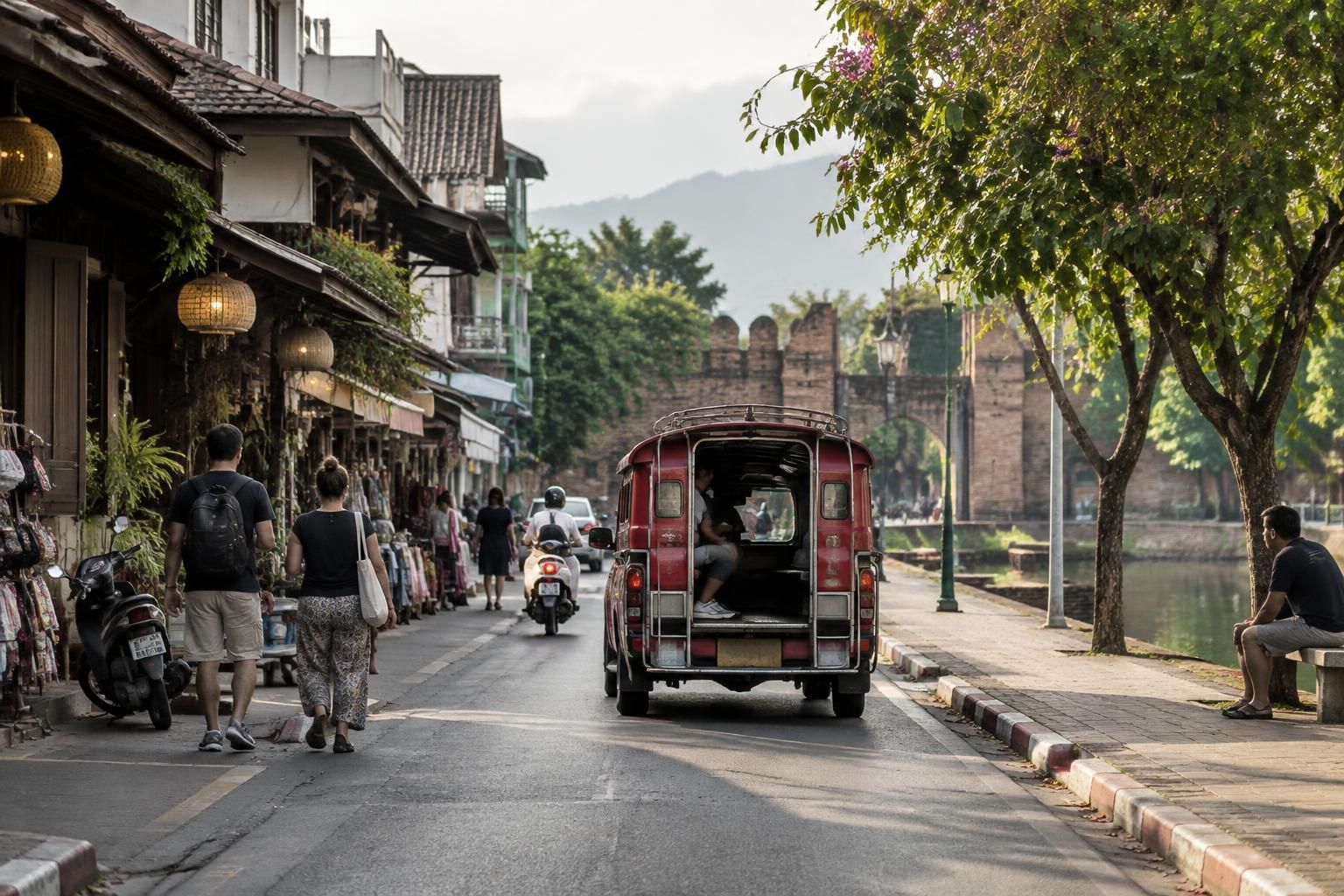
Within town, red songthaews operate as shared pickup-truck taxis. Tell the driver the destination and agree on the fare before boarding; short shared trips often cost around ฿30–50 per person, while a private arrangement costs more.
Grab and other available ride-hailing services provide an upfront price and can be useful after dark or when visiting places outside the center. Walking is pleasant for short distances, but uneven pavements, crossings and heat mean that a map’s short-looking route may take longer than expected.
Scooters are widely rented, yet they are not necessary for a successful visit. Riders need the appropriate motorcycle entitlement and an accepted international driving permit, should wear a helmet and must check that their insurance covers both the vehicle and the activity.
Inexperienced riders are better served by a driver or shared transport, particularly on mountain roads. A smaller transport budget is rarely worth a serious injury, and the money saved by walking around the center can instead be spent exploring its food culture.
For neighborhood ideas and additional planning, browse this Chiang Mai travel guide and compare it with other Thailand travel inspiration.
Chiang Mai Food and Night Markets: What to Eat
Northern Thai cuisine gives visitors a reason to linger between sightseeing stops. Its dishes draw on local herbs, chilies, regional ingredients and connections with neighboring cultures, creating flavors that differ from the central Thai food many travelers already know.
Northern Thai Dishes Worth Trying
Khao soi is the city’s best-known meal: soft noodles in a rich curry broth, topped with crisp noodles and usually served with pickled greens, shallots and lime. Chicken and beef versions are common, while vegetarian alternatives may be available at specialist restaurants.
Try it at lunchtime, when many noodle shops are busiest, and adjust the condiments a little at a time. A bowl may cost roughly ฿50–100 at a simple restaurant, though prices vary by location and ingredients.
Sai oua, a grilled northern sausage, is fragrant with herbs and spices and works well with sticky rice. For something different, order nam prik ong, a savory tomato-and-pork dip often accompanied by fresh vegetables.
Another regional favorite, gaeng hang lay, is a rich pork curry with ginger and tamarind. Northern-style larb is also worth seeking out, but its seasoning can differ considerably from the lime-forward versions familiar elsewhere.
Travelers who avoid meat should ask specifically about fish sauce, shrimp paste, stock and oyster sauce rather than assuming a vegetable dish contains none. A translation card describing allergies or dietary requirements can make these conversations much easier.
Sunday Walking Street and Other Chiang Mai Markets
On Sunday evenings, the walking street along Ratchadamnoen Road fills with food stalls, crafts and performances. It is popular with visitors and residents alike, but popularity brings crowds, especially later in the evening.
Arriving around opening time gives Maya and Arun more room to browse and compare handmade goods. Carrying small notes is helpful, and asking about the maker or material can be more rewarding than bargaining over every purchase.
Saturday’s Wualai walking street is another option, particularly for travelers interested in the area’s silversmithing tradition. The market is on Wualai Road, south of the Old City, not beside the Ping River.
For a daytime experience, Warorot Market east of the Old City is a useful place to browse ingredients, snacks, textiles and household goods. Market schedules and individual stall hours change, so an early visit generally offers a wider choice than arriving late.
There is no single correct way to experience the city’s night markets: one traveler may want a quick dinner, while another spends an hour talking to a craft seller. Choose food prepared hot, follow normal hygiene precautions and leave room to try something unfamiliar.
Cooking Classes and Local Ingredients
A cooking class turns a pleasant meal into a more lasting understanding of ingredients. Many include a market visit, a demonstration of curry paste and a hands-on session followed by the dishes participants have prepared.
Half-day classes often start around ฿1,000–1,500, with longer or smaller-group options costing more. Compare group size, transport, menu choices and dietary accommodation before booking; during busy periods, reserve several days ahead.
A class also provides an easy social activity for solo travelers without requiring a late night. For those curious about where ingredients come from, the same questions about sourcing and local benefit become important when choosing excursions outside the city.
Chiang Mai Day Trips, Ethical Experiences and Travel Costs
Chiang Mai is a useful base for experiences beyond the city walls, but the most satisfying itinerary leaves space for rest. Three or four days allow a first look at the highlights; a longer stay makes room for a full-day excursion without turning every morning into an early departure.
Choosing an Elephant Experience Responsibly
Animal welfare claims deserve careful scrutiny. Look for operators that prohibit riding and performances, allow elephants meaningful freedom of movement and prioritize observation rather than close contact.
Feeding and bathing are not automatic signs of good welfare: frequent, controlled encounters can place pressure on animals even when a venue calls itself a sanctuary. Ask how much choice elephants have, how groups are managed and what happens when an animal does not want to interact.
Elephant Nature Park is a well-known operator with different programs, but visitors should review the current details of any specific tour rather than assume all experiences are identical. Book early in peak season and expect a full-day excursion to cost substantially more than a temple visit.
Maya and Arun might decide that watching elephants from a respectful distance is more valuable than securing a close-up photograph. Travelers who cannot verify an operator’s practices can choose another activity without feeling that an elephant encounter is compulsory.
Mountains, Villages and Longer Excursions
Doi Inthanon National Park makes a rewarding full-day trip for waterfalls, mountain forest and cooler temperatures. Thailand’s highest summit is there, while the twin royal pagodas are located nearby rather than at the summit itself.
Organized tours simplify transport, but check whether park entry, meals and guide fees are included. The drive is substantial, weather can change quickly, and some trails have seasonal closures, so bring layers and follow park advice.
Visits involving Indigenous or ethnic-minority communities require the same care as wildlife tourism. Choose community-led activities where people have consented to receive visitors, understand how fees are distributed and ask before photographing anyone.
Chiang Rai’s White Temple is possible on a very long day trip, but several hours in a vehicle can make the experience tiring. An overnight stay gives more time for the city and its art sites; Pai likewise works better as a separate stop than as a rushed there-and-back excursion.
Planning a Realistic Chiang Mai Budget
Costs depend on season, room type and how many organized activities are booked. The figures below are planning estimates per person; private-room costs assume one traveler pays for the room, so couples sharing may spend less each.
| Expense | Indicative cost | Planning note |
|---|---|---|
| Hostel dorm | ฿250–500 per night | Higher rates are possible during festivals. |
| Simple local meal | ฿50–150 | Restaurant location and dish affect the price. |
| Shared songthaew | ฿30–50 per short trip | Confirm the fare before boarding. |
| Cooking class | ฿1,000–1,500 or more | Check whether transport and meals are included. |
| Private driver or organized day trip | Varies by itinerary | Confirm entry fees, group size and pickup arrangements. |
A simple budget day might include a ฿350 dorm, ฿400 for meals, ฿100 for local transport and ฿150 for small activities: ฿1,000 in total. A cooking class, national park trip or private hotel room should be added separately rather than hidden inside that estimate.
For a five-day stay, one practical arrangement is two days around the Old City and nearby mountain temple, one day for food and neighborhoods, one excursion and one largely unplanned day. Keeping that final day open gives travelers room to respond to the weather, a local event or simply the need for a slower morning.