
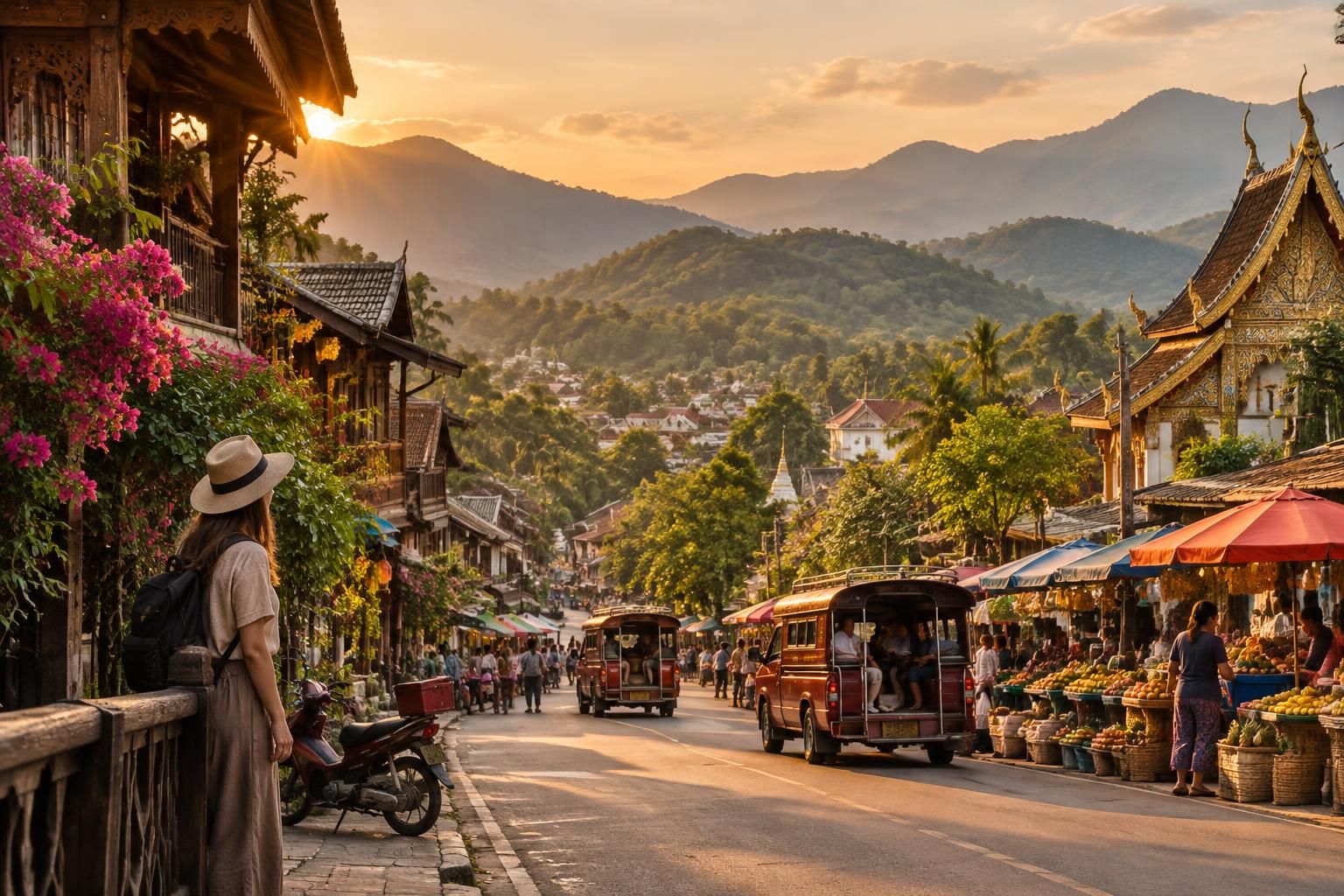
Northern Thailand changes character quickly beyond Chiang Mai. A short journey south leads to the old temple city of Lamphun, while longer roads climb toward mountain towns, lakeside communities and the distinctive art of Chiang Rai. Some places make easy day trips; others reward an overnight stay, especially when winding roads or scattered attractions make a hurried schedule tiring.
The choice depends as much on travel style as distance. History lovers can follow the traces of the Haripunchai and Lanna kingdoms in Lamphun and Lampang. Travellers seeking mountain scenery might prefer Chiang Dao or Pai, while Mae Sariang and Nan offer quieter bases for exploring their surrounding provinces. Phayao brings a different rhythm again, with lakeside evenings and a compact centre suited to an unhurried walk.
Consider Maya, a fictional traveller with a few flexible days and no desire to spend every afternoon in transit. Her route illustrates a useful principle: choose destinations that fit the time available, leave room for local meals and unexpected stops, and treat mountain journeys as part of the experience rather than an obstacle between attractions.
At a glance
- Best short cultural trips: Lamphun and Lampang, with historic temples, markets and distinctive architecture.
- Best mountain bases: Chiang Dao and Pai, for caves, viewpoints and a slower pace.
- Best longer journeys: Mae Hong Son, Mae Sariang and Nan, where an overnight stay makes the distance worthwhile.
- Best for art and waterside evenings: Chiang Rai and Phayao, which pair well on a northern itinerary.
- Practical planning: Check current transport schedules and air quality, and allow extra time on winding roads.
Lamphun and Lampang: Historic Cities Close to Chiang Mai
Lamphun is one of the easiest ways to experience a different northern city without committing to a long journey. Around 26 kilometres south of Chiang Mai, it is close enough for a relaxed day trip by road or train, with time to return before evening.
The city was an important centre of the Haripunchai kingdom, which predates Chiang Mai’s establishment as a Lanna capital. Local tradition associates its early history with Queen Chama Devi, a figure whose legacy remains visible in the city’s cultural identity.
Explore Lamphun’s temples and local life
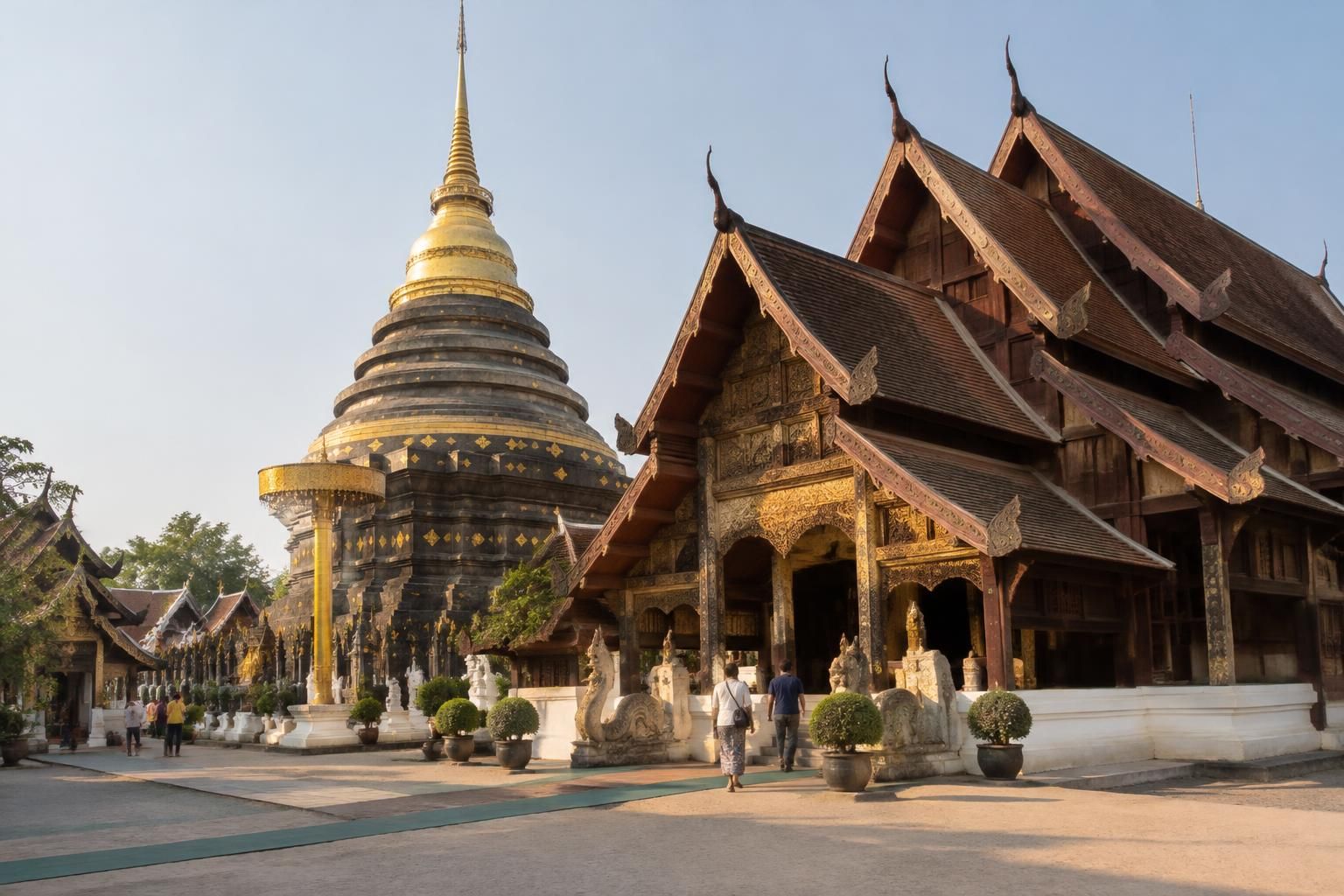
Wat Phra That Haripunchai is the natural starting point. Its golden chedi rises above a temple complex where visitors can observe worshippers making offerings and see how a historic religious site continues to serve the community.
Rather than rushing from one monument to another, Maya might spend the morning at the temple and then walk toward the river and nearby market streets. A simple lunch and a look at local textiles provide a useful contrast to the grandeur of the shrine: history here is part of everyday life, not confined to a museum.
Dress respectfully at temples by covering shoulders and knees, and remove shoes where requested. These small preparations make a visit more comfortable for everyone and allow more time to notice details such as carved woodwork, decorative roofs and the quiet rituals unfolding around the courtyards.
Travellers who enjoy a slower pace can stay overnight, although it is not essential. Returning to Chiang Mai the same day leaves plenty of time to enjoy Lamphun without turning the trip into a demanding excursion.
Make room for Lampang’s architectural heritage
Lampang, roughly 100 kilometres southeast of Chiang Mai, deserves a longer day or an overnight stop. Its streets and riverside neighbourhoods contain teak buildings, temples and architectural influences associated with the region’s links to Myanmar as well as its Lanna past.
Wat Phra That Lampang Luang, outside the city, is a major reason to visit. Its walled hilltop setting and richly detailed wooden buildings reward a slow look, particularly for travellers interested in how sacred architecture and local craftsmanship developed together.
Back in town, horse-drawn carriages are a recognisable sight, while the rooster appears in local stories and decorations. A stroll near the Wang River, followed by a meal at a riverside restaurant, gives the city a gentler rhythm than a checklist of attractions would suggest.
If an elephant attraction is part of the plan, investigate its current practices before booking. Choose experiences that prioritise observation and animal welfare, and avoid riding or performances; a familiar name alone does not guarantee suitable care.
Both cities can be reached by road or rail, although station locations and departure times should be checked in advance. Lamphun suits a short cultural escape; Lampang rewards travellers who can linger—a useful distinction before turning north toward the mountains.
Chiang Dao and Fang: Mountain Towns North of Chiang Mai
The road north from Chiang Mai leads toward limestone scenery, orchards and communities where the pace feels noticeably gentler. Chiang Dao, approximately 70 kilometres from the city, is an appealing first stop for travellers who want mountain views without spending an entire day on the road.
The town sits near Doi Luang Chiang Dao, a dramatic limestone massif that shapes the landscape. Its silhouette is especially striking in clear early light, when the surrounding fields and smaller hills reveal the scale of the mountain.
Visit Chiang Dao Cave and enjoy a slower stay
Chiang Dao Cave combines natural formations with religious spaces, including Buddha images and places of worship. The developed parts are accessible to many visitors, while deeper chambers are typically explored with a local guide and a lamp.
Good footwear matters: cave floors can be uneven or slippery, and visitors should avoid touching formations. As at other sacred sites, modest clothing and a respectful manner help keep the experience comfortable for worshippers and guests alike.
Maya could visit the cave in the morning, have lunch in town and spend the afternoon at a café or guesthouse with a mountain view. An overnight stay creates space for bird-watching or a locally guided walk without the pressure of returning to Chiang Mai before dark.
Those hoping to trek on the mountain should check current access rules, seasonal opening periods and guide requirements before making plans. Protected-area restrictions can change, and a summit excursion is a different undertaking from a casual walk through the valley.
Hot springs in the wider area offer another way to unwind, but they are best treated as a pleasant soak rather than a medical treatment. Check pool temperatures and facilities before bathing, particularly when travelling with children or anyone sensitive to heat.
Continue toward Fang’s orchards and northern landscapes
Farther north, Fang works well as a base for exploring the upper Mae Kok basin and nearby mountain areas. It feels more like a working provincial town than a purpose-built resort, which can appeal to visitors who enjoy ordinary markets and quieter evenings.
The surrounding district is associated with agriculture, including fruit orchards, while Doi Pha Hom Pok National Park offers access to mountain scenery and hot springs. Travel times within the district can be substantial, so choose one or two activities rather than assuming every attraction is close to the town centre.
For example, Maya might stay in Fang after a night in Chiang Dao, visit a market for breakfast and arrange a vehicle for a park excursion. That sequence avoids a rushed return journey and allows weather, road conditions and personal energy to shape the day.
Local buses or shared transport can serve parts of the northern corridor, but onward connections to attractions may be less straightforward than the main journey. Ask accommodation staff about current options, agree on any private-driver arrangements in advance and carry enough cash for smaller businesses.
Mountain air is not always clear: seasonal smoke can affect visibility and outdoor comfort, particularly in the dry season. Check air quality before planning strenuous walks, and keep a flexible alternative in mind as the route bends west toward Pai.
Pai, Mae Hong Son and Mae Sariang: Northern Thailand’s Scenic Loop
Pai sits in a green valley northwest of Chiang Mai and attracts travellers with guesthouses, cafés, night-market food and access to surrounding countryside. It is a sociable place to pause, though the centre is busier than its reputation as a sleepy mountain town might suggest.
The road from Chiang Mai is famous for its many bends. Minivans commonly take around three to four hours, depending on traffic and stops, but motion-sensitive passengers should prepare for a longer-feeling ride and consider a seat near the front.
Spend more than a few hours in Pai
A stay of at least one night gives visitors time to see the valley without rushing. Maya might browse the evening walking street for snacks and locally made goods, then explore outside town the next morning when temperatures are more comfortable.
Pai Canyon is popular near sunset, when warm light falls across its narrow ridges. The paths have steep drops and little protection in places, so sturdy shoes, careful footing and the willingness to stop before an exposed section matter more than reaching every viewpoint.
Hot springs and waterfalls offer other ways to enjoy the district. Water levels vary with the season, and wet paths can be slippery, so check local conditions before setting out and bring drinking water for longer excursions.
Renting a scooter can look convenient, but mountain traffic and winding roads demand experience. Travellers without the appropriate licence, insurance and confidence are better served by a shared excursion, a driver or other local transport.
Follow the loop through Mae Hong Son and Mae Sariang
Beyond Pai, Mae Hong Son sits in a mountain valley and offers a quieter provincial-town atmosphere. Temples around the lake and the wider area’s Shan cultural influences make it a rewarding overnight stop, particularly for visitors interested in architecture and local food.
Evenings can be cool in the highlands, especially during the cooler season, so a light layer is useful. Allow extra time for travel: the distance on a map does not convey the bends, changes in elevation or possible weather delays.
Farther south, Mae Sariang provides a different kind of pause, with a riverside setting, teak buildings and nearby farming communities. It is generally less visitor-focused than Pai, making it a good choice for travellers who prefer an early dinner and a peaceful morning walk.
The Mae Hong Son Loop links these towns with Chiang Mai, often over several days. Maya could travel west to Mae Sariang, continue to Mae Hong Son, then return via Pai; the reverse direction works too, provided the itinerary leaves space for rest.
When visiting surrounding communities, book directly with locally run guides or community initiatives where possible. Ask permission before photographing people, pay fairly for services and avoid staged encounters that turn residents’ identities into a spectacle.
The loop is most rewarding when the schedule leaves room for the road itself. Travellers wanting a more direct combination of art and city life can instead head northeast toward Chiang Rai and Phayao.

Chiang Rai and Phayao: Art, Temples and a Lakeside City
Chiang Rai is farther from Chiang Mai than the closest day-trip towns, with a road journey commonly taking around three to four hours. It can be visited on a long excursion, but staying overnight makes the city’s art, temples and food much easier to enjoy.
Wat Rong Khun, commonly called the White Temple, is a contemporary artistic landmark just outside the centre. Its pale surfaces and intricate details create a striking first impression, but looking closely reveals an imaginative work that differs from a conventional historic temple visit.
Discover Chiang Rai beyond the White Temple
Wat Rong Suea Ten, known as the Blue Temple, offers another visually memorable stop, with richly coloured decoration and a large Buddha image. The contrast between the two sites shows why grouping them together can be rewarding: each uses an unmistakable visual language to create a different atmosphere.
Baan Dam Museum, often called the Black House, provides a further change of mood through its buildings and collections. These places are spread across the area, so arranging transport in a sensible order prevents a day of unnecessary backtracking.
In the city centre, an evening market or a relaxed meal offers a welcome break from sightseeing. Maya might spend one day on the major art sites, sleep in town and leave the following morning free for a temple, café or local neighbourhood rather than racing directly back to Chiang Mai.
Chiang Rai province also includes communities with diverse ethnic and cultural backgrounds. Seek out workshops, shops and guiding services where makers set their own terms, and be wary of activities that present living cultures as performances for tourists.
The Golden Triangle is a separate area farther north, where Thailand, Myanmar and Laos meet. The Hall of Opium is there rather than in central Chiang Rai, so it requires additional travel and deserves its own place in the itinerary.
Pause beside Phayao Lake
Phayao offers a gentler counterpart to Chiang Rai’s widely visited art attractions. Its centre sits beside Kwan Phayao, a large freshwater lake where an evening walk can be as satisfying as a full schedule of formal sights.
A lakeside meal gives travellers time to notice the changing light and the everyday use of the waterfront. Local fish dishes appear on many menus, though visitors can also find other northern Thai meals according to their preferences.
Wat Si Khom Kham is a significant temple near the lake and adds cultural depth to a short stay. As elsewhere, checking opening arrangements and dressing appropriately makes for an easier visit.
Phayao works as an overnight stop between Chiang Mai and Chiang Rai, although actual routes and bus connections depend on the service chosen. By private vehicle, Maya could travel at her own pace; by public transport, she should check timetables before assuming an easy same-day connection.
For travellers tired of unpacking every night, the two cities can also be enjoyed separately. Chiang Rai offers a concentrated art itinerary; Phayao invites a slower lakeside pause—a contrast that prepares the way for an even longer journey east to Nan.
Nan and Practical Routes from Chiang Mai for Longer Trips
Nan lies well east of Chiang Mai and is better suited to a multi-day trip than a quick return journey. Road travel can take roughly five hours or more, depending on the route and conditions, so an overnight stay gives the destination the time it deserves.
Once the centre of a small northern kingdom, Nan has a distinctive history shaped by connections across the region, including links with Lanna and communities farther east. Its compact historic core makes that heritage approachable on foot or by bicycle, without requiring a demanding schedule.
Explore Nan’s temples and surrounding province
Wat Phumin is a rewarding place to begin. Its murals offer scenes of local life as well as religious storytelling, giving visitors a reason to look beyond the building’s exterior and spend time with the details inside.
A museum visit, a market meal and a stroll through the older streets can comfortably fill the rest of a day. Maya might choose two principal stops, leave an afternoon free for a café or craft shop, and avoid treating the city simply as a gateway to somewhere else.
The wider province includes mountain landscapes and protected areas such as Doi Phu Kha National Park. Reaching them requires further transport from Nan city, so check driving times, weather and park access before setting out; a scenic route is not necessarily a short one.
For a community-led craft or food experience, ask who operates it and how to book directly. Buying from makers and paying for guides helps keep a visit grounded in the contemporary life of the province rather than in a romanticised idea of the past.
Choose realistic transport from Chiang Mai
Travel times across northern Thailand vary with traffic, roadworks, weather and the number of stops. The table gives broad road estimates for planning rather than fixed timetables; confirm current departures and allow extra time when making onward connections.
| Destination | Approximate road time | Suggested pace |
|---|---|---|
| Lamphun | 40–60 minutes | Day trip |
| Chiang Dao | 1.5–2 hours | Day trip or overnight |
| Lampang | 1.5–2 hours | Long day or overnight |
| Pai | 3–4 hours | At least one night |
| Chiang Rai | 3–4 hours | At least one night |
| Nan | 5 hours or more | Several days |
Chiang Mai has rail connections toward Lamphun and Lampang, while buses serve several provincial destinations. Chiang Rai has no railway station, so travellers should plan on road transport for that leg; minivans and organised trips also serve selected mountain destinations.
Before booking a vehicle, check luggage allowances and where the service actually drops passengers. A cheap fare may be less convenient if the arrival point is far from accommodation or if onward transport is difficult to find after dark.
For a different short escape, the mountain village of Mae Kampong offers homestays and forest walks east of Chiang Mai, while the San Kamphaeng area is known for craft workshops and hot springs. These are not cities, but they can add a quieter day between longer journeys.
Build the route around usable time, not just map distance: a relaxed night in Nan or a modest day trip closer to Chiang Mai can both be more satisfying than spending most of the holiday in a vehicle.