
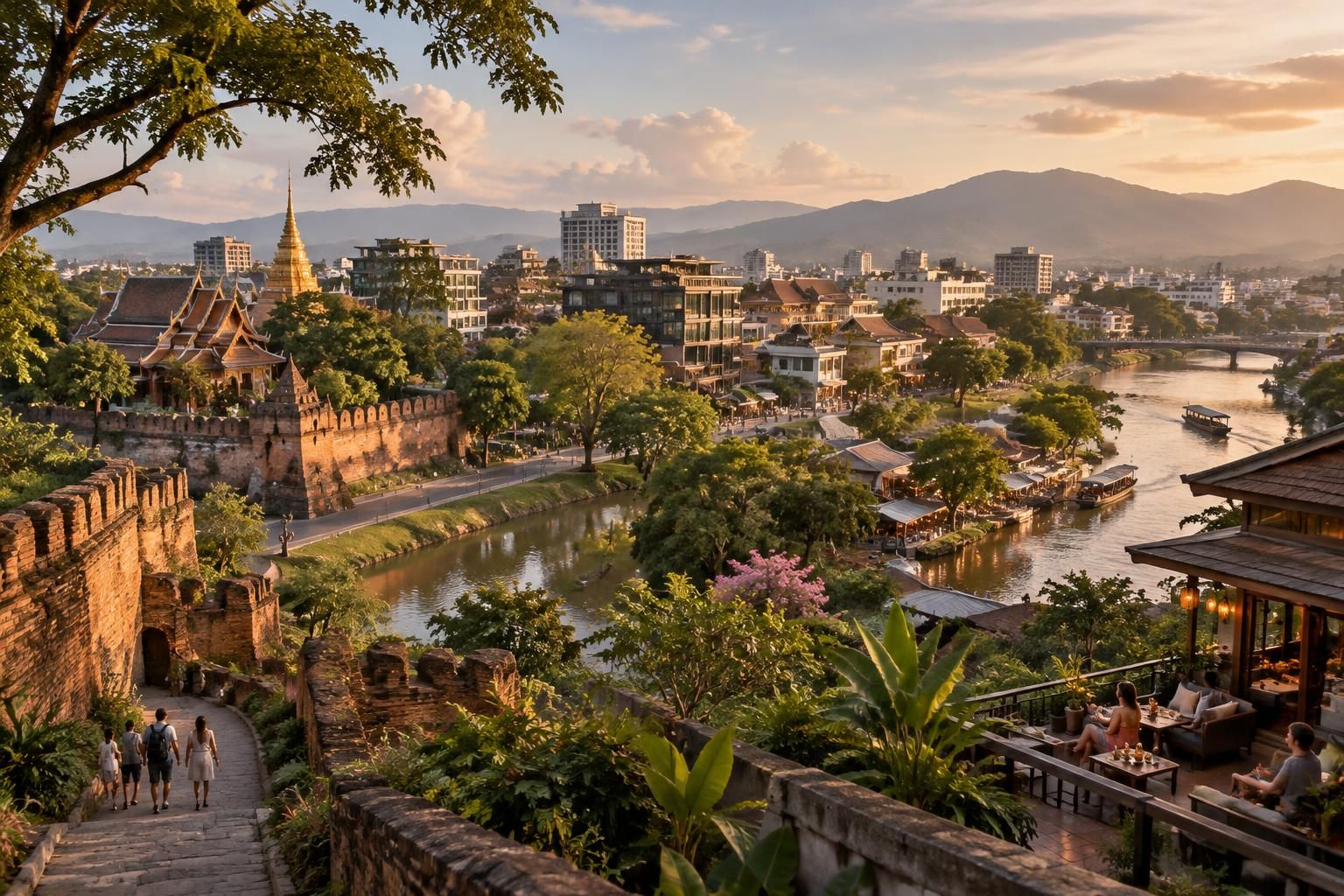
Chiang Mai can feel intimate one moment and surprisingly spread out the next. A room within the Old City’s moat puts temple visits and market evenings within easy reach, while a stay beside the Ping River offers more space to slow down. Farther west, Nimman’s cafés and workspaces suit travelers who want city comforts; north of town, Mae Rim trades quick sightseeing trips for forested hills and resort gardens.
The right choice depends on more than a hotel’s photographs. Think about how often the family will need transport, whether a quiet night matters more than a lively street, and how much time is available for exploring. For a family such as fictional travelers Maya and Arun and their two children, a central guesthouse might make a short first visit easier; on a longer trip, a riverside pool or a countryside retreat could be worth the extra journeys.
At a glance
- Old City: The most convenient base for first-time visitors who want temples, markets, and walkable streets.
- Nimman: A lively choice for cafés, nightlife, shopping, and remote work; nearby Santitham offers a more budget-conscious alternative.
- Night Bazaar: An energetic base for evening shopping, street food, and access to both the historic center and river.
- Riverside and Wat Ket: Attractive for families, boutique hotels, and a quieter pace, although transport is often useful.
- Mae Rim and Hang Dong: Better suited to travelers who prioritize green surroundings and are comfortable staying outside the center.
| Area | Best for | Main consideration |
|---|---|---|
| Old City | First visits and historic sights | Central streets can be busy or noisy |
| Nimman and Santitham | Cafés, longer stays, and budgets | Traffic and aircraft noise vary by street |
| Night Bazaar | Markets, food, and evening activity | Some roads are crowded after dark |
| Riverside and Wat Ket | Families and boutique stays | Distances depend on the property |
| Mae Rim and Hang Dong | Nature and resort stays | Regular city trips take planning |
Old City: Where to Stay in Chiang Mai for a First Visit
The Old City is an easy place to get oriented. Its roughly square moat and surviving sections of wall frame a compact historic center, with temples, cafés, massage shops, and guesthouses tucked along both main roads and smaller lanes.
For a first visit, that concentration makes a difference. Maya and Arun can plan a temple visit in the morning, return the children to their room for a rest, and head out again for dinner without arranging a long journey across town.
Explore Chiang Mai’s Temples and Walking Streets
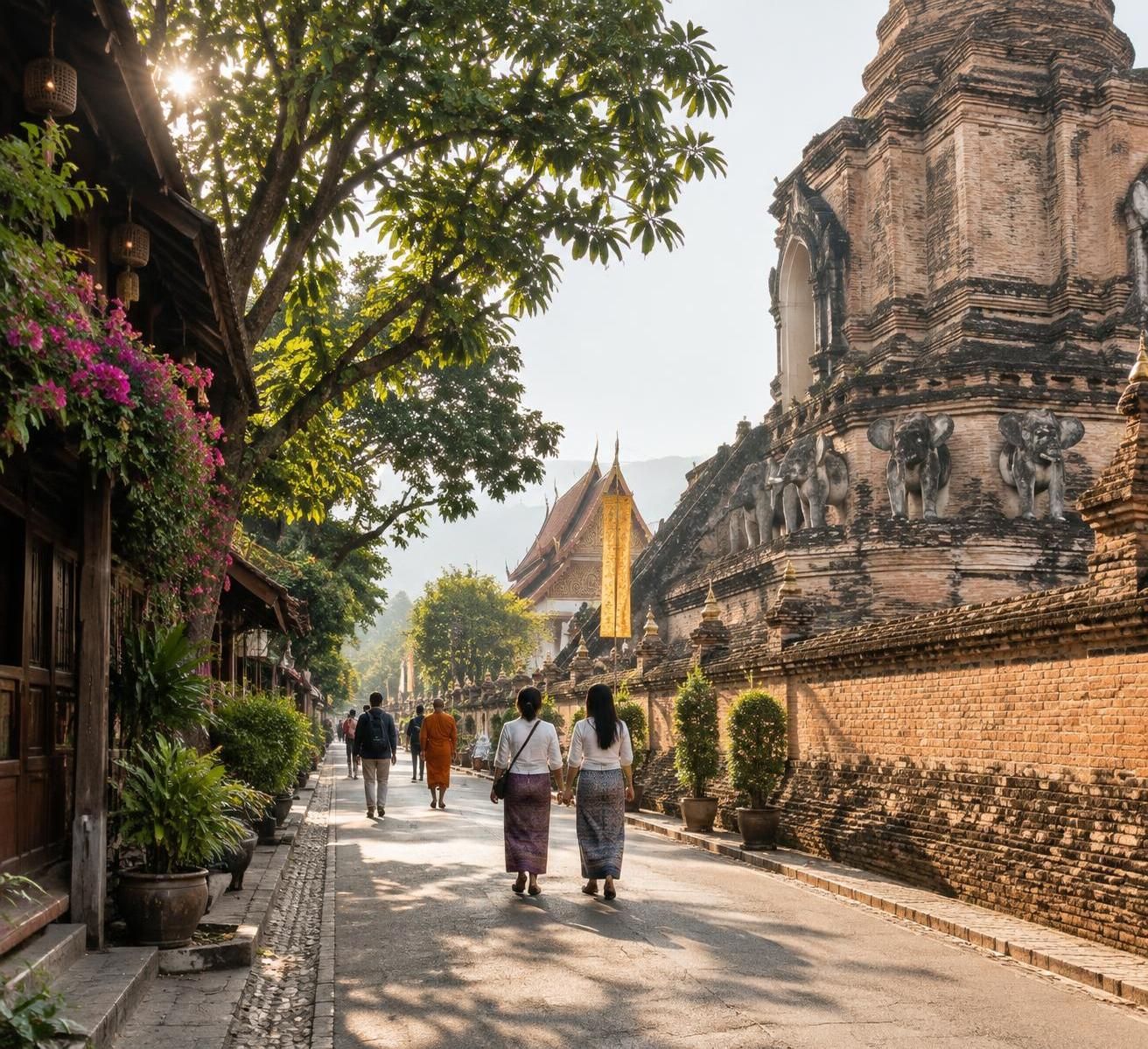
Wat Chedi Luang is a compelling starting point, with its enormous brick chedi recalling the city’s importance as a center of the Lanna kingdom. Wat Phra Singh, toward the western side of the historic quarter, rewards a slower visit with ornate buildings and a revered Buddha image.
These are active religious sites rather than open-air museums. Dress respectfully, follow posted instructions, and allow space for worshippers; carrying a light layer makes it easier to cover shoulders when entering temple grounds.
On Sundays, the walking street along Rachadamnoen Road draws shoppers and food lovers into the area. It is a memorable evening, but the crowds can be tiring for young children, so arriving early or choosing a hotel on a quieter side street can make the experience more comfortable.
Buak Hard Public Park, in the southwest corner, offers a change of pace when everyone needs room to move. The historic center also has plenty of casual places to eat, so a family does not need to commit to a formal meal after a long day out.
Choose an Old City Hotel, Hostel, or Guesthouse
Accommodation ranges from social dormitories to intimate guesthouses and polished boutique hotels. Green Sleep Hostel and Sherloft Home & Hostel are options for travelers who value shared spaces, while a private guesthouse room can provide a quieter retreat without losing the central location.
For a hotel stay, consider Aksara Heritage, Vieng Mantra Hotel, or El Barrio Lanna. Villa Thai Orchid is an adults-only option, so families should check the property’s admission policy before booking rather than assuming every small hotel welcomes children.
Read the room description closely: older buildings can have steep stairs, compact bathrooms, or limited sound insulation. A central address is helpful, but a room overlooking a busy road may feel very different from one set behind a garden.
Understand the Practical Trade-Offs of Staying Inside the Moat
Walking is often the simplest way to explore locally, though pavements can be uneven or interrupted and crossings deserve care. A stroller may be useful in some places but awkward on narrow lanes, making a lightweight carrier worth considering for younger children.
For sights farther away, arrange a car, use a ride-hailing service, or ask the property about a red shared songthaew. Confirm the fare or booking details before setting off, and allow additional time during busy market evenings.
The area’s popularity can also affect value: two similarly priced rooms may differ considerably in size, natural light, or noise. Checking recent reviews for the specific room type is more revealing than judging a property by its address alone.
The Old City works best when proximity is the priority: it keeps a short sightseeing trip manageable, while travelers who want a more contemporary daily rhythm may prefer the cafés west of the moat.
Nimman, Santitham, and Chang Phueak: Chiang Mai Areas for Cafés and Longer Stays
Nimman, short for Nimmanhaemin, offers a different side of the city: coffee shops, contemporary restaurants, boutiques, bars, and apartment buildings cluster around Nimmanhaemin Road and its side streets. It is especially appealing when a trip involves working online or staying long enough to appreciate everyday convenience.
Maya, for example, might spend a morning on calls while Arun takes the children out for breakfast, then meet everyone for lunch near One Nimman or Maya Lifestyle Shopping Center. The neighborhood’s strength is not a single landmark but the number of useful places close together.
Stay in Nimman for Remote Work and Nightlife
Coworking spaces and laptop-friendly cafés make it relatively straightforward to build a working routine. Before committing to a long stay, check the actual room’s internet speed, desk, chair, and mobile reception; a beautiful café downstairs cannot always compensate for an uncomfortable workspace upstairs.
Hotel Sensai Nimman Chiang Mai, The Craft Nimman, and Verbena Chiangmai are among the accommodation options to investigate. Travelers who prefer an apartment should ask about cleaning, electricity charges, deposit terms, and whether the building permits the intended length of stay.
Evenings can be lively, with restaurants and bars spread through the side streets. That variety suits sociable travelers, but light sleepers should look beyond the neighborhood label and check whether the room faces a venue, a main road, or an active flight path.
Aircraft noise is a consideration in parts of western Chiang Mai. Listening to recent guest feedback and asking for a room away from the street can help, although sound sensitivity differs from person to person.
Find Budget-Friendly Chiang Mai Accommodation in Santitham
North of the historic center, Santitham feels more residential and is often a practical choice for a longer, budget-conscious stay. Small eateries, markets, cafés, and apartment buildings serve a mix of residents and visitors rather than concentrating solely on sightseeing.
The advantage is a chance to settle into an everyday routine: buy breakfast nearby, find a regular laundry service, and try different local restaurants without making every outing an excursion. It can also put Nimman and the Old City within a manageable ride.
Lower prices do not automatically mean poor rooms, just as a modern exterior does not guarantee comfort. Compare air-conditioning, hot water, natural light, access, and cancellation terms; for a month-long stay, a window that opens or a reliable laundry arrangement can matter more than an elaborate lobby.
Some streets are less pleasant to walk than others, especially after rain or with children. A short map check should be followed by a closer look at crossings and pavements around the actual property, not just the distance shown to a landmark.
Consider Chang Phueak for a Local Food Base
Chang Phueak, north of the moat, is another useful area to consider, particularly around the gate and its evening food market. It places travelers close to the historic center while offering a different mix of neighborhood restaurants, shops, and practical services.
A room near a major road can make pickups simple but may bring traffic noise. For Maya and Arun, a quieter lane with a straightforward route to the gate could be a better compromise than the cheapest room beside a busy junction.
These northern and western neighborhoods reward travelers who think about how they will spend ordinary hours, not only sightseeing days. Choose the street and room as carefully as the district; the next area, by contrast, comes into its own when the evening markets open.
Night Bazaar: Where to Stay in Chiang Mai for Markets and Evening Food
The Night Bazaar area sits east of the Old City, between the historic center and the Ping River. It is a useful base for travelers who like to step outside after dark and find food, shops, and activity without organizing a separate evening trip.
During the day, the district has a more ordinary urban rhythm. As evening arrives, market stalls and restaurants draw visitors onto the streets, making the neighborhood particularly attractive to anyone who prefers a full day of sightseeing followed by a relaxed wander back toward the hotel.
Plan an Evening Around the Chiang Mai Night Bazaar
Browse clothing, handicrafts, souvenirs, and accessories, then pause for a meal at a market food area or nearby restaurant. Prices and quality vary, so it helps to compare a few stalls before buying and to treat bargaining as a friendly conversation rather than a contest.
For Maya and Arun’s family, the bazaar offers an easy way to let everyone choose something different for dinner. Setting a meeting point before entering a busy stretch and carrying a little cash for smaller purchases can prevent an enjoyable outing from becoming unnecessarily stressful.
The market is not the same event as the Sunday walking street inside the Old City. Travelers hoping to experience both should check their dates and plan a separate visit rather than assuming one replaces the other.
Tailors also operate around the district. Anyone considering made-to-measure clothing should ask about fabric, fittings, delivery timing, and the total price before paying, and leave enough time for alterations rather than placing an order on the final evening.
Choose a Night Bazaar Hotel for Your Budget and Schedule
The accommodation mix includes straightforward city hotels and larger properties with pools, restaurants, or fitness facilities. Nap in Chiangmai is an option for travelers prioritizing proximity to the market, while Ama’s House Luxury Boutique Hotel and Meliá Chiang Mai offer a more full-service style of stay.
A pool can be particularly useful for families who plan to explore in the morning and return to the market later. Check whether the room accommodates the entire family comfortably and whether breakfast, extra beds, or children’s amenities are included in the chosen rate.
Location within the district matters as much as the hotel category. A room directly above nightlife may be convenient for late evenings but less suitable for an early sleeper; a side street can offer a calmer base while keeping the market within reach.
Balance Walkability, Transport, and Noise Near the Bazaar
The area can suit travelers who want access to more than one part of town. Depending on the exact address and comfort with walking, a visit to Tha Phae Gate or the river may be possible on foot, with a car or songthaew useful for longer journeys and tired legs.
Pedestrian routes can be crowded, and pavements may narrow around stalls or parked vehicles. Families should allow extra time after dark, especially when moving with a stroller or carrying shopping bags across busy roads.
Remote workers should check the hotel’s connectivity rather than assuming that a central location guarantees a quiet place for calls. The district’s greatest advantage is its evening energy, not necessarily an abundance of workspaces immediately outside every hotel.
A stay here suits travelers who enjoy a little bustle and want dinner choices close at hand. For a softer end to the day, the river and Wat Ket offer a different atmosphere only a short journey away.
Riverside and Wat Ket: Chiang Mai Neighborhoods for Families and Boutique Stays
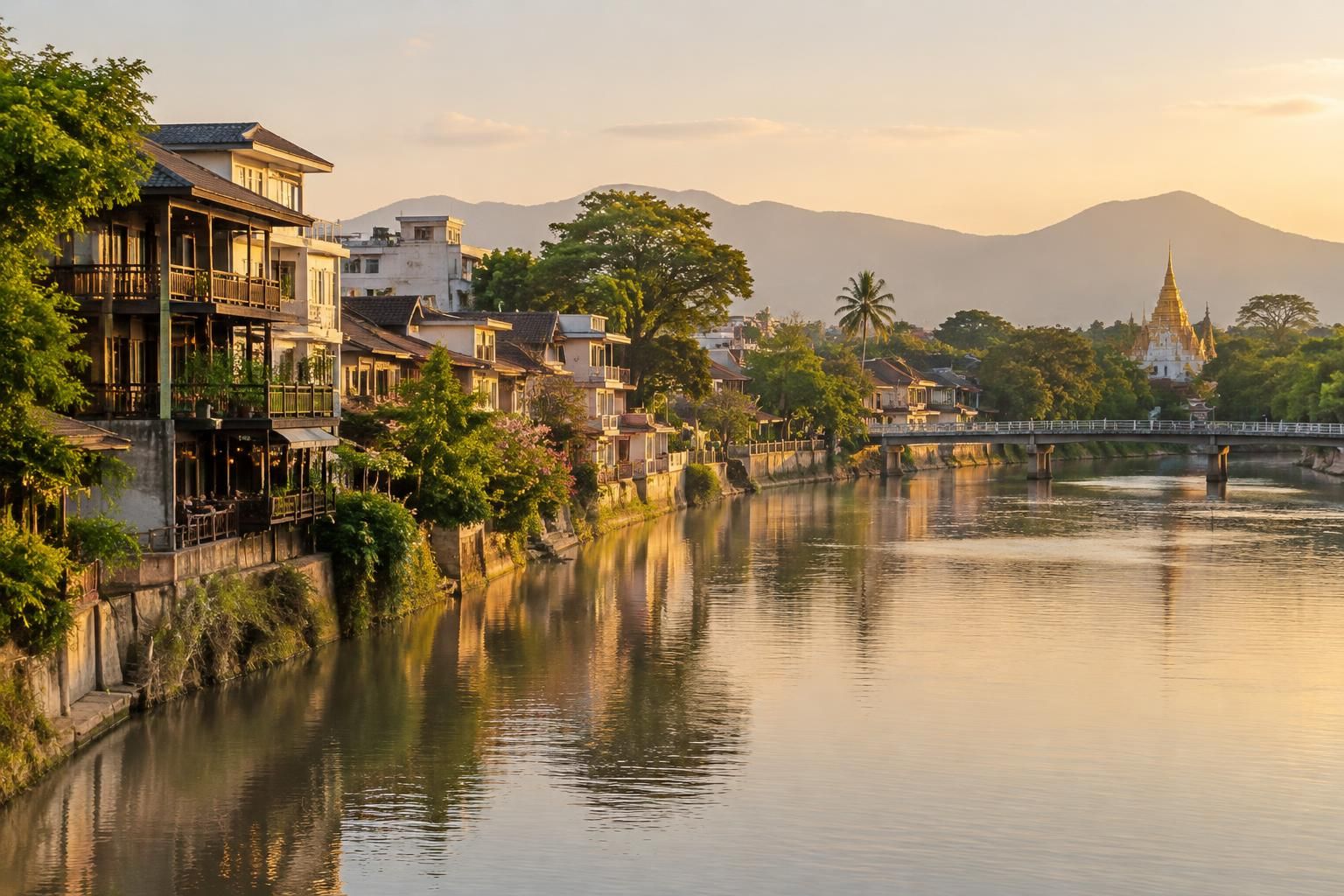
The Riverside stretches along the Ping River, while Wat Ket lies on the eastern side around the temple of the same name. Together, they offer an appealing alternative for travelers who want access to the city without spending every evening in its busiest streets.
There is no single riverside experience. A hotel near a bridge and restaurants may feel connected to the center, while a property farther south can feel more secluded and require a car for routine outings.
Find Family-Friendly Hotels Along the Ping River
For Maya and Arun, a riverside hotel with a pool could turn a demanding sightseeing schedule into something gentler. The children can have an unhurried afternoon at the property, while the adults enjoy a meal nearby instead of negotiating another crowded market.
Rimping Village, near the Wat Ket area, is one option for travelers seeking a smaller hotel with a pool. Na Nirand Romantic Boutique Resort and RatiLanna Riverside Spa Resort offer more upscale alternatives; check each property’s location and current room policies to see whether it fits the group.
Hongkhao Village is another boutique-style choice in the broader river area. Maladee Rendezvous Hotel Chiang Mai is closer to the Night Bazaar side, making it worth considering for travelers who want access to both the market district and the river rather than assuming every hotel nearby has a river view.
When a view is important, reserve a room category that explicitly includes it. A hotel described as riverside may also have rooms facing a courtyard, road, or neighboring building, and those differences can affect both price and atmosphere.
Explore Wat Ket’s Quieter Streets and Local Character
Wat Ket offers a pleasant setting for a slower walk, with cafés, restaurants, older buildings, and the temple contributing to a sense of place. It suits visitors who prefer to explore in short stretches rather than move constantly between major attractions.
A café stop followed by a visit to the temple can make a manageable half-day for a multigenerational group. As elsewhere in Chiang Mai, respectful clothing and attention to temple etiquette help keep the visit comfortable for guests and worshippers alike.
Restaurants along or near the water can make evenings feel special without requiring a luxury hotel. Ask about seating and accessibility in advance if someone in the group has mobility needs, since steps and uneven approaches vary from one building to another.
Check River Conditions and Transport Before Booking
Being near the water is attractive, but heavy seasonal rain can bring flooding risks in some areas. Check current local conditions and ask the property about its access arrangements if traveling during periods of substantial rainfall.
Transport deserves equal attention. Some hotels are close to bridges and market streets, while others are farther from the sights; map the actual route to the places on the itinerary rather than judging by the word “riverside” alone.
For travelers with early flights or young children, a prearranged car can make departure day simpler. Ask the hotel about pickup access, expected travel time, and whether a suitable child seat can be arranged if needed.
The river is a good choice when the hotel is part of the experience, not merely a place to sleep. Those seeking even more greenery can look beyond the urban neighborhoods to Mae Rim and Hang Dong.
Mae Rim and Hang Dong: Where to Stay Near Chiang Mai for Nature
Mae Rim and Hang Dong are districts outside central Chiang Mai, not neighborhoods inside the Old City. They appeal to travelers who want gardens, hills, resort facilities, or a quieter setting and are willing to plan journeys into town.
For Maya and Arun, the choice might make sense after several city days: the family could move to a greener property for a slower final stretch. It would be less convenient if every morning still began with a temple visit in the center.
Stay in Mae Rim for Gardens, Hills, and Resort Facilities
Mae Rim extends north and northwest of the city, with a wide range of landscapes and travel times. A property in the district may be relatively accessible from Chiang Mai or much farther into the hills, so check its precise location before deciding that a daily city commute is practical.
Botanical gardens, waterfalls, and rural roads offer plenty of reasons to stay outside town. For families, grouping nearby activities into one outing can reduce time in the car and leave space for a relaxed afternoon at the hotel.
Panviman Chiang Mai Spa Resort is an option for travelers seeking a hillside resort experience. Sukantara Cascade Resort and Spa offers a nature-oriented setting, while Country Retreat has bungalows in a farming-village setting; compare their actual locations and facilities rather than treating them as interchangeable.
Remote workers should ask each property about connection speed and backup options before booking. A garden view is wonderful for a break, but dependable internet and a suitable workspace matter more when a working day cannot be interrupted.
Choose Hang Dong for a Countryside Escape Southwest of Chiang Mai
Hang Dong also covers a broad area, ranging from developed outskirts to quieter countryside and hills. It can work well for travelers interested in resort stays, scenic drives, and a slower rhythm away from the center.
Properties such as Flora Creek Chiang Mai and Veranda High Resort are worth investigating for a resort-style stay. Look at the route from the airport and the distance to planned activities: a peaceful hillside address can be rewarding, but it may also make short errands a longer undertaking.
If visiting an elephant venue, examine its practices carefully. Favor operators that provide observation without riding or forced performances, explain how animals are cared for, and give visitors clear information about the elephants’ welfare.
Plan Transport and Weather for a Stay Outside the City
A private driver or prearranged car can be helpful for families carrying bags or visiting several rural stops. Travelers who rent a vehicle should ensure they hold the required license, have appropriate insurance, and are comfortable with local road conditions; mountain roads demand particular care.
November through February generally brings cooler conditions that are pleasant for exploring, although air quality can deteriorate as the dry season progresses. Smoke pollution is often a concern from late winter into spring, with conditions changing from year to year, so check current air-quality information when planning outdoor activities.
The rainy season brings greener scenery but can also affect visibility, road conditions, and access to waterfalls. Ask the property about recent weather and allow flexibility rather than building an itinerary around fixed outdoor stops every day.
For a longer stay, confirm meal options, laundry, transfer costs, and the distance to shops before booking. A countryside hotel offers its greatest value when travelers can enjoy being there, rather than spending each day traveling back and forth to the city.