
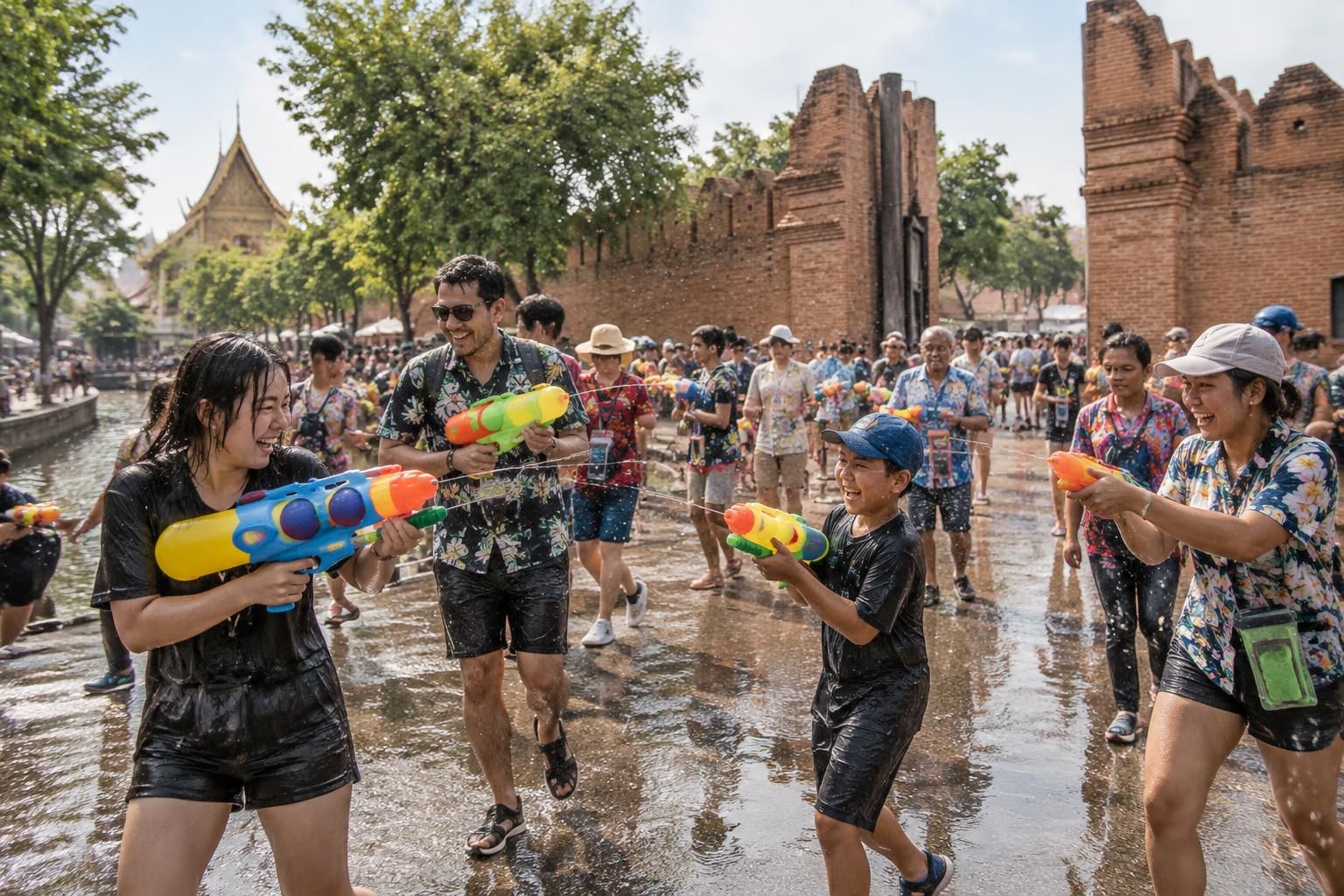
In Chiang Mai, Songkran can begin with a quiet offering at a temple and turn, a few streets later, into a full-scale water fight. The contrast is part of the experience: the Thai New Year brings families together for blessings and merit-making while the roads around the Old City fill with buckets, water guns, music and laughter.
The main festival dates are 13–15 April; in 2026, they fall from Monday to Wednesday. Celebrations can begin earlier or linger beyond those dates, and getting soaked near the moat is a realistic expectation rather than a remote possibility. For travelers who prefer a gentler visit, early temple visits, thoughtful accommodation choices and breaks away from the busiest streets can make a substantial difference.
At a glance
- When: The core Songkran dates are 13–15 April, with additional informal celebrations possible on either side.
- Where: The Old City moat and Tha Phae Gate are among the busiest places for water fights.
- Culture: Temple offerings, Buddha-image bathing and blessings for elders remain central to the holiday.
- Prepare: Protect valuables, dress for heat and wet streets, and allow extra time for transport.
- Stay dry: Choose a quieter neighborhood and use enclosed transport, while recognizing that a dry journey is not guaranteed.
Songkran in Chiang Mai: Dates, Traditions and the Thai New Year
Songkran marks the traditional Thai New Year, a time associated with renewal, family and respect. In Chiang Mai, its public face is famously lively, but the water festival is not simply a party designed for visitors: households and communities observe it in ways that extend far beyond the tourist-heavy streets.
The core dates are fixed at 13–15 April, unlike the lunar-calendar dates of festivals such as Yi Peng and Loy Krathong. Chiang Mai’s celebrations often spill into neighboring days, although the timing and intensity of unofficial activity vary from year to year.
For a traveler called Alex, arriving on 12 April might mean finding shops already selling waterproof pouches and seeing the first playful splashes. That is useful for planning, but not a promise of a quieter experience: a street that seems relaxed in the morning can become busy once a neighborhood gathering gets going.
Why water matters during Chiang Mai Songkran
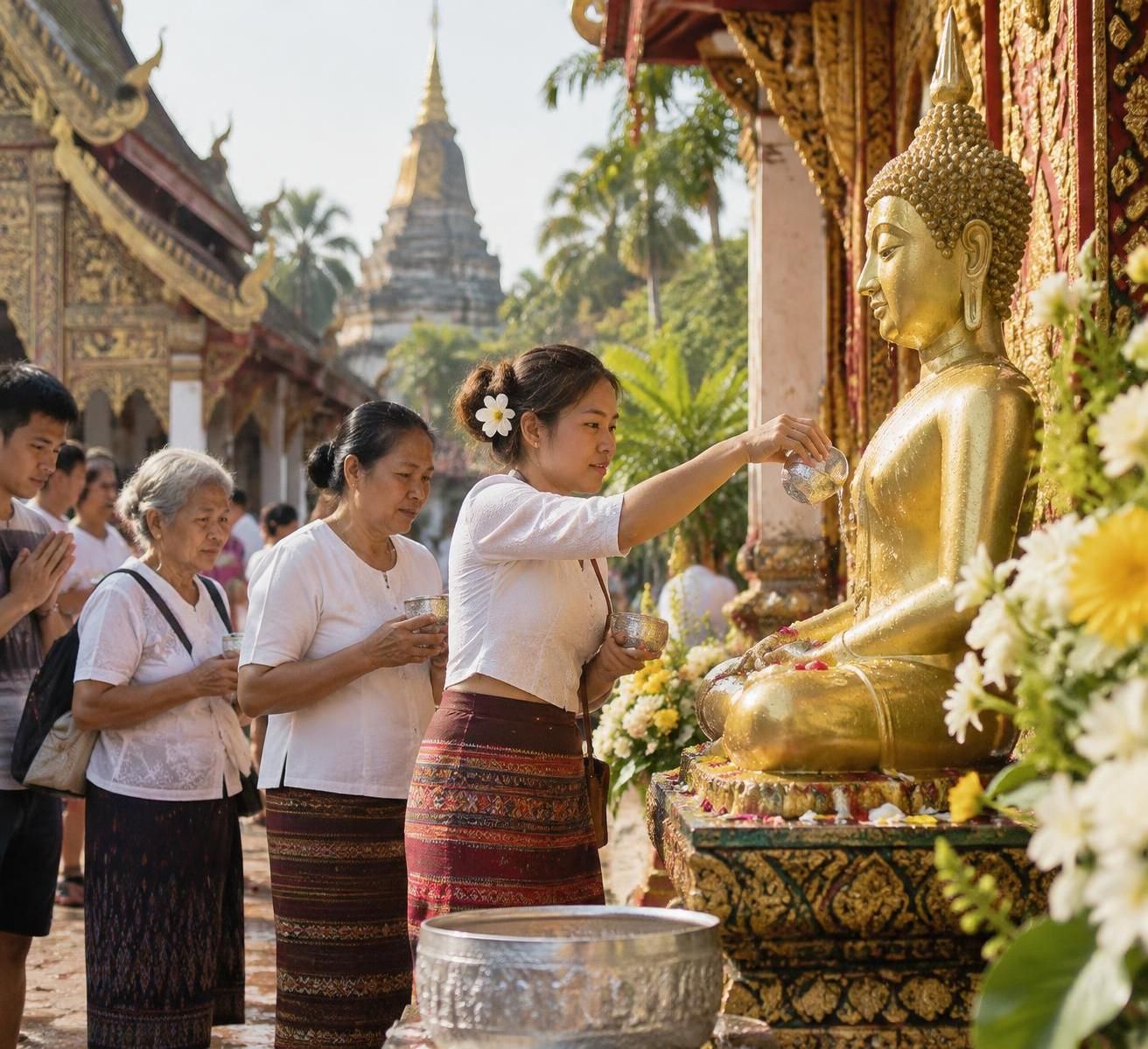
Water carries the idea of cleansing away misfortune and welcoming a fresh start. At temples, worshippers may gently pour scented water over designated Buddha images; within families, younger relatives may pour water over the hands of elders while asking for blessings and showing respect.
The latter practice is known as rod nam dam hua. It is intimate and often takes place among relatives, so travelers should not expect every ceremony to be a public performance or assume that an invitation to observe includes an invitation to participate.
Other customs include cleaning homes, making offerings to monks and building small sand chedi, or sand stupas, in temple grounds. In northern Thailand, bringing sand to a temple can symbolically replace soil carried away on visitors’ feet over the year, turning a simple act into a form of merit-making.
Chiang Mai’s Lanna heritage is especially visible in its temple traditions and cultural processions. The revered Phra Buddha Sihing image associated with Wat Phra Singh is traditionally part of the city’s celebrations, with people gathering to offer scented water respectfully as it passes.
Routes, timings and public programs can change, so check announcements from the city or the temple rather than arranging an entire day around an assumed departure time. UNESCO inscribed Songkran in Thailand on its Representative List of the Intangible Cultural Heritage of Humanity in 2023, recognizing the festival’s living traditions and community significance.
The exuberant street celebrations grew alongside these gentler customs, not in place of them. Understanding that relationship makes the difference between seeing a spontaneous soaking as the whole holiday and recognizing it as one expression of a much broader New Year celebration.
Chiang Mai Songkran Water Fights: The Moat, Tha Phae Gate and Beyond
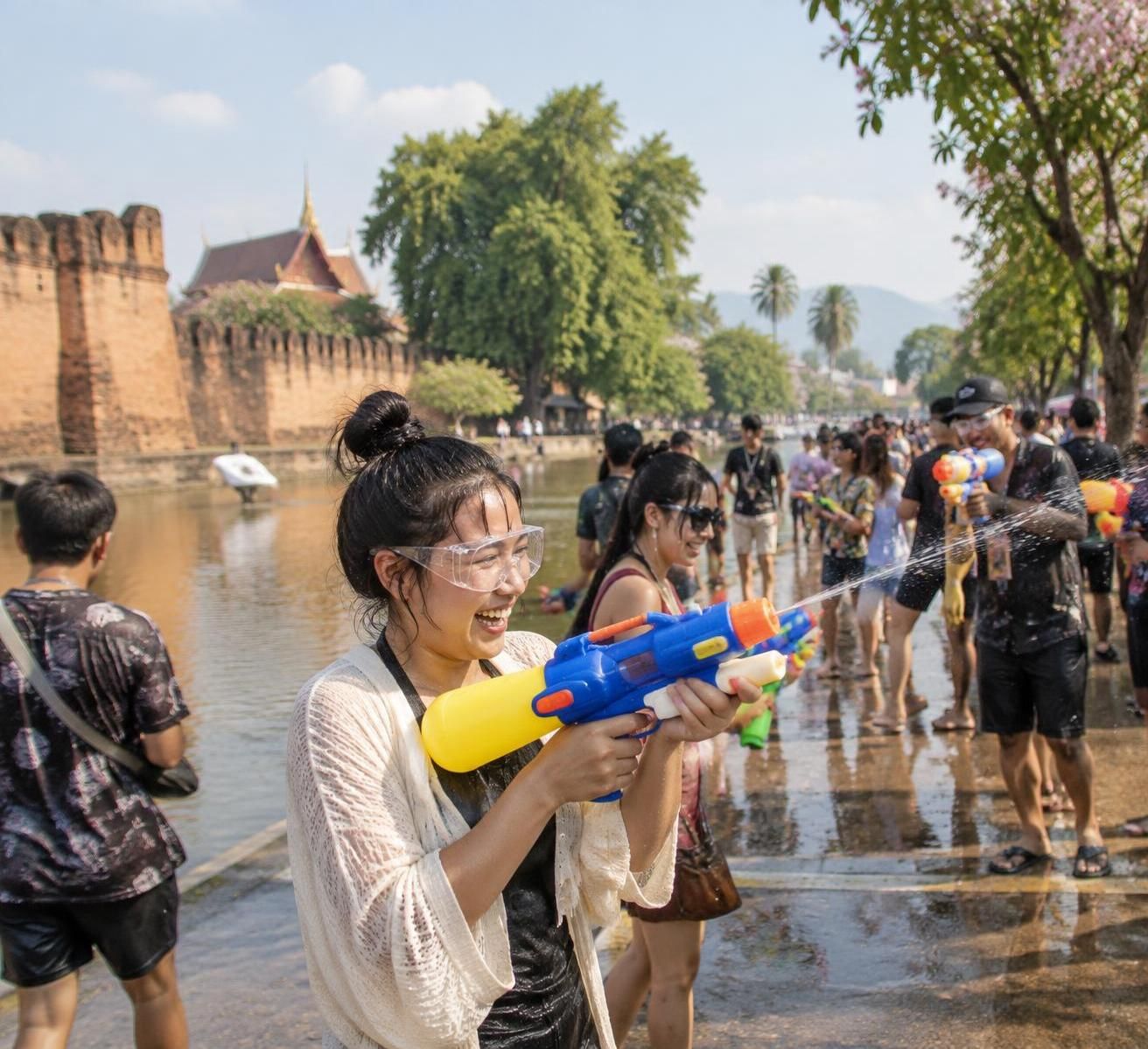
The Old City moat is the best-known setting for Chiang Mai’s water fights. Its long perimeter provides a natural route for pedestrians and vehicles, while nearby water stations and containers keep the action going through much of the day.
Tha Phae Gate, on the eastern side, typically draws especially dense crowds. Expect music, street vendors, pickup trucks carrying water containers and people eager to refill their buckets; walking a short distance can take much longer than it would on an ordinary April afternoon.
For Alex, a trip from a guesthouse to a café near the gate might become an unplanned soaking before breakfast is finished. A waterproof pouch can protect a phone, but it cannot make that route feel calm, so the location of a room matters as much as its distance from the attractions.
Choosing a Songkran neighborhood by atmosphere
Not every part of the city feels the same. The following comparisons are a starting point rather than a guarantee: individual streets, local events and the time of day all influence how wet and crowded a place becomes.
| Area | Typical atmosphere | Best fit |
|---|---|---|
| Old City moat and Tha Phae Gate | Dense crowds and sustained splashing | Travelers seeking the main public spectacle |
| Nimmanhaemin | Busy streets, bars and a youthful party scene | Visitors who enjoy music and an energetic evening |
| Night Bazaar and riverside | Mixed activity, with places to eat away from the moat | Travelers who want access to the festival and a change of pace |
| Outer residential streets | Smaller neighborhood gatherings and lighter activity | Those looking for a quieter base, without a promise of staying dry |
Nimmanhaemin, often called Nimman, is not automatically a peaceful alternative to the Old City. Its main roads and side streets can host substantial celebrations, particularly around venues playing music, although a room set back from the busiest blocks may offer a more restful night.
Near the Night Bazaar and river, daytime splashing can still occur, but food stalls and restaurants offer opportunities to pause. Farther-out residential sois may feel more local and less crowded; nevertheless, families and neighbors celebrate there too, so visitors should avoid treating those streets as guaranteed dry corridors.
Most public action around the moat builds from mid-morning and eases during the evening, though activity does not stop everywhere at a fixed hour. If the crowd becomes overwhelming, stepping into a suitable café or returning to the accommodation for a dry change is a sensible choice, not a missed opportunity.
Water from the moat and street containers should not be assumed clean. Keep it away from the mouth and eyes as much as possible, use clean water to rinse after exposure, and cover cuts before joining the crowd.
The key distinction is not whether one neighborhood is “better” than another, but how much intensity feels enjoyable. Choosing the right setting first makes the practicalities of the day much easier to manage.
Temple Visits and Traditional Ceremonies During Songkran in Chiang Mai
A temple visit offers a different perspective on the holiday, especially before the busiest street activity begins. Wat Phra Singh and Wat Chedi Luang are well-known places to observe Songkran traditions, though individual ceremonies and access arrangements should be checked locally.
Early morning can be a comfortable choice for Alex: temperatures are generally less punishing than at midday, and there is a better chance of reaching the temple before the surrounding streets become crowded. An early start reduces the likelihood of a soaking; it does not eliminate it.
How to visit Chiang Mai temples respectfully at Songkran
Wear clothing that covers shoulders and knees, and remove shoes where signs or local practice indicate. A lightweight overshirt and a longer pair of quick-drying trousers or a skirt can be useful when a temple visit and an afternoon outdoors are planned for the same day.
Watch what worshippers do before approaching an activity. If a temple provides a bowl and clearly invites visitors to bathe a particular Buddha image, pour gently and follow the local arrangement; do not apply water to images, monks or religious objects simply because it is Songkran.
During a procession, give participants room and avoid directing water guns toward the image or the people carrying it. A small offering of scented water is a religious gesture, whereas a bucket thrown into a ceremonial group can disrupt the occasion and create a safety risk.
Photography also calls for judgment. Look for posted restrictions, avoid flash during ceremonies, and ask before taking close portraits; someone making an offering may be comfortable being photographed, but a camera should not turn a private moment into an obligation.
A traveler invited into a family blessing can take cues from the host rather than trying to reproduce a ritual from memory. Receiving guidance with patience, keeping gestures gentle and allowing elders to set the pace are more meaningful than attempting an elaborate display of familiarity.
Sand chedi provide another example of how participation and observation differ. Watching families decorate a small stupa can reveal the care involved in preparing for the new year, while joining in is most appropriate when the temple or participants have clearly opened the activity to visitors.
Some temple grounds are busy gathering places, not silent museums. Children, conversations and food preparations can all be part of the day, so respectful behavior means responding to the setting rather than expecting every moment to be hushed.
For more ideas to shape a wider visit, the site’s Chiang Mai travel resources can be explored alongside the city’s current festival announcements. Keeping the temple schedule flexible leaves room for a ceremony that lasts longer than expected or a procession that changes course.
Above all, traditional ceremonies are acts of devotion and family connection, not a backdrop for the street party. Giving them space and attention makes the transition back into the city’s louder celebrations feel more thoughtful.
Songkran Travel Tips: What to Pack, Wear and Protect
A good festival bag begins with deciding what can stay behind. Passports, spare cards, valuable electronics and anything difficult to replace are better secured at the accommodation than carried into hours of crowding and splashing.
For essentials, use a properly sealed waterproof pouch or dry bag. Test the closure before leaving and remember that a phone’s water-resistance rating is not the same as protection against repeated soaking, pressure from a crowded street or a pouch accidentally opening.
Practical packing for a day at Chiang Mai Songkran
- Quick-drying clothes: Choose comfortable fabrics that remain appropriate when wet; light-colored cotton can become transparent.
- Secure footwear: Closed shoes with grip help on slippery pavement and protect feet in crowds, though they will need time to dry.
- Sun protection: Bring a hat, sunglasses and water-resistant sunscreen, and reapply sunscreen according to its instructions.
- Small sealed cash supply: Carry enough for food, drinks and transport without exposing a full wallet.
- Dry clothes: Leave a complete change and a towel at the accommodation for a comfortable return.
For Alex, a simple dry-bag test might involve sealing a tissue inside and checking it for leaks before putting the phone in. That small preparation is more useful than discovering a faulty closure in the middle of the moat-side crowd.
April can be very hot in Chiang Mai, and being wet does not remove the risk of overheating. Take breaks in shade or air-conditioning, drink water regularly and eat proper meals; people with particular health needs should follow the advice appropriate to their circumstances.
The hottest part of the afternoon is a reasonable time for a longer pause. A seated lunch of khao soi, a northern Thai curry noodle dish, offers a chance to cool down, check belongings and decide whether another round of festivities still sounds appealing.
Sunglasses can provide some protection against accidental splashes to the eyes, but they are not a substitute for careful play. If dirty water enters the eyes, rinse with clean water; seek medical attention if irritation persists or if an injury occurs.
Use clean water when filling a bucket or water gun whenever possible, and keep it away from electrical equipment. Avoid ice, forceful blasts and close-range shots to the face: a moment’s restraint can prevent discomfort or injury for someone who was otherwise enjoying the day.
Travelers who wear contact lenses may prefer glasses for the busiest areas, while anyone with an open wound should consider the risks of exposure to street water. A shower and clean clothes afterward are practical comforts, particularly when the day has included moat-side splashing.
For additional planning, browse the site’s Thailand travel information before deciding what to carry. The most useful packing rule is simple: bring only what can be protected, replaced or comfortably left wet.
Chiang Mai Songkran Festival Safety, Transport and Places to Stay
Songkran is a busy holiday travel period across Thailand, and road safety deserves as much attention as waterproofing. Traffic, alcohol, unfamiliar routes and wet surfaces can combine into difficult conditions, especially around the Old City and after dark.
For an inexperienced rider, this is a poor time to learn to use a scooter in Chiang Mai. Walking where pavements and crossings are safe, or using an enclosed car arranged through an app such as Grab, can reduce exposure to traffic and splashing, although road journeys may still be slow.
Getting around Chiang Mai during the water festival
Open-sided songthaews are part of local transport, but passengers can get wet and should assess their own comfort with crowded roads. An enclosed vehicle with the windows raised offers better protection from water, not immunity from congestion or road risk.
Allow generous extra time for airport transfers and other fixed appointments. A practical approach for Alex is to ask the accommodation about current road conditions, arrange a pickup point away from the busiest moat-side blocks if necessary, and keep flight documents protected during the journey.
When crossing a road, pause even if the atmosphere feels festive: drivers may have limited visibility, and wet pavement can lengthen stopping distances. Never throw water at riders, drivers or windscreens, and give emergency vehicles and people working in traffic space to move.
Respect for other participants matters too. Avoid splashing monks, babies, elderly people and anyone who indicates they do not wish to take part; being near a celebration is not permission for a forceful or unwanted soaking.
Where to stay for a comfortable Chiang Mai Songkran
A room inside or close to the Old City puts the main action within walking distance, which is convenient for changing clothes or taking a break. The trade-off can be noise, wet approaches to the entrance and crowds that make a quick errand unexpectedly demanding.
A riverside property or accommodation on a quieter residential street may offer more distance from the busiest gathering points. Ask about the exact street rather than relying on the neighborhood name, and check whether the property has a calm entrance, secure storage and a way to dry clothes.
Book ahead when possible, particularly for popular guesthouses near the moat. Prices and availability depend on the property and booking date, so comparing several options is more reliable than assuming every room will rise by the same amount.
Guests who want to avoid the festivities altogether should consider visiting in another week. If travel dates cannot change, staying farther from the moat, using enclosed transport and scheduling temple visits early provide a better chance of remaining dry, though occasional splashes are still possible.
A longer stay also makes room for ordinary Chiang Mai pleasures: a relaxed meal, a market visit or a slower morning after the crowds. Check current air-quality conditions as well as the weather, since April can still bring haze, and adjust outdoor plans if heat or smoke becomes uncomfortable.
The best safety plan is one that matches the day’s energy to the traveler’s own limits. A reserved car, a quiet room and permission to step away from the crowd can make the difference between an exhausting holiday and a comfortable one.