
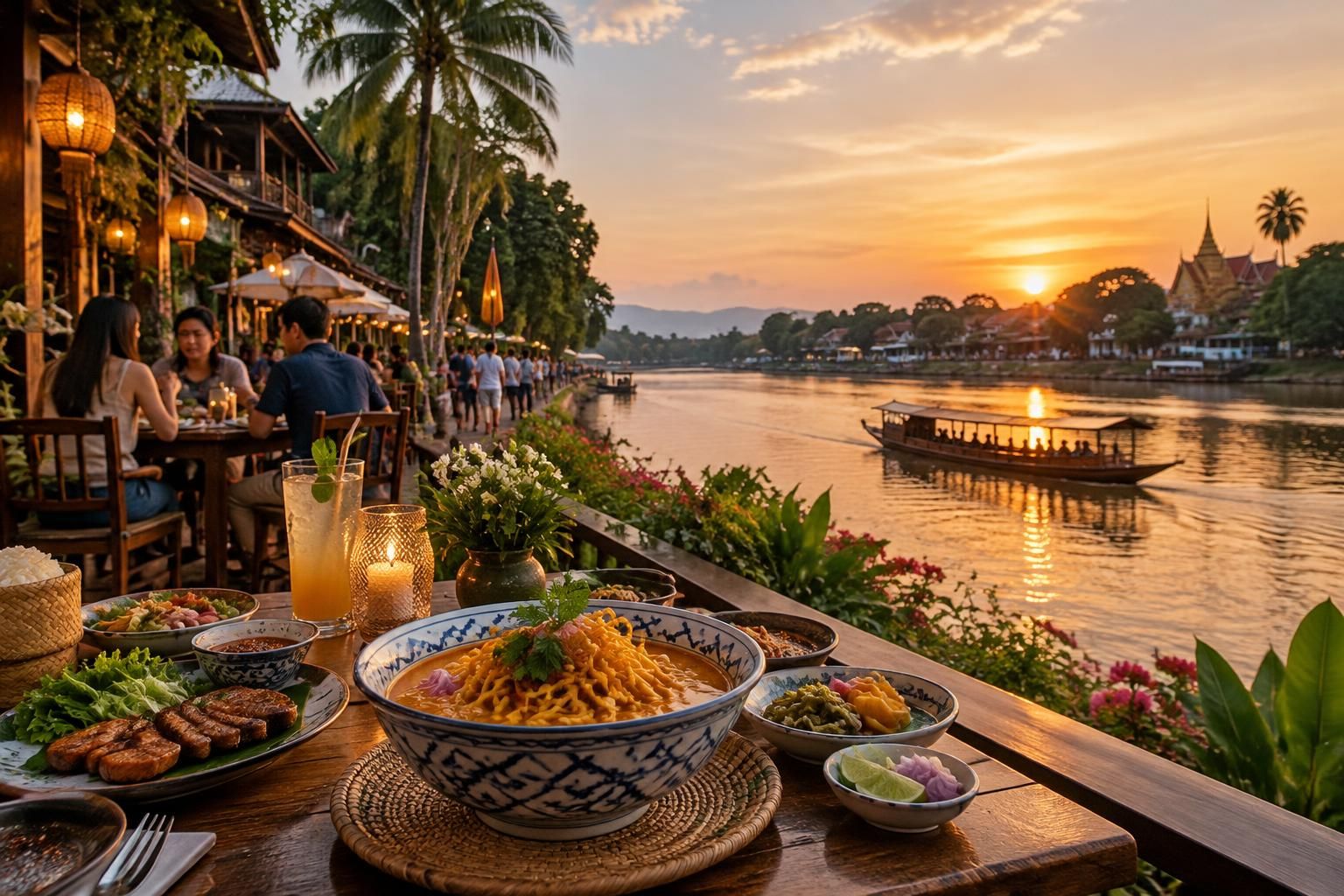
On the banks of the Ping River, Chiang Mai reveals a gentler rhythm: bridges catch the evening light, old trading streets lead to shrines and temples, and dinner can stretch from a plate of northern Thai noodles to a table overlooking the water. The river also reaches far beyond the city, flowing through districts where it supports farming and everyday life.
This travel guide follows a visitor called Maya as she plans a day around the waterfront. Her route pairs well-known riverside attractions with practical decisions: where to find shade, how to approach a place of worship respectfully, when to book a table, and what to ask before stepping aboard. The aim is not to rush from one landmark to another, but to make room for the small details that give this part of Chiang Mai its character.
At a glance
- Visit Khua Lek, or Iron Bridge, near sunset for photographs and cooler walking conditions.
- Explore the Wat Ket area and Pung Thao Kong Shrine for a glimpse of the neighborhood’s layered cultural history.
- Choose from casual Thai meals, lively waterfront restaurants, afternoon tea and special-occasion dining.
- Consider morning paddleboarding or a boat trip, with safety and river conditions checked before booking.
- Carry Thai baht, allow for uneven pavements, and confirm current opening hours and menus directly with venues.
Ping River Attractions: Bridges and Waterfront Walks in Chiang Mai
The Ping River gives Chiang Mai’s eastern neighborhoods a sense of direction. It flows through the city and onward through agricultural areas, linking the urban waterfront with communities whose livelihoods depend on the wider river system. On a walk beside it, the contrast between working life and visitor-friendly terraces is part of the appeal.
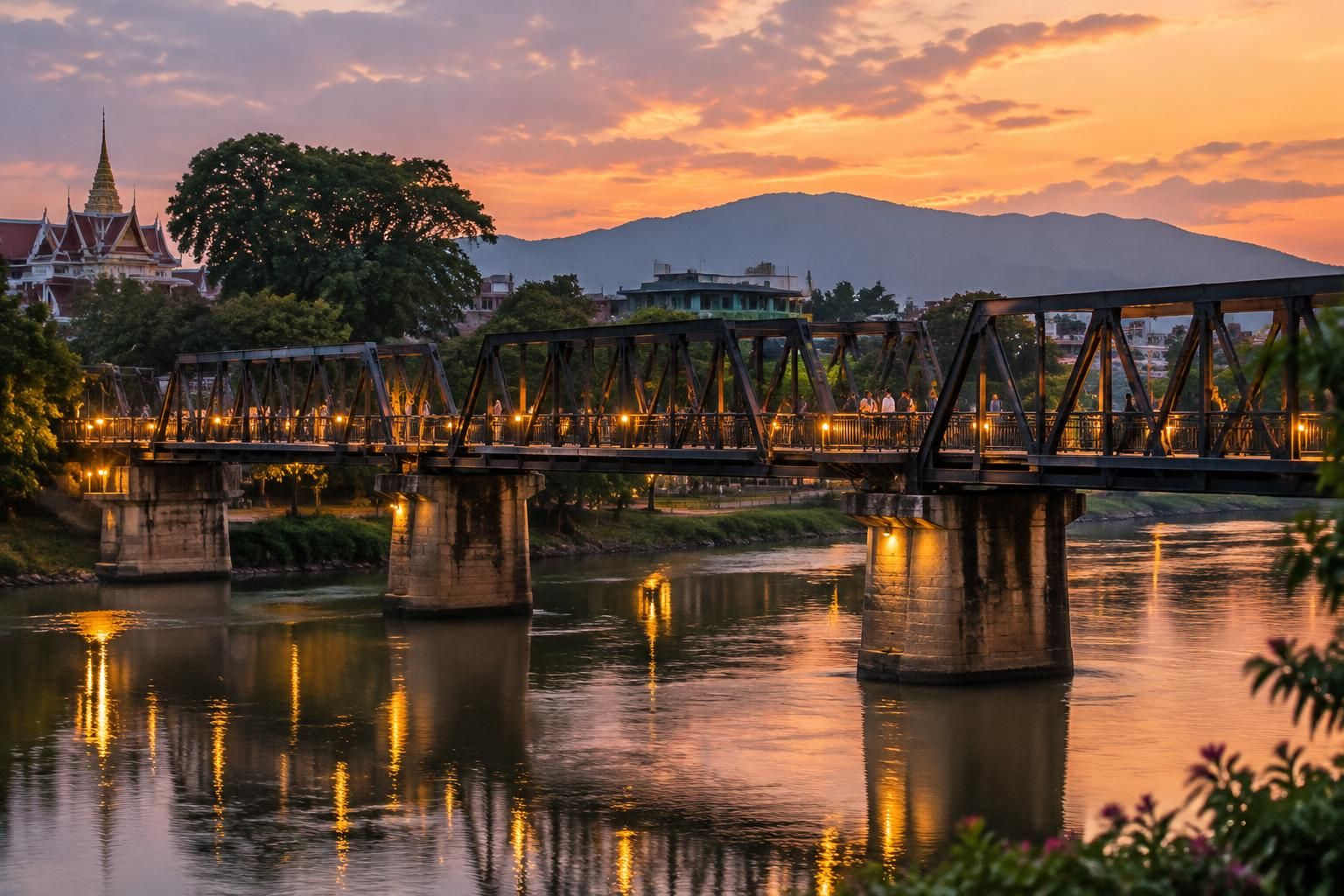
For Maya, the easiest landmark to recognize is Khua Lek, the Iron Bridge. Its metal structure frames the water and makes a distinctive backdrop for photographs. The bridge is especially appealing after the strongest afternoon heat has passed, when its lights and the reflections below bring a different mood to the crossing.
Walking Between Chiang Mai’s Iron Bridge and Nawarat Bridge
Start by locating both bridges on a map rather than assuming that a continuous waterside promenade connects them. Streets, private properties and traffic can interrupt access to the bank, so the most comfortable route may involve walking inland for a short stretch. A map with pedestrian directions is useful, but it cannot always show the condition of a pavement.
Nawarat Bridge offers another perspective on the Ping and its surrounding streets. Towards evening, a breeze can make the crossing more pleasant, and people sometimes fish along the river nearby. Pause where there is room for pedestrians, rather than stopping in a narrow passage or stepping into traffic for a better photograph.
These crossings are not simply viewpoints: they also help visitors understand how the neighborhoods on either side connect. The west bank leads towards busy commercial areas, while the east bank opens into Wat Ket and its mix of heritage buildings, local businesses and restaurants. Crossing slowly lets the change in atmosphere register.
Midday can be demanding, particularly on exposed concrete or metal. Maya carries drinking water, chooses a hat with a brim and leaves longer walks for morning or late afternoon. A short ride between stops is a sensible alternative for anyone traveling with young children, managing limited mobility or simply feeling tired.
Photographing the Ping River Without Rushing
For a softer image of Iron Bridge, arrive before sunset and watch how the light changes across the structure. After dark, use the bridge lighting and riverside reflections as part of the composition, but keep valuables close and remain aware of bicycles, motorcycles and other pedestrians. A small tripod should never block a crossing.
The riverfront is also worth observing without a camera. A fisherman waiting patiently, restaurant staff arranging outdoor tables and commuters heading home each tell a more grounded story than a landmark alone. Ask permission before taking an identifiable close-up of anyone, and respect a refusal without pressing the point.
The useful insight: the bridges work best as anchors for a flexible walk, not as a promise of uninterrupted river access. Once across, the streets of Wat Ket reward a closer look at the communities that grew around the water.
Wat Ket Heritage and Temples Near the Chiang Mai Riverside
The east bank offers a different way to explore the city: through houses, places of worship and streets shaped by generations of trade and migration. The river once provided an important route for moving people and goods, and the neighborhood’s varied architecture reflects those connections. A visit here is most rewarding at walking pace, with time to notice details rather than merely collect photographs.
Maya begins around Wat Ket, where temple grounds offer a quieter counterpoint to the busier roads. The area contains a mix of religious and commercial heritage, so it is useful to distinguish a working place of worship from a museum or attraction designed primarily for visitors. People may be praying, maintaining the grounds or going about ordinary routines.
Visiting Wat Ket and Pung Thao Kong Shrine Respectfully
Pung Thao Kong Shrine is another meaningful stop for travelers interested in Chiang Mai’s Chinese community and religious traditions. Its decorative details make it visually striking, but the most important activity inside is worship. Speak quietly, give devotees space and follow signs or a caretaker’s guidance about where to stand and whether photographs are appropriate.
If Maya wants to make an offering but does not know the procedure, she asks the caretaker rather than copying someone else’s actions without context. Participation is not required: observing respectfully from an appropriate place is enough. This approach avoids turning a living religious practice into a performance for visitors.
For nearby Buddhist temples, clothing that covers shoulders and knees is a practical choice. Remove shoes where instructed before entering a worship space, and avoid posing irreverently with sacred objects. Families can prepare children by explaining that these are places where people come to pray, not just attractive buildings to explore.
Keep a lightweight scarf or overshirt in a day bag, although it is worth checking whether the clothing underneath meets the site’s requirements. Accessibility varies between buildings; steps, thresholds and uneven surfaces may limit entry to some spaces. A companion can check the approach first while another person waits in a shaded area.
Finding Local Character Along Charoen Rat Road
After the shrine, Maya follows the neighborhood streets towards Charoen Rat Road. Traditional-looking shopfronts sit alongside galleries, cafes and modern businesses, creating a streetscape that reflects change rather than a preserved historic set. A doorway, timber detail or small courtyard can be as revealing as a major landmark.
Some businesses occupy old buildings, but not every attractive property is open to the public. Look for an entrance, opening sign or invitation before stepping inside, and avoid photographing through residential windows. Buying a drink or a small locally made item is one way to support a place that welcomes visitors, without treating a purchase as an obligation.
Heat can make a heritage walk feel longer than it looks on a map. Plan a seated stop between religious sites, and remember that opening arrangements may change around ceremonies or holidays. A quiet closure can be an opportunity to explore another street rather than a reason to force an itinerary.
The useful insight: the neighborhood’s value lies in its living communities as much as its architecture. That same blend of tradition and change appears at the table, where northern Thai dishes share the waterfront with contemporary dining rooms.
Best Chiang Mai Riverside Dining: Thai Food, Tea and River Views
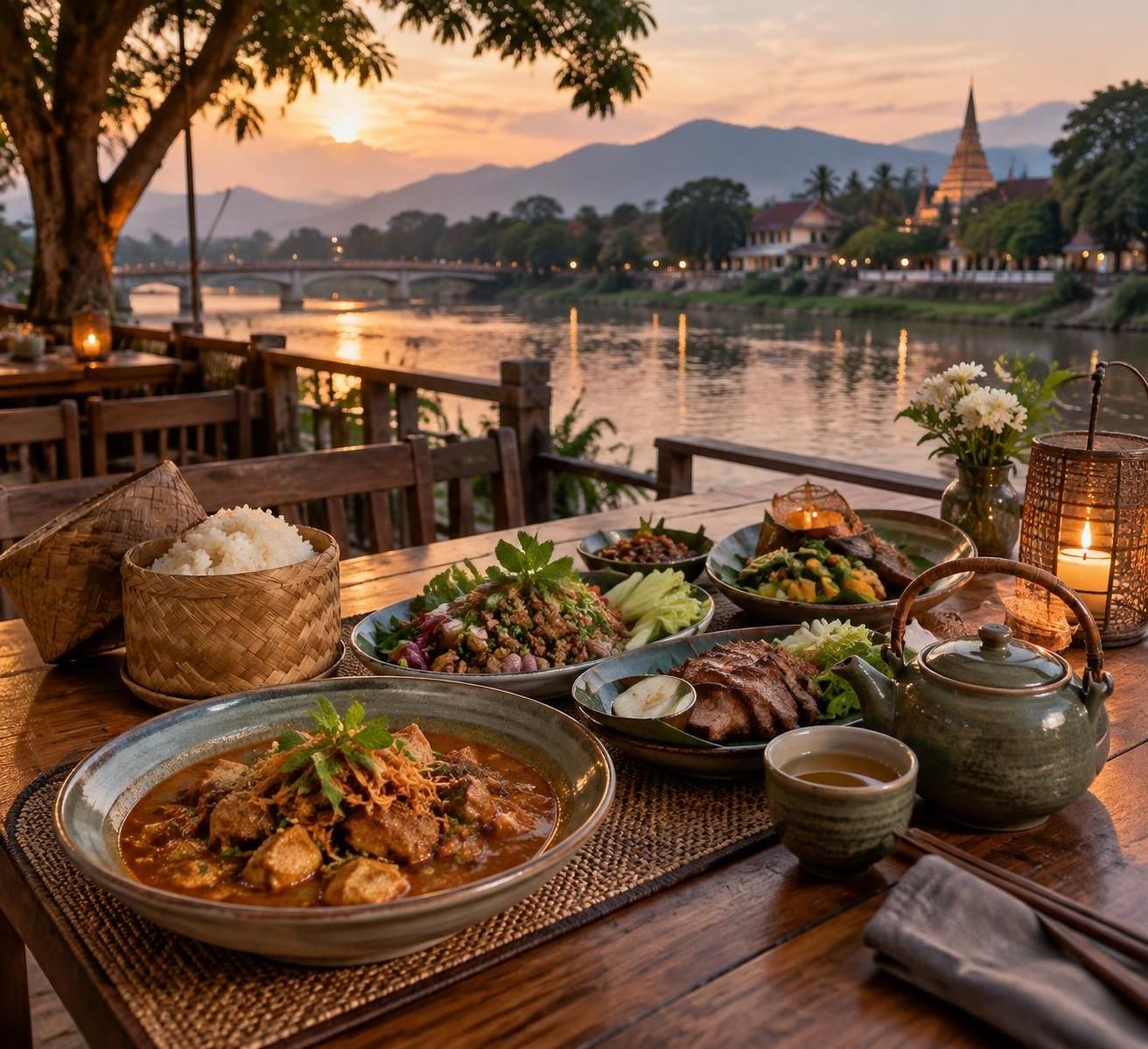
Choosing where to eat along the Ping is about more than finding a view. Some restaurants favor relaxed shared dishes and live music, while others offer quieter meals, elaborate service or afternoon tea. Maya decides first what kind of evening she wants, then checks the current menu and location before making a reservation.
At a Thai restaurant, sharing several dishes gives a small group the chance to try contrasting flavors. Khao soi, a northern Thai curry noodle dish, can sit alongside a crisp green papaya salad or stir-fried morning glory. Ask about spice levels when ordering; “less spicy” is a helpful request, though kitchens interpret it differently.
Choosing a Riverside Restaurant for the Occasion
The Good View Bar and Restaurant, on Charoen Rat Road, has been known for a broad menu and a lively setting by the water. It suits a group whose members want different things, from Thai dishes to international options. Anyone hoping for quiet conversation should ask about the seating arrangement and whether music is scheduled for that evening.
Deck1 has been associated with contemporary Thai and Asian-inspired food in a modern setting. It can be a good fit for visitors who want a more polished meal without abandoning familiar flavors. Ask whether outdoor tables are available and whether the menu currently offers the dishes or drinks that prompted the visit.
The Gallery, also on Charoen Rat Road, has been described as combining dining with art and traditional-style surroundings. For a slower afternoon, Vieng Joom On Teahouse has been known for tea, cakes and a riverside terrace. Both illustrate how a meal or drink can become part of a neighborhood walk rather than a separate excursion.
For a special occasion, hotel dining at Anantara Chiang Mai offers another style of experience, with a landscaped setting beside the river. Menus, restaurant names and operating schedules can change, so contact the property directly before planning around a particular cuisine or buffet. The same check is sensible for every venue in this guide.
How to Order Well and Manage the Bill
Maya’s vegetarian friend asks whether a dish contains fish sauce, shrimp paste, oyster sauce or meat stock, rather than assuming that a vegetable dish is automatically vegetarian. Travelers with allergies should explain their needs clearly and ask about cross-contact. A translated note can help communication, but it does not replace a conversation with staff.
When booking a riverside table, specify the preferred time and whether an outdoor seat matters. A waterside view may come with mosquitoes, heat or a longer wait; an indoor table can be more comfortable for a family member who needs air-conditioning. A reservation is especially useful for sunset, weekends and celebrations.
Older listings quote widely different prices, from relatively modest meals to expensive fine dining. Treat them as historical indications rather than current bills: ask for an up-to-date menu and check whether tax or service charges are included. Alcohol, seafood and tasting menus can change the total considerably, even when the main dishes look reasonably priced.
The useful insight: a satisfying riverside dining experience starts with matching the setting to the group, not chasing the most photographed table. For another perspective on the water, the next decision is whether to stay ashore or travel along it.
Ping River Boat Tours and Paddleboarding in Chiang Mai
Seeing the river from the water changes the scale of the city. Bridges pass overhead, gardens and buildings appear between trees, and stretches that feel busy from the road can seem unexpectedly quiet. Boat tours range from sightseeing outings to meals on board, while paddleboarding offers a more active way to experience the current.
Maya considers what she wants from the trip before comparing operators. A short daytime cruise may suit a traveler interested in views and photographs; a dinner cruise combines transport and a meal but leaves less freedom to choose a restaurant separately. Neither requires a full day, although the journey to and from the departure point still needs planning.
Booking a Chiang Mai River Cruise
Before paying, ask where the boat departs, how long it spends on the water and what the price includes. A “dinner cruise” may have a fixed menu, a separate food charge or a particular boarding time. Confirm dietary arrangements in advance, especially when traveling with children or someone who has a food allergy.
Ask about life jackets for every passenger and whether appropriately sized equipment is available for children. Travelers with limited mobility should also ask how boarding works: a floating pier, narrow gangway or steep step can make access difficult even when the boat itself has seats. A clear answer from the operator makes the experience easier to judge.
Weather and water conditions matter as much as the timetable. Heavy rain, strong currents, floating debris or high water can make a trip unsuitable, and a responsible operator may change or cancel a departure. Check the cancellation policy before booking and avoid treating a fixed itinerary as more important than safety.
For photography, choose a seat that allows a view without leaning over the side or blocking the crew. Keep a phone on a secure strap if possible, and protect it from splashes. Evening light can be beautiful, but a moving boat and low light make sharp pictures harder to capture than images from the bridge.
Morning Paddleboarding on the Ping River
Stand-up paddleboarding offers a closer, quieter encounter with the river. Morning is often more comfortable than the heat of the day, and an organized session can help beginners learn how to balance, steer and return to shore. Providers such as SUP CNX have offered paddleboarding experiences; check their current meeting point, schedule and operating conditions directly.
A beginner should tell the instructor about swimming ability and any concerns before entering the water. Wear a properly fitted personal flotation device, follow the guide’s instructions and ask how the group will handle an unexpected fall or a change in current. A calm-looking surface does not reveal every hazard below it.
Sun protection remains important even early in the day. Bring water, secure glasses and leave passports or other irreplaceable items somewhere safe rather than relying on an untested dry bag. After rain, ask specifically about water quality and debris; postponing is a sensible choice when conditions are poor.
The useful insight: the best trip is one matched to the group’s comfort and the day’s conditions. Back on land, a little planning around transport, money and evening crowds keeps the rest of the visit just as relaxed.
Chiang Mai Riverside Travel Tips: Markets, Transport and Timing
A good day beside the Ping does not need an elaborate budget or a rigid schedule, but a few practical choices make it easier. Maya keeps the morning for outdoor activities, takes a break during the hottest hours and returns to the bridges and restaurants later in the day. That sequence leaves room for delays without making the evening feel hurried.
Planning Around Heat, Rain and Air Quality
Conditions change through the year. Hot afternoons can make even a short walk tiring, while rainy periods may bring slippery paths and sudden downpours. Check the forecast before setting out, carry water and make sure a route has a comfortable indoor stopping point.
Seasonal smoke and poor air quality can also affect outdoor plans in Chiang Mai. Check a reliable local air-quality reading on the day, particularly if anyone in the group has asthma or another respiratory condition. A museum, cafe or indoor meal can be a better choice than prolonged exercise when the air is poor.
For travelers using wheelchairs or pushing strollers, riverside access deserves extra attention. Pavements may be uneven, crossings busy and restaurant terraces reached by steps. Contact a venue about its entrance and toilets, and allow enough time to change plans if the route on a map proves awkward in practice.
Visiting Night Markets and Getting Around
Chiang Mai’s night markets offer a different atmosphere from a waterfront dinner. The Night Bazaar area, west of the river, is a practical addition to an evening around Iron Bridge, with stalls and nearby food choices creating plenty of opportunities to browse. Market activity and individual vendors vary, so allow flexibility rather than relying on a particular stall.
For a simple evening, Maya photographs the bridge, eats near the river and then walks or takes a short ride towards the Night Bazaar. She checks the route first and chooses a ride if traffic, rain or fatigue makes walking uncomfortable. A group can split its time too: shoppers browse while others pause for a drink at a nearby cafe.
Ride-hailing services, taxis and shared red trucks can help connect the waterfront with other parts of the city. Agree on the destination and, where relevant, the fare before setting off; for an app-based ride, check the driver and vehicle details shown in the app. Keep the name or address of the destination available in Thai when possible.
Thai Baht, Reservations and a Practical Day Plan
Thailand’s currency is the Thai baht, or THB. Carry some cash for smaller purchases, while checking whether a restaurant accepts cards or other payment methods before ordering. Exchange rates and fees change, so compare the actual rate offered by banks, exchange counters and ATMs rather than relying on a fixed dollar conversion.
ATMs may charge a local withdrawal fee in addition to any fee from a traveler’s own bank. When a machine or card terminal offers to convert the transaction into a home currency, compare the terms carefully; choosing to pay in baht generally leaves conversion to the card issuer. Keep cash in more than one secure place.
| Time | Plan | Useful preparation |
|---|---|---|
| Morning | Explore Wat Ket or join a paddleboarding session | Carry water and check conditions before going onto the river |
| Afternoon | Pause for tea or an indoor meal | Confirm opening hours and take a break from the heat |
| Late afternoon | Walk around Nawarat Bridge and Iron Bridge | Allow time for crossings and uneven pavements |
| Evening | Enjoy dinner, a cruise or a Night Bazaar visit | Reserve when needed and confirm the route home |
The useful insight: a flexible plan leaves room for the weather, the people traveling together and the unexpected pleasure of a longer stop beside the river.