
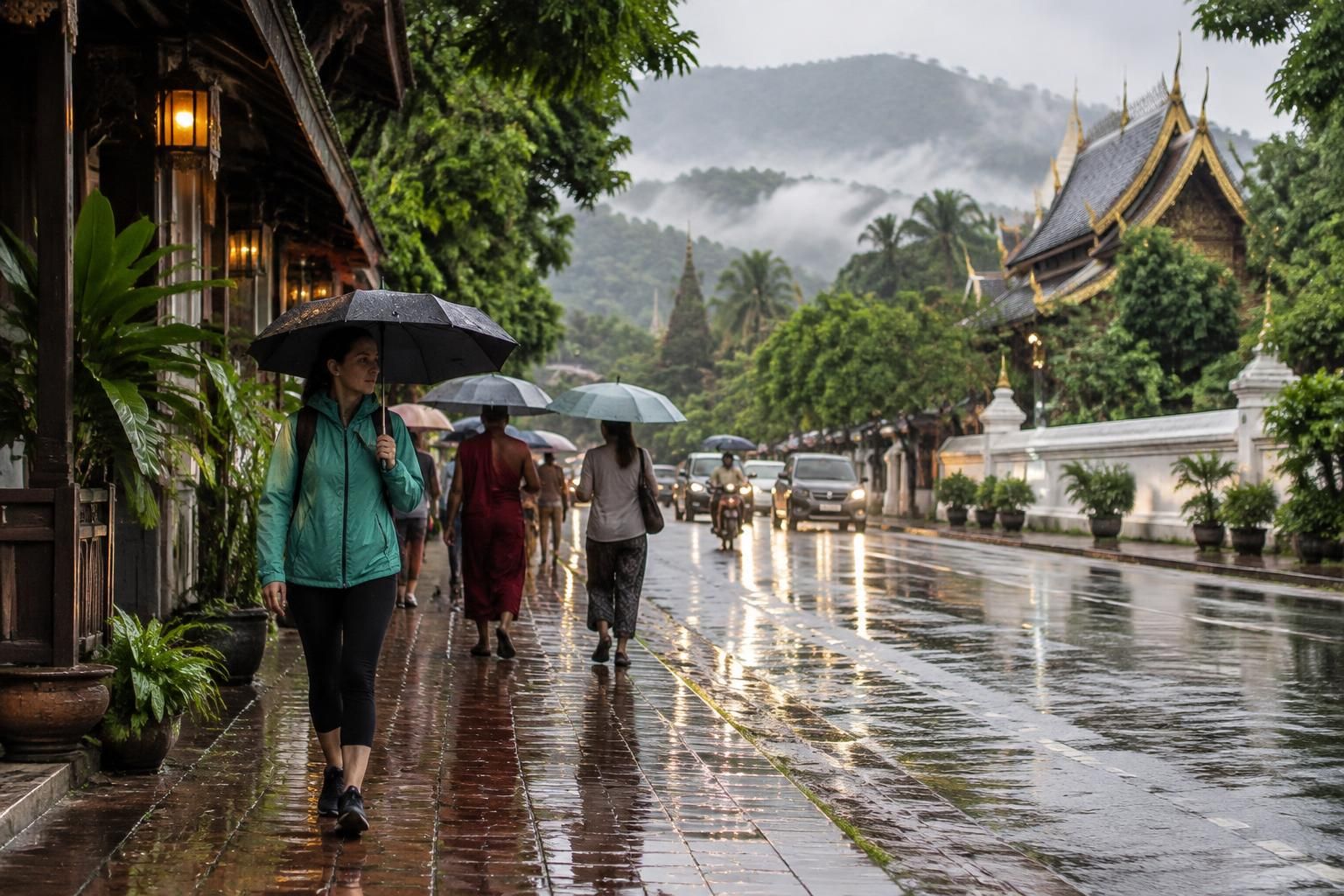
Rainy-season mornings in Chiang Mai often begin with a clear view of the mountains, followed by clouds that build into a dramatic afternoon shower. From roughly May to October, the northern Thai city becomes greener and quieter, but the weather also asks travelers to be more flexible: a temple visit may need an early start, a mountain trip may depend on the latest road conditions, and a riverside hotel booking deserves an extra look at flood risk.
For a traveler arriving with a backpack and a week to explore, the practical questions are rarely just about whether it will rain. They are about drying clothes, getting home safely after dinner, choosing an elephant sanctuary responsibly, and knowing when a storm is serious enough to change plans. August and September are generally the wettest months, while September and October deserve particular attention for flooding near the Ping River. A little preparation makes room for the pleasures of the season, from misty hills to unhurried afternoons in a cooking class.
At a glance
- When to go: Rain usually increases from May, peaks around August and September, and eases during October.
- Daily pattern: Heavy afternoon or evening showers are common, although storms can also bring longer wet spells.
- Where to stay: Check flood exposure before booking close to the Ping River, especially for September and October.
- What to carry: Pack a light rain jacket, a waterproof pouch, quick-drying clothes, and mosquito repellent.
- Getting around: Allow extra time for wet roads and avoid driving or walking through floodwater.
- What to do: Keep outdoor plans flexible and save cooking classes, museums, and covered markets for rainy periods.
Chiang Mai rainy season weather: months, rainfall and daily patterns
The Chiang Mai rainy season usually develops between May and October, although the change is gradual rather than a switch that flips on a particular date. May often brings the first substantial thunderstorms after the hottest part of the year, and showers become more frequent as the monsoon develops.
June can feel less intense than travelers expect, with dry intervals between bursts of rain. July often brings a steadier build-up, followed by the wetter stretch of August and September; October generally becomes drier as the month progresses, before the cooler season settles in around November.
Rainfall varies by year and by location, so a monthly average is a planning guide rather than a promise. Chiang Mai receives roughly 200–260 mm in each of August and September in commonly cited climate averages, but the exact figures depend on the observation period and weather station.
| Period | Typical conditions | Planning approach |
|---|---|---|
| May | Hot weather begins to give way to more frequent storms. | Carry a light rain layer and schedule outdoor visits early. |
| June–July | Showers alternate with dry periods; humidity remains high. | Keep a flexible afternoon option and check mountain weather. |
| August–September | Usually the wettest part of the season, with occasional prolonged rain. | Watch local forecasts and allow extra time for travel. |
| October | Rain often tapers, but substantial storms and river flooding remain possible. | Check local alerts, especially when staying near the river. |
What monsoon weather feels like during a day in Chiang Mai
Many days follow a recognizable rhythm: a reasonably bright morning gives way to thicker clouds, then a heavy downpour arrives in the afternoon or evening. The rain can be loud enough to drown out conversation under a café roof, yet a street may look calm again after the shower passes.
That pattern is useful for planning, but it is not a guarantee. From late August into early October, moisture associated with regional storms can bring a grey, wet stretch lasting more than a day, with accumulated rain creating problems even when individual showers do not seem exceptional.
Consider a visitor with a morning booking at a temple outside the center. Leaving early creates time to return before a possible afternoon storm, while reserving a nearby café or museum as a backup prevents a delayed journey from becoming a lost day.
Temperatures remain warm, and humidity can make clothes feel damp even when the sky is clear. Air-conditioned rooms provide relief, but a wet shirt left in a closed bag overnight may still need washing rather than simply airing.
How to use a Chiang Mai rainfall forecast
Check the hourly rainfall forecast before setting out, then look again if clouds build quickly or a mountain excursion is planned. A percentage chance of rain is not the same as a prediction that it will rain for that percentage of the day, and a city-center forecast cannot describe every valley or mountain road.
For trips beyond the city, combine the forecast with local advice from accommodation staff or the tour operator. Ask not only whether rain is expected, but whether recent storms have affected the route, trail, or attraction.
Seasonal comparisons also matter. The burning season, commonly around February to April, can bring serious fine-particle pollution; rainier months generally offer relief from that seasonal smoke, although air quality should still be checked rather than assumed to be perfect.
The useful habit is to plan around changing conditions, not around the idea that every rainy-season day looks the same. Once the weather pattern makes sense, the next decision is where to stay when the river rises.
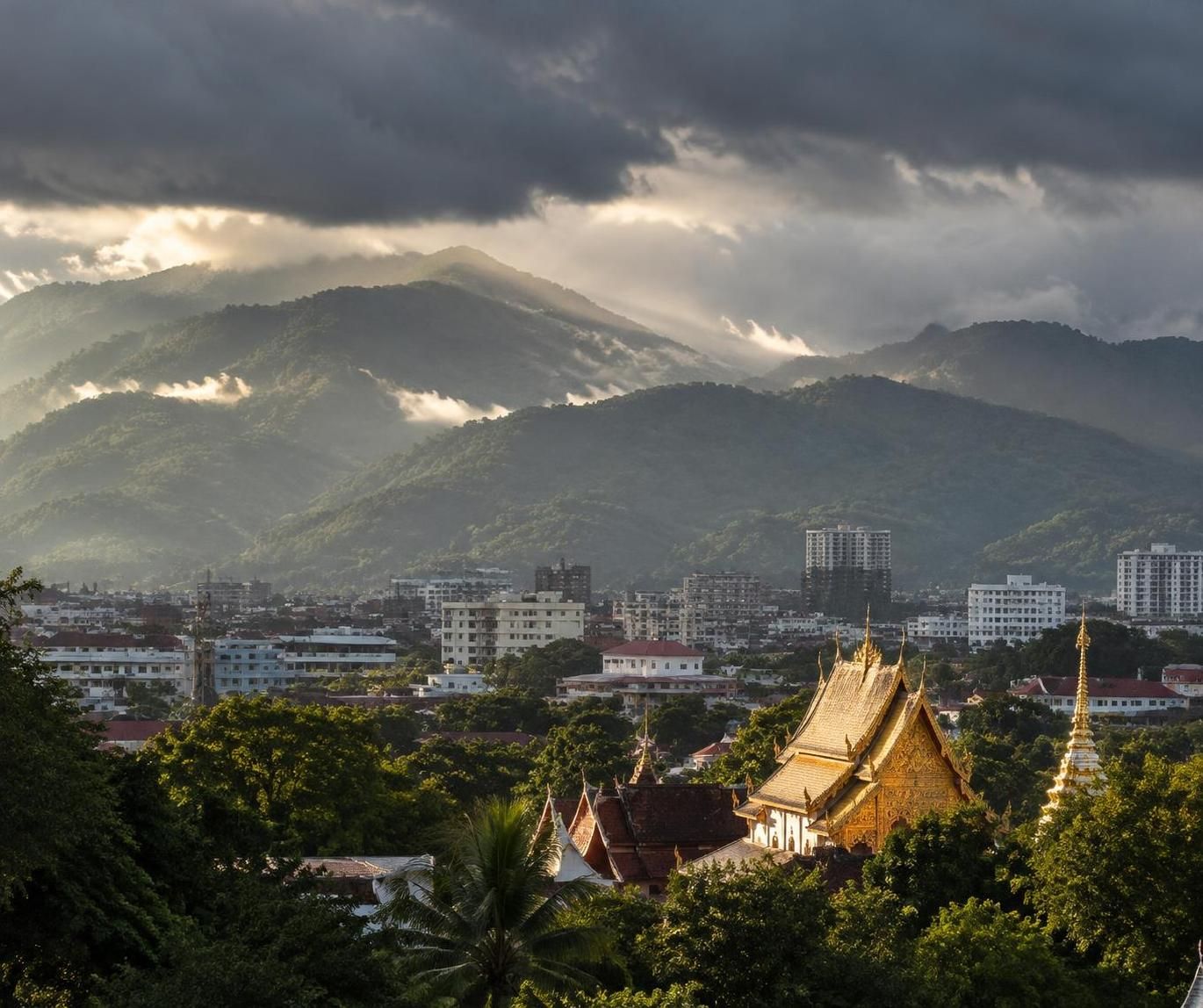
Chiang Mai flooding: where to stay and how to monitor alerts
Most visitors encounter wet pavements and short-lived puddles rather than a major flood, but Chiang Mai has a documented history of serious river flooding. The most significant concern for travelers is the low-lying land around the Ping River, particularly after sustained rain upstream as well as heavy local downpours.
In October 2024, severe flooding affected riverside neighborhoods and parts of the city center, disrupting transport and closing the main railway station. That event is a useful reminder that a quiet-looking sky over a hotel does not necessarily reveal how much water is moving down from the wider river basin.
Areas around Chang Klan Road, the Night Bazaar, Warorot Market, Nawarat, and parts of the east bank warrant particular attention when flood warnings are active. Exposure varies from street to street and even between buildings, so a neighborhood name alone cannot guarantee that a property is safe or unsafe.
Choosing accommodation for Chiang Mai’s rainy months
Higher areas around Nimman and Suthep Road have historically been less exposed to Ping River flooding than many riverside streets. That does not make any location immune to drainage problems or guarantee that every route to it will remain open after a severe storm.
Before booking, ask a property a direct question: “How did the building and access road fare during previous flooding?” A helpful answer should address the entrance and surrounding streets, not only whether guest rooms are above ground level.
A traveler arriving late by train, for example, may find that a hotel itself is dry while the most convenient approach road is affected. Knowing whether staff can suggest an alternative route, or where guests can wait if access is interrupted, is more useful than relying on a reassuring description alone.
For September and October stays, flexible cancellation terms can be valuable. They allow a traveler to respond to an official warning without having to choose between ignoring the situation and losing the entire accommodation budget.
What to do when a Chiang Mai flood warning is issued
Follow updates from Thai authorities, the Thai Meteorological Department, local disaster-management offices, and trusted local transport providers. Ask the accommodation team how alerts are communicated and whether the property has a plan for guests who need assistance moving luggage or reaching a safer location.
Keep a charged phone, essential medication, identification, and a small amount of cash accessible rather than buried at the bottom of a backpack. If an evacuation is ordered, leave promptly using the route advised by local officials; do not wait for water to reach the room.
Never walk, ride, or drive through floodwater. Water can hide open drains, damaged pavement, electrical hazards, strong currents, and much greater depth than it appears to have from the bank.
There is also a difference between rain that has briefly overwhelmed a drain and a rising river that may continue to affect an area. The first may clear quickly; the second requires attention to official updates and upstream conditions rather than assumptions based on a previous visit.
Travel insurance is worth reading before departure, especially its rules on cancellations, emergency accommodation, and weather-related disruption. Coverage depends on the policy and the timing of the warning, so keep the insurer’s contact details handy and ask the provider about unclear terms before buying.
A room choice is not a flood plan: knowing the building, the surrounding streets, and the source of reliable alerts completes it. With the location settled, packing becomes much easier to tailor to the trip.
What to pack for Chiang Mai rainy season: clothing, health and comfort
The most useful rainy-season bag is not the heaviest one. It contains a few items that protect essentials, dry reasonably quickly, and make an unexpected wait under shelter more comfortable.
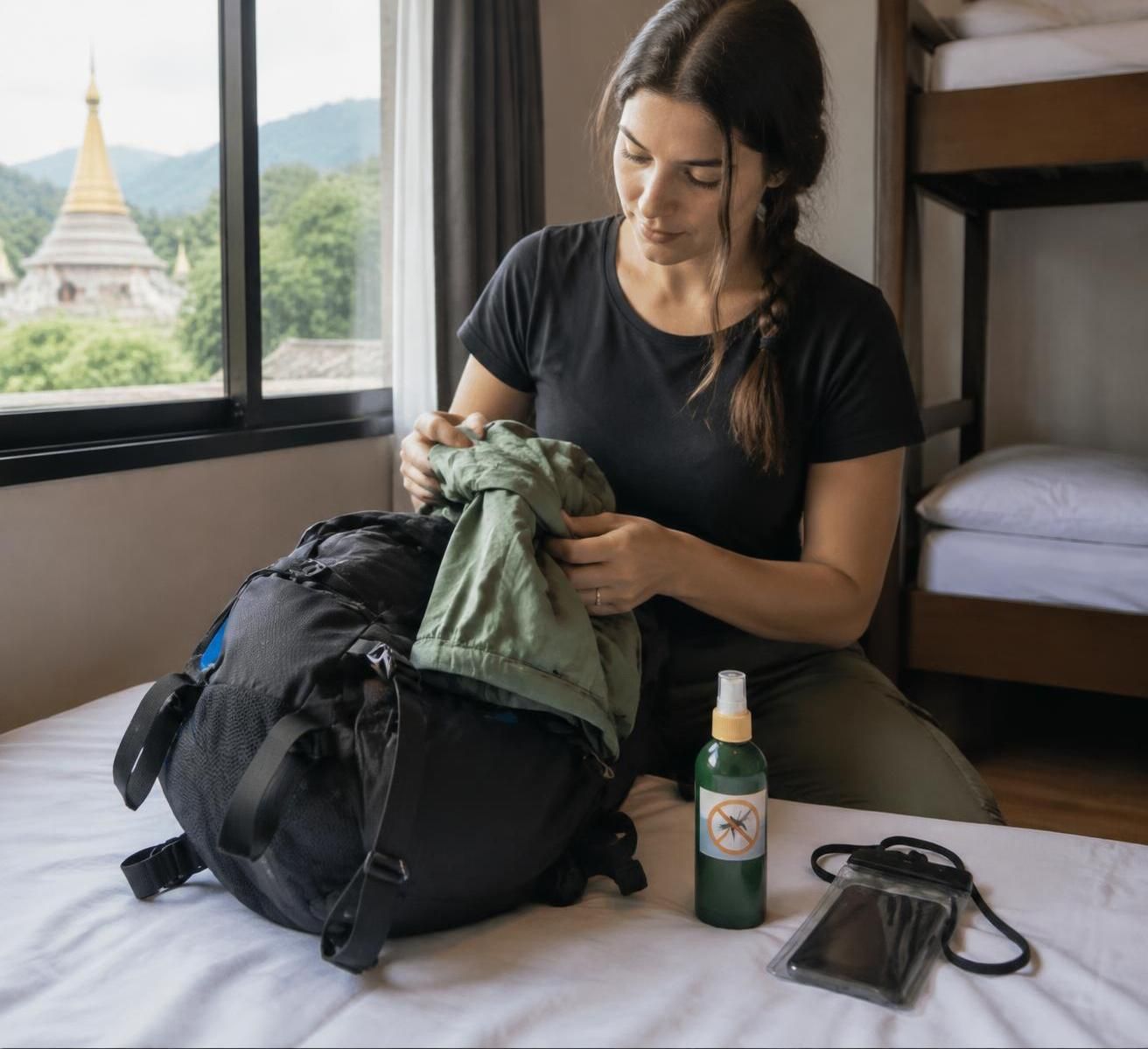
A lightweight rain jacket is often more practical than relying solely on an umbrella, particularly when wind pushes water sideways. Look for breathable waterproof clothing with a hood, and consider a pack cover or waterproof liner rather than assuming a backpack’s outer fabric will protect electronics in a long shower.
Rainy-season packing choices that solve everyday problems
- Quick-drying clothing: Lightweight shirts and trousers are easier to wash and dry than heavy cotton or denim.
- Footwear with grip: Choose comfortable shoes or sandals with reliable soles for wet tiles and uneven pavements.
- Waterproof storage: A sealed pouch protects a phone, passport, and bank cards when a bag gets soaked.
- Small dry bag: Separate damp clothes from clean items on travel days.
- Compact umbrella: Useful for walking between short indoor stops, though less effective in strong wind.
- Repellent and sunscreen: Both remain useful in cloudy weather; follow product instructions when applying them.
Imagine a guest returning from a morning market just as the rain starts. A rain cover keeps the bag manageable, but a separate pouch keeps the phone and passport dry even if water works its way through the seams.
Leave space in the bag for damp items rather than compressing everything into a single compartment. A spare pair of socks can turn a long journey much more comfortable, especially when air conditioning makes wet footwear feel cold.
High moisture levels also affect laundry. Ask whether a hostel or laundry shop uses a machine dryer, check the collection time, and avoid leaving the only clean outfit in the wash immediately before an early departure.
Leather shoes, closed wardrobes, and bags stored against a damp wall can develop musty smells or mold. Let gear air out when possible, and tell the accommodation team if a room smells persistently damp rather than trying to solve a ventilation problem with perfume.
Mosquito protection and rainy-season health
Mosquito protection deserves attention because dengue occurs in Thailand and mosquitoes can breed in standing water. The mosquitoes that spread dengue often bite during the day, so protection should not be limited to evenings.
Use a repellent containing an effective ingredient such as DEET or picaridin according to its label, and wear loose, covering clothing when practical. Sleeping in a screened or air-conditioned room can help reduce bites, while checking balconies for containers of standing water addresses a common breeding opportunity.
If fever, severe headache, body pain, rash, or other concerning symptoms develop during or after a trip, seek medical advice and mention the travel history. For suspected dengue, a clinician can advise on safe treatment; avoid assuming an over-the-counter painkiller is appropriate without checking.
Heat still matters on overcast days, particularly during a long walk or temple visit. Carry water, pause in the shade, and give children or older travelers extra time to cool down when the air feels heavy.
For anyone with asthma, heart disease, or another condition affected by air pollution, check current readings throughout the year and bring the usual medication. If the same itinerary includes the February–April burning season, ask accommodation about air filtration and consider a well-fitting certified respirator during polluted periods.
Good travel preparation removes small points of friction: dry essentials, clean clothes, and a sensible health kit leave more attention for the journey. The next challenge is getting around when the roads themselves are wet.
Getting around Chiang Mai in the rain: scooters, roads and mountain trips
Rain changes the time needed for even a short journey. Traffic can slow sharply when a downpour reduces visibility, and a route that looked simple on a map may include slick tiles, deep puddles, or a stretch without shelter.
For many visitors, a booked car, licensed taxi, or ride-hailing service is a more comfortable choice than a scooter during a storm. Allow extra time for pickup and keep the accommodation address available in Thai as well as in English where possible.
Scooter safety in Chiang Mai’s wet weather
Riding in the rain requires experience, a legally valid motorcycle licence, an appropriate helmet, and insurance that actually covers the rider and the vehicle. A car licence alone does not automatically authorize a visitor to ride a motorcycle in Thailand, and a rental agreement does not replace checking legal and insurance requirements.
Wet painted lines, metal covers, leaves, and moss can be particularly slippery. Smooth braking, a larger following distance, and slowing before a bend all give a rider more room to respond, but none removes the risk created by poor visibility or standing water.
The first rain after a dry spell can make a road especially slick as dust and residue mix with water. Puddles can also conceal potholes, so a rider who cannot see the surface clearly should slow down or choose another route rather than assuming the water is shallow.
When a heavy storm begins, pull over somewhere safe, such as a café or a petrol station, and wait away from traffic. Avoid riding at night in heavy rain: glare, dark clothing, and water on a visor can make hazards difficult to see until there is little time to react.
A loose poncho can flap or catch while riding and is not a substitute for suitable protective equipment. A well-fitting rain jacket is generally easier to manage, while a waterproof phone pouch helps protect navigation without encouraging a rider to look at a screen while moving.
Never enter floodwater on a scooter. Apart from the danger to the rider, water can damage the engine, and the depth or condition of the road underneath cannot be judged reliably.
Checking road conditions before Pai, Doi Suthep or Doi Inthanon
Mountain routes add another layer of uncertainty. Heavy rain can wash gravel or mud onto bends, reduce visibility in cloud, and cause temporary delays or closures after landslides.
A traveler considering the winding route to Pai should check current road conditions with transport operators and local authorities before departure. If a storm has recently passed, ask whether the whole route is open and whether buses or shared vans are running, rather than relying on an older online review.
The same principle applies to Doi Suthep and Doi Inthanon. A clear morning in the city does not guarantee clear conditions at elevation, and a viewpoint hidden in cloud may be beautiful in its own way but disappointing to someone expecting a long mountain panorama.
Booking a driver familiar with the route can reduce the burden of navigating unfamiliar roads, although a driver cannot make a closed road safe. Keep the itinerary adjustable and agree on the cancellation or rescheduling terms before paying for a private excursion.
For a flight or train departure, build in a wider buffer during sustained rain and confirm the service directly with the operator. If a major flood affects a station or access road, a normal journey-time estimate may no longer be relevant.
The safest transport plan has an acceptable alternative: a delayed excursion, a car instead of a scooter, or a day in town. That flexibility also opens the door to some of Chiang Mai’s best wet-weather experiences.
Things to do in Chiang Mai during rainy season: outdoor and indoor activities
Rain does not make Chiang Mai a city of cancelled plans. It changes the rhythm, encouraging earlier starts outdoors and slower afternoons in places where a shower becomes part of the atmosphere rather than a reason to rush.
One practical itinerary begins with a morning visit to a temple or market, followed by lunch near a pre-booked class. If the sky stays clear, there is room for a walk; if thunder arrives, the indoor booking already provides a comfortable next step.
Rainy-season nature trips and cultural visits
The surrounding hills become especially green during the wet months, and waterfalls often have stronger flow. At Doi Inthanon, that seasonal abundance can make the forest and cascades memorable, although mist may hide the summit views that appear in sunny-season photographs.
At Bua Tong, the limestone surface is known for its unusual grip, but conditions still need checking. Follow posted instructions and staff advice, avoid fast water or closed areas, and remember that adjacent rocks and paths can remain slippery even when the main limestone surface feels secure.
Temple visits work well when planned with respect for both weather and local customs. Dress modestly, carry a light layer, remove shoes where required, and use care on polished floors after stepping in from the rain.
A guided walk can add context that a quick photograph misses: Chiang Mai’s old city walls and temples reflect its history as the center of the Lanna kingdom. A local guide can explain architectural details while adjusting the route if a shower arrives.
For elephant-related activities, choose an operator that prioritizes animal welfare, does not offer riding, and allows elephants space to behave naturally. Ask how close visitors are expected to get, how animals are managed, and what happens to the visit during heavy rain.
Indoor activities for a rainy day in Chiang Mai
Cooking classes are a particularly rewarding way to spend a wet afternoon. Many begin with a market visit, so travelers can learn about ingredients such as lemongrass, galangal, and fresh herbs before moving into a sheltered kitchen to prepare northern Thai dishes.
Museums and galleries provide another change of pace, especially for visitors interested in the city’s Lanna heritage or contemporary art. Check opening days before setting out, since a rainy-day alternative is only useful if the venue is actually open.
Covered markets can be lively during a shower, though access streets may still become wet or crowded. At Warorot Market, for example, a traveler can browse textiles and snacks while keeping an eye on local flood alerts because of the area’s proximity to the river.
A massage, craft workshop, café, or Muay Thai event can also fit around the weather. Book with reputable providers, confirm opening times, and leave enough travel time to avoid feeling pressured to cross the city during the worst of a storm.
Making a rainy-season Chiang Mai budget go further
Accommodation can be less expensive outside the peak visitor season, and popular attractions may feel less crowded. Prices still vary with holidays, property type, and booking conditions, so compare the total cost rather than assuming every room will be heavily discounted.
Factor in practical extras: an occasional car ride instead of a walk, machine drying for laundry, and a flexible tour booking. A slightly cheaper room may be poor value if reaching it requires repeated detours during bad weather.
A traveler staying a week might reserve one or two key experiences in advance, then leave the remaining afternoons open. That approach protects the activities that matter most without turning every forecast change into a scheduling problem.
The richest rainy-season itinerary leaves space for both the landscape and the weather: a green morning outdoors, a sheltered afternoon learning something new, and enough flexibility to choose safety over a fixed timetable.